
Owner Of Debt Relief Company Sentenced to 9 Years in Federal Prison After Guilty Plea

Preet Bharara, the U.S. Attorney for the Southern District of New York, announced Wednesday that Michael Levitis, the owner of Mission Settlement Agency, was sentenced in Manhattan federal court to 108 months in prison in connection with a multimillion-dollar scheme that victimized more than 1,200 financially struggling people across the country.

Mission was also sentenced today, and ordered to pay a fine of $4,393,044.

Levitis and Mission pled guilty on April 8, 2014, before U.S. District Judge Paul G. Gardephe, who also imposed today’s sentences.

Bharara said, “Michael Levitis preyed upon people across the country who, like so many Americans, were struggling to pay off their debts after the financial downturn. Through Mission Settlement Agency, Levitis lied about quick, guaranteed cures to their serious financial problems in order to trick them out of money they could not afford to lose.  With his sentence today, he has been held responsible and punished for his crimes.”

Bharara also mentioned a case announced the previous day involving a debt collection scam. “As we demonstrated just yesterday through our announcement of another consumer debt-related case, this Office is committed to working with our law enforcement partners to pursue and prosecute those who seek to profit by exploiting financially struggling and vulnerable people,” he noted.

From 2009 through May 2013, at Levitis’s direction, he and his co-conspirators Denis Kurlyand, Boris Shulman, Manuel Cruz, Felix Lemberskiy, and Zakhir Shirinov systematically exploited and defrauded over 1,200 customers across the country, who were financially disadvantaged people struggling to pay their credit card debts. They tricked people into paying Mission for purported debt settlement services by lying to prospective customers about Mission’s ability to help settle their debts, the fees that Mission charged, and Mission’s purported affiliation with the federal government.

Among other things, the defendants: (1) lied about and/or concealed Mission’s fees, falsely assuring customers that Mission would charge a mere $49 per month when, in truth, Mission took thousands of dollars in fees from funds that its customers believed would be used to pay creditors, (2) deceived customers by fraudulently and falsely promising that Mission could slash their debts – typically, by 45% — when, in fact, for the majority of its customers, Mission did little or no work and failed to achieve any reduction in debt, and (3) sent prospective customers solicitation letters that falsely suggested that the agency was acting on behalf of or in connection with a federal governmental program, which letters included an image of the Great Seal of the United States and indicated that they were coming from the “Reduction Plan Administrator” of the purported “Office of Disbursement.”

As a result of the defendants’ scheme, in addition to losing money, most of Mission’s customers failed to achieve the reduction in debt that the defendants had promised them, and some of them suffered further declines in their credit ratings, were sued by their creditors, and/or fell into bankruptcy.

Mission received over $6.6 million in fees during the course of the scheme. For more than 1,200 of its customers, Mission took fees totaling nearly $2.2 million but never paid a penny to the customers’ creditors. Levitis used the money that Mission took from its customers to pay for, among other things, the operating expenses of Rasputin, a restaurant/nightclub he controlled, lease payments for two different luxury Mercedes cars, credit card bills for his mother, and expenses for parties and other events featured in a reality television show in which he starred during the course of the scheme.

In addition to his prison term, Levitis was sentenced to three years of supervised release, and ordered to pay forfeiture and restitution of $2,196,522 and a fine of $15,000. Five other defendants, Denis Kurlyand, Boris Shulman, Felix Lemberskiy, Zakhir Shirinov, and Manuel Cruz, previously pled guilty for their roles in the fraudulent scheme, and await sentencing.

The United State Postal Inspection Service and the CFPB assisted in the investigation into Mission.

Owner Of Debt Relief Company Sentenced to 9 Years in Federal Prison After Guilty Plea
http://www.insidearm.com/daily/collection-laws-regulations/collection-laws-and-regulations/owner-of-debt-relief-company-sentenced-to-9-years-in-federal-prison-after-guilty-plea/
http://www.insidearm.com/feed
insideARM

Accounts Receivable Management

U.S. Gov’t to Test In-House Student Loan Debt Collections, Cutting Out Private ARM Firms

The U.S. Treasury Department is readying a pilot program to take over the collection of some defaulted student loan accounts from the Department of Education, essentially removing the work from contracted private debt collection agencies.

There is no official confirmation of the program yet, but multiple unnamed sources within ED and Treasury have discussed the plan with numerous media outlets. The Huffington Post had the story first and The Wall Street Journal independently verified some of the information.

According to media sources, the plan would involve moving defaulted student loans to Treasury’s fiscal service bureau. The intent is to put more focus on helping struggling borrowers, most likely in the form of rehabilitating defaulted loans into current status.

It is unclear whether the initial loans would involve more recent direct federal loans or legacy guaranteed loans, or a combination of the two. Currently, ED contracts with private debt collectors to recover defaulted loans.

There is also a separate plan to do the same with student loans that are current. ED also uses private companies to service those loans under a separate contract.

The internal debt collection pilot program could begin early next year, according to sources.

Although there has been no official confirmation, at least one member of the Administration recently acknowledged that federal agencies are concerned with some of the incentives in the debt collection contracts.

Deputy Treasury Secretary Sarah Bloom Raskin said at a National Consumer Law Center conference last week that incentives embedded in the debt collection contracts may not align with an Education Department goal of rehabilitating defaulted loans to current.

“Federal student loan debt collectors need to be encouraged to remove loan accounts from default when possible, as well as deal fairly with borrowers, and the incentive structures in debt collector contracts should convey these priorities,” Raskin said in a prepared speech.

Raskin’s main objection was in the scoring of performance in the contract. Private debt collection agencies are scored based on a range of criteria, and the scores determine how much additional work each agency receives in the next scoring period. Raskin noted that the largest emphasis for performance scores is total dollars collected.

Although there has not been an update in the scoring methodology used to rank private collectors, the terms of the contract have already changed with regard to collection agency compensation.

ED awarded debt collection contracts on its small business set aside last month. The contracts signed by the 11 small business contractors allowed for a flat fee paid for rehabilitations, a departure from the previous contract that called for a commission on rehabs based on the value of the account. The new contract also awards a flat rate three times higher than the previous one for administrative resolutions (situations where collectors remove the account from default status based on certain events, like death or bankruptcy).

In addition to the changes in flat rate compensation, topline commission rates for dollars collected are lower in the new contract. So emphasis has been shifted, at least somewhat, from total dollars collected to more of a servicing and outcome-based model.

The awarding of that small business collection contract presents some issues for the planned Treasury pilot. While the unrestricted contract has yet to be awarded, there are 11 small business collection agencies that have signed on the dotted line. What happens to those contracts if the Treasury moves forward?

The Huffington Post article noted that the entire pilot plan “would be contingent on Congress providing necessary funding,” a feat that may have long odds with a shift in Congressional power slated to take effect in January.

U.S. Gov’t to Test In-House Student Loan Debt Collections, Cutting Out Private ARM Firms
http://www.insidearm.com/daily/debt-collection-news/debt-collection/u-s-govt-to-test-in-house-student-loan-debt-collections-cutting-out-private-arm-firms/
http://www.insidearm.com/feed
insideARM

Accounts Receivable Management

State AG Launches Enforcement Action Against Payday Lender and Affiliated Debt Collectors

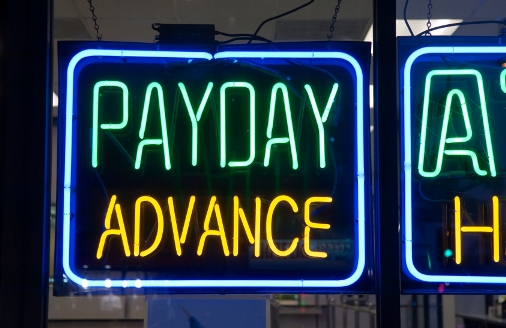
Pennsylvania Attorney General Kathleen G. Kane Thursday announced a consumer protection lawsuit against a Texas-based company for allegedly engineering an illegal payday loan scheme over the Internet. According to the lawsuit, the defendants allegedly targeted Pennsylvania consumers in violation of state law.

The civil lawsuit was filed in the Court of Common Pleas of Philadelphia County against Think Finance Inc. (formerly ThinkCash), TC Loan Services LLC, Elevate Credit Inc., Financial U LLC, and former Chief Executive Officer Kenneth E. Rees. Rees and the companies use an address of 4150 International Plaza, Suite 400, Fort Worth, Texas.

Payday loans are illegal in Pennsylvania.  According to the lawsuit, Think Finance targets consumers in Pennsylvania using three Native American tribes, who function as the apparent lender, as a cover. In turn, Think Finance earns significant revenues from various services it charges to the tribes.

Also named in the lawsuit is an Internet marketer, Selling Source LLC, which used its “MoneyMutual” website and television commercials to generate online leads for high-rate lenders, including at least one tribal lender.

Selling Source allegedly made referrals of Pennsylvania residents to the scheme for a commission, even after it was ordered to stop those referrals in a 2011 agreement with the Pennsylvania Department of Banking. The lawsuit also includes various debt collectors as defendants, including the Washington-based law firm of Weinstein, Pinson and Riley PS, Cerastes LLC, and National Credit Adjusters LLC, which are allegedly utilized to collect debts derived from illegal loans.

According to the lawsuit, before establishing these tribal partnerships, the company allegedly used the cover of a rogue bank based in Center City Philadelphia, in what is commonly referred to as a “rent-a-bank” scheme, until the federal government shut down the bank.

A Think Finance press release in 2013 stated the company had more than $500 million in revenues  – up from $100 million in 2010 – and had provided more than $3.5 billion in loans to 1.5 million consumers in the U.S. and internationally.

Attorney General Kane explained that in operating and participating in the scheme, the defendants are accused of violating several Pennsylvania laws including the Unfair Trade Practices and Consumer Protection Law, the Corrupt Organizations Act and the Fair Credit Extension Uniformity Act.

State AG Launches Enforcement Action Against Payday Lender and Affiliated Debt Collectors
http://www.insidearm.com/daily/collection-laws-regulations/collection-laws-and-regulations/state-ag-launches-enforcement-action-against-payday-lender-and-affiliated-debt-collectors/
http://www.insidearm.com/feed
insideARM

Accounts Receivable Management

DBA International Applauds New FTC Security Measure on the Sharing of Portfolio Data

DBA International, the voice of the debt buying industry, commends the Federal Trade Commission (FTC) on its leadership role in the recently announced security measures that provide guidance to ensure that adequate security protocols are followed which offer greater protection of consumer data during the review of portfolios in the buying and selling valuation process.

Posted on the FTC’s business center blog, the newly recommended security measures for debt buyers and sellers provide specific suggestions on ways to protect data at each step of the transaction, beginning with qualifying the potential buyer through the destroying of data at the end of the process.

“Several months ago, the FTC expressed concerns about consumer data protection in the buying and selling valuation process undertaken by debt buying companies,” said DBA International Executive Director Jan Stieger. “DBA worked with the FTC in the development of best practices, many taken from policy and procedure manuals of DBA’s members. The standards set by many DBA members exemplify the professional and ethical environment maintained by the vast majority of debt buyers.”

Out of the seven security measures included in the FTC’s business center blog, the FTC included some of the recommendations provided by DBA International:

  • Non-Disclosure Agreement: The buyer and seller would execute a mutual Non-Disclosure Agreement that is valid for a minimum of two years.
  • Due Diligence: Before sharing or transferring any data, the prospective buyer and seller must conduct a thorough due diligence process. This process ensures that the seller is the true owner of the debt and possesses the required data to validate the consumer and the debt. It also ensures that the buyer has sufficient data to value the portfolio for purposes of submitting a bid to purchase it.
  • Non-Disclosure Agreement: Following this initial assessment, the buyer and seller would execute a mutual Non-Disclosure Agreement that is valid for a minimum of two years.
  • Data Transfer: The seller then transfers data to the prospective buyer utilizing appropriate encryption technology. Any masked data containing Personally Identifiable Information (PII) must be hidden so that it prevents an unintended or unauthorized recipient from reconstructing the file with PII.
  • Data Destruction: After the allotted time for the prospective buyer’s data review has expired, the seller should request and log the acknowledgement that the prospective buyer has destroyed and deleted any and all agreed upon files that contain PII. In the case where the buyer purchases the file, a Data Destruction Affidavit is not required.

In addition to the safeguards provided in these security measures, DBA International developed and manages a Debt Buyer Certification Program for its member companies. This certification program represents a comprehensive national standard of industry best practices. It stresses responsible consumer protection, increased transparency and improved educational and operational standards within the industry. This certification program operates in addition to extensive federal and state regulation.

“The FTC’s security measures contain many of the best practices that are key components of DBA International’s industry-leading Debt Buyer Certification Program,” added Stieger.

DBA International is the nonprofit trade association that represents public and private companies that purchase performing and nonperforming receivables on the secondary market. Founded in 1997 by a small group of companies to provide a forum to advance best practices within the industry, today DBA has grown to represent more than 550 companies. DBA provides its members with networking, educational, and legislative advocacy opportunities through an annual conference, an executive summit, regional seminars, state and regional committees, newsletters, webinars, teleconferences, and other media. DBA maintains a code of ethics and a national certification program that promote uniform industry standards of best practice which debt buying member companies must comply with in order to maintain membership. DBA is headquartered in Sacramento, California.


DBA International Applauds New FTC Security Measure on the Sharing of Portfolio Data
http://www.insidearm.com/daily/debt-buying-topics/debt-buying/dba-international-applauds-new-ftc-security-measure-on-the-sharing-of-portfolio-data/
http://www.insidearm.com/feed
insideARM

Accounts Receivable Management

Celebrate Our Veterans Every Day

Mike Ginsberg

Mike Ginsberg

Nearly 20 years ago, my wife and I bought our first home, a townhouse located in a neighborhood with other young family first-time home owners. Over the next few years, we got to know our neighbors and realized how fortunate we were to live near so many other couples with young families. What we did not realize at that time was how fortunate we really were to purchase the house we did.

By definition, townhouses are connected to adjoining houses so you get to know your immediate neighbors very quickly. Next to us lived a couple with older kids who were out of the house and on their own. This couple seemed very friendly so we hit it off quickly. Conversations on our connected decks led to dinners in our homes. Let me correct that. Our conversations actually led to many dinners in their home. They had a close family and they celebrated the holidays together. It was as if they hosted every event themselves and we were always invited guests. Anita is an amazing cook and the meals were always terrific. Even better, my wife and I really submerged ourselves in family time at their home. Our kids played with their grandkids and developed new friendships. We don’t have a big extended family, and most of our relatives are out of town, so we really enjoyed this connection.

One day I was in my garage attempting to fix the opener that was on the fritz. This is a big deal because unlike my neighbor David who can fix anything, I can’t do anything for myself around the house without making things worse. David, on the other hand, has rebuilt practically every room of his house and is one of the most self-sufficient people I know. If you look up handyman in the dictionary (I know I am aging myself with that expression), you will see David’s smiling face. That morning, I saw David on his ladder working on his window. He was wearing shorts because it was hot outside. I went out to talk to David and realized that he had a prosthetic leg. I never knew because he never told me. That day we talked about it. David told me that he lost his leg fighting for our country in the Vietnam War. David told me he was one of the lucky ones who came back full of life. For years I lived next to David but did not realize that he was handicapped. That’s because to this day David is one of the most capable men I know.

Our kids grew and like many other families, we moved on. We purchased another home that was not too far away and, from time to time, we get together with our next-door neighbors from the old ‘hood to catch up. A couple of months ago, I learned that David was in the hospital because of a problem he was experiencing with his prosthetic leg. I stopped by and we spent a few hours together catching up about the neighborhood, his family, my family and life. He complained a little about the food but his wife was there every night bringing him quality meals to eat. David never complained once about his leg or the discomfort of being the hospital for a week.

David embraces life, has real perspective about this great country and I am fortunate he share time with him. David is a true American hero and someone that my family and I admire deeply. He fought bravely for our country and cares about its well-being with a passion that I don’t see in too many people. He cares equally about his wife and his family which is apparent. David, I respect you and the countless other veterans like you that sacrifice life and limb for our freedom and protection every day.

Celebrate Our Veterans Every Day
http://www.insidearm.com/obs-in-focus/celebrate-our-veterans-every-day/
http://www.insidearm.com/feed
insideARM

Accounts Receivable Management

Feds Investigating Banks’ and Debt Buyers’ Treatment of Bankruptcy Accounts

The United States Trustee Program, a division of the Justice Department, is investigating several of the largest consumer lenders in the country over their debt collection and portfolio sales tactics relating to accounts owed by consumers under bankruptcy protection, according to The New York Times.

In an article running at the top of The Times’ front page Thursday, reporter Jessica Silver-Greenberg reveals that the Trustee Program is investigating JPMorgan Chase, Bank of America, Citigroup, and Synchrony Financial (formerly GE Capital) for potential violations of U.S. bankruptcy law. The Trustee Program is the Justice Department branch that oversees the bankruptcy system.

At particular issue is the continued reporting of discharged debts as active accounts on consumer credit reports and the arrangements the banks make with debt buyers who purchase the bankruptcy accounts.

According to sources familiar with the investigation, federal attorneys are examining an increasingly common tactic used by the banks of marking accounts discharged in bankruptcy as “charged-off” on consumer credit reports. By law, the marks on individual accounts should be removed after bankruptcy, although the bankruptcy event still remains on the report.

But the banks argue that the accounts were charged-off and sold to debt buyers before consumers filed for bankruptcy protection, thus ending their involvement.

Several bankruptcy judges and consumer advocates have noted that the practice works to the banks’ advantage, using the credit report mark as leverage to get a consumer to pay. That practices raises the price debt buyers are willing to pay for the accounts.

The federal probe was likely launched in the wake of a decision by a New York bankruptcy judge in July.

Judge Robert D. Drain in White Plains denied a motion to dismiss a class action lawsuit brought against Chase Bank that alleged the lender intentionally falsified consumer credit reporting on some accounts to increase their value in the debt purchasing market. Chase argued that its designation of “charged-off” was pre-bankruptcy and after the debt was sold, it had no obligation under either bankruptcy law or the Fair Credit Reporting Act (FCRA) to continue to deal with credit reporting agencies.

Judge Drain disagreed with that defense and allowed the case to move forward.

“I believe the complaint sets forth a cause of action that Chase is using the inaccuracy of its credit reporting on a systematic basis to further its business of selling debt and its buyer’s collection of such debt,” he wrote.

The Times article on Thursday notes that Judge Drain mentioned in oral arguments in a similar case that he might refer the matter to the U.S. attorney, which appears to have happened. The article’s sources speculate that if the Trustee’s investigation finds violations of bankruptcy law on the part of banks, the federal government could “audit the lenders and extract steep penalties.”


Feds Investigating Banks’ and Debt Buyers’ Treatment of Bankruptcy Accounts
http://www.insidearm.com/daily/credit-card-accounts-receivable/charge-off/feds-investigating-banks-and-debt-buyers-treatment-of-bankruptcy-accounts/
http://www.insidearm.com/feed
insideARM

Accounts Receivable Management

How to Make the Most of the Holidays

Lindsey Walters

Lindsey Walters

For me, the month of November means the holiday season is around the corner. What do you love about this time of year? Is it the food? Is it the weather? Is it the time with your family and friends? Maybe it’s the time off from work; everyone needs a break every once in a while.

Before you get caught up with the holidays, be sure to remember those who you work with and who you work for — your clients. Make the most of your holidays while you are in the office by following these tips:

1.)   Send Gifts – You most likely speak to your clients on a regular basis, whether it’s through email or phone, but when is the last time you sent them a gift? This is a great way to make someone’s day through a sincere gesture. A gift does not have to be lavish and over the top to make a difference, rather it should send a genuine message. I mean, who doesn’t like receiving something unexpectedly?

2.)   Send Cards – Sending a gift to your clients really is wonderful if you have the means to do so. However, you can also convey your message with a simple card. When is the last time you received a card? I know off the top of my head my grandma sends me a card once a year, but that’s about it.  It’s always nice to get something in the mail, because it is somewhat of a rarity these days. Sending a card shows your client you are taking time out of your day, you are being thoughtful, and that you think of them as more than just a business contact.

3.)   Personalize Your Message – Sending cards and gifts are great, but if your messaging is generic and vague, people can easily tell that the muffin basket was sent to your entire contact list. Instead of sending out the same card or the same gift to everyone, take your time and do your research. For example, maybe you know your client has a large family, so you should mention that you hope that he/she enjoys time with their family this holiday season. Or maybe you know your client lives in Dallas, so maybe you send tickets to a Dallas Cowboys game or a gift card to a local restaurant. Personalizing your gift or card will mean that much more to the receiver.

4.)   Saying Thank You – Holidays can allow you to reflect on things, in your personal life and your business life. This is a great time to remember that without your clients, you would essentially have no business or maybe even a job. In this industry, everyone has their choices – from employees, employers, vendors, etc. It is always humbling to show your gratitude and thank your clients for choosing to work with you. Manners go a long way.

5.)   Something you should definitely keep in mind during your holiday outreach is that not everything should be a sales pitch. There is a time and place for business, of course, but every form of communication you have with your client does not need to pertain to your latest product line or possible upgrades. To have a true relationship, you need to be able to speak outside of the product/service you are offering. This might be the perfect time to get to know your clients a little more if you haven’t done so already.

So here’s to you — yeah you! Thank YOU for reading The Marketing Arm. We hope you enjoy the holidays and be sure to take the time to send your greetings to those who you surround yourself with!

How to Make the Most of the Holidays
http://www.insidearm.com/the-marketing-arm/how-to-make-the-most-of-the-holidays/
http://www.insidearm.com/feed
insideARM

Accounts Receivable Management

CFPB Proposes Strong New Federal Protections for Prepaid Financial Products

The Consumer Financial Protection Bureau (CFPB) today proposed strong, new federal consumer protections for the prepaid market. The proposal would require prepaid companies to limit consumers’ losses when funds are stolen or cards are lost, investigate and resolve errors, provide easy and free access to account information, and adhere to credit card protections if a credit product is offered in connection with a prepaid account.

The Bureau is also proposing new prepaid disclosures that would provide consumers with clear information about the costs and risks of prepaid products upfront.

“Consumers are increasingly relying on prepaid products to make purchases and access funds, but they are not guaranteed the same protections or disclosures as traditional bank accounts,” said CFPB Director Richard Cordray. “Our proposal would close the loopholes in this market and ensure prepaid consumers are protected whether they are swiping a card, scanning their smartphone, or sending a payment.”

Prepaid products are consumer accounts typically loaded with funds by a consumer or by a third party, such as an employer. Consumers can use these products to make payments, store funds, get cash at ATMs, receive direct deposits, and send funds to other consumers. Prepaid products are often bought at retail stores or online. Prepaid products are amongst the fastest growing types of consumer financial products in the United States. For example, the amount of money consumers loaded onto “general purpose reloadable” prepaid cards grew from less than $1 billion in 2003 to nearly $65 billion in 2012. The total dollar value loaded onto general purpose reloadable cards is expected to continue to grow to nearly $100 billion through 2014.

This proposal would apply a number of specific federal consumer protections to broad swaths of the prepaid market for the first time. The proposal would cover traditional plastic prepaid cards, many of which are general purpose reloadable cards. In addition, the proposal would cover mobile and other electronic prepaid accounts that can store funds. The prepaid products covered by the proposal also include: payroll cards; certain federal, state, and local government benefit cards such as those used to distribute unemployment insurance, child support, and pension payments; student financial aid disbursement cards; tax refund cards; and peer-to-peer payment products.

Prepaid Protections

Many consumers use prepaid products as an alternative to traditional checking accounts. Currently, however, there are limited federal consumer protections for most prepaid accounts. The proposal would ensure that most prepaid account consumers would have important protections under the Electronic Fund Transfer Act after registering their account. The protections are generally similar to those checking account consumers already receive and include:

  • Easy and free access to account information: Under the CFPB proposal, financial institutions would be required to either provide periodic statements or make account information easily accessible online and for free. Unlike checking account customers, prepaid users typically do not automatically receive periodic statements. The proposal would ensure that consumers are able see their account balances and a history of their transactions and fees.
  • Error resolution rights: The proposed rule would require financial institutions to work with consumers who encounter errors with their account. Currently, prepaid customers who are double-charged for a transaction or charged an incorrect amount may not be guaranteed a practical way to fix the problem. This proposal would require financial institutions to investigate errors that consumers report on registered accounts and to resolve those errors in a timely manner. If the financial institution cannot resolve an alleged error within a certain period of time, it would be required to temporarily credit the disputed amount to the consumer to use while the institution finishes its investigation.
  • Fraud and lost-card protection: The proposal would protect consumers against unauthorized, erroneous, or fraudulent withdrawals or purchases, including when registered cards are lost or stolen. Consumers receive this protection on their credit and debit cards, but it is not guaranteed on prepaid products. If consumers lose their prepaid card or find erroneous or fraudulent charges on their prepaid account, the rule would limit their responsibility for transactions they did not authorize and create a timely method for them to get their money back. As long as the consumer promptly notifies their financial institution, the consumer’s responsibility for unauthorized charges would be limited to $50.

Know Before You Owe: Prepaid Fees

The Bureau’s proposal also includes new “Know Before You Owe” prepaid disclosures that would provide consumers with standard, easy-to-understand information about the prepaid account. Consumers cannot always tell what fees apply to their prepaid cards before purchasing them because such disclosures are inside the packaging or hard to find online. The current lack of an industry-wide standard on prepaid-card fee disclosures can make it difficult for consumers to comparison shop and make well-informed decisions. Under the proposal, prepaid consumers would have access to:

  • Standard, easy-to-understand information upfront: The CFPB’s proposal includes two required forms, one short and one long, with easy-to-understand disclosures. The short form would concisely and clearly highlight key prepaid account information, including common costs like the monthly fee, fee per purchase, ATM withdrawal cost, and fee to reload cash onto the account. In addition, under the CFPB’s proposal, consumers would have to receive or have access to a full set of the account’s fees and related information before acquiring the account. The long form would contain all of the fees on the short form, plus any other potential fees that could be imposed in connection with the account.
  • Publicly available card agreements: To facilitate comparison shopping, this proposal would require that prepaid account issuers post their account agreements on their websites. Additionally, issuers would be required to submit those agreements to the Bureau for posting on a public, Bureau-maintained website.

The proposed disclosures are available at: http://files.consumerfinance.gov/f/201411_cfpb_prepaid-model-sample-disclosure-forms.pdf

Credit Protections

The proposal also includes strong protections in connection with credit products that allow consumers to pay to spend more money than they have deposited into the prepaid account. Under the proposed rule, if consumers choose to use a credit product related to their prepaid account, they would be entitled to the same protections that credit card consumers receive today. These protections largely stem from the Truth in Lending Act and the Credit Card Accountability Responsibility and Disclosure Act of 2009. The protections that would also apply to prepaid credit products include:

  • Ability to pay: Like credit card issuers, prepaid companies would be required to first make sure consumers have the ability to repay the debt before offering credit. Under the proposal, companies cannot open a credit card account or increase a credit line related to a prepaid card unless they consider the consumer’s ability to make the required payments. For consumers under 21, the companies would be required to assess these consumers’ independent ability to repay the credit.
  • Monthly credit billing statement: Prepaid companies would be required to give consumers the same monthly periodic statement that credit card consumers receive. This statement would detail consumers’ fees, and if applicable, interest rate, what they have borrowed, how much they owe, and other key information about repaying the debt.
  • Reasonable time to pay and limits on late fees: Prepaid companies, like credit card issuers, would be required to give consumers at least 21 days to repay their debt before they are charged a late fee. Additionally, late fees must be “reasonable and proportional” to the violation of the account terms in question.
  • Limited fee and interest charges: During the first year a credit account is open, the total fees for prepaid credit products would not be allowed to exceed 25 percent of the credit limit. Card issuers generally are prohibited from increasing the interest rate on an existing balance unless the cardholder has missed two consecutive payments. Card issuers may increase the interest rate prospectively on new purchases, but must generally give the consumer 45 days advance notice – during which time the consumer may cancel the credit account.

The CFPB’s proposal also includes some additional protections to ensure that the prepaid account and the credit product are distinct, such as:

  • Thirty-day waiting period: The CFPB’s proposal would require companies to wait thirty days after a consumer registers the prepaid account before they could formally offer credit to the consumer. This would allow consumers to get experience with the basic prepaid account before deciding whether they want to apply for a credit product.
  • Wall between prepaid funds and credit repayment: Prepaid companies could not automatically demand and take credit repayment whenever a prepaid account is next loaded with funds. Further, prepaid companies could not take funds loaded into the prepaid account to repay the credit when the bill is due unless the consumer has affirmatively opted in to allow such a repayment. Even then, companies cannot take funds more frequently than once per calendar month. Payment also cannot be required sooner than 21 days after the mailing of the periodic statement.

In May 2012, the CFPB issued an Advance Notice of Proposed Rulemaking on prepaid cards. The Bureau carefully reviewed all of the comments received and conducted outreach in the development of this proposal.

The proposed rule and disclosures will be open for public comment for 90 days after its publication in the Federal Register. A copy of the proposed rule, which includes information on how to submit comments, will be available at: http://www.consumerfinance.gov/regulations/

A CFPB study of the prepaid market can be found at: http://files.consumerfinance.gov/f/201411_cfpb_study-of-prepaid-account-agreements.pdf


CFPB Proposes Strong New Federal Protections for Prepaid Financial Products
http://www.insidearm.com/daily/credit-card-accounts-receivable/credit-card-receivables/cfpb-proposes-strong-new-federal-protections-for-prepaid-financial-products/
http://www.insidearm.com/feed
insideARM

Accounts Receivable Management

FTC Details Data Security Steps for Debt Buyers and Sellers

In the wake of a settlement with a debt portfolio broker over the public disclosure of sensitive consumer information, the FTC Wednesday published steps debt buyers and sellers can take to secure consumer data.

In a post on its Business Center Blog, the FTC discussed the case and offered seven steps participants in the secondary debt buying market can take regarding data integrity and security. The post is more casual than most FTC communications and is intended for a business audience rather than for consumers and media.

The seven steps suggested by the FTC:

1.   Don’t disclose data publicly.  Let’s face it. The data in your possession – account numbers, Social Security numbers, information about debt amounts, creditors, charge-offs, etc. – is the financial equivalent of plutonium. Powerful when used with proper safeguards in place, but hazardous in the wrong hands. That’s why there is simply no legitimate business reason for publicly posting your portfolios or making consumer information publicly available in any other way. You can advertise by mentioning specific categories of information you have, but don’t disclose the individual’s information.  Period.

2.   Store your portfolios securely.  Keep paper copies in a locked room or in a secure cabinet. Limit employee access on a need-to-know basis.  Electronic data needs fortification, too. Consider keeping portfolios in password-protected files and make sure all devices with access to the information have reasonable security measures in place – updated antivirus software, firewalls, and the like.

3.   Minimize the amount of consumer information you share with prospective buyers.  Potential buyers may need access to some of the sensitive data in a portfolio to evaluate whether they want to buy it, but keep it to a minimum. Provide only the data the prospective buyer needs and explain why sound security is in their best interest, too. Furthermore, don’t sell sensitive information to just anyone. Make sure they are who they say they are, and consider contractually requiring them to maintain reasonable safeguards.

4.   Transfer data securely.  When transferring data to a potential or final buyer, keep it secure. For example, encrypt the file or password-protect the portfolio. If you’re sending the file via email, don’t include the password in the same message.

5.   Dispose of data safely.  When you no longer need sensitive consumer information, get rid of it securely, using strategies to thwart dumpster divers and hackers. Don’t just throw away hard copies. Burn, pulverize, or shred them. For electronic files, simply clicking the delete button may not be enough. Take advantage of free and low-cost tools that will reduce the risk that a computer criminal can recreate a deleted file.

6.   Have a plan in place in case there’s a breach.  Whether it’s a misplaced file, a lost laptop, or a hack attack, the worst time to start thinking about a data breach is after you’ve experienced one. One key step in a compliance check-up is to put together an up-to- date file of “just-in-case” resources. For example, if there’s a breach, how will you contact affected consumers, businesses, and law enforcement? Most states have data breach laws with specific requirements. Be sure to consult all relevant laws.

7.   Take advantage of free resources from the FTC.  Evaluating your company’s practices doesn’t have to be a start-from-scratch process. The FTC has a to-the-point publication, Protecting Personal Information: A Guide for Business, with practical tips on securing sensitive data.  Watch a 20-minute online tutorial that outlines the basics. Information Compromise and the Risk of Identity Theft includes steps to consider if you’ve experienced a data breach.


FTC Details Data Security Steps for Debt Buyers and Sellers
http://www.insidearm.com/daily/debt-buying-topics/debt-buying/ftc-details-data-security-steps-for-debt-buyers-and-sellers/
http://www.insidearm.com/feed
insideARM

Accounts Receivable Management

Allied Global Completes Move to New, Expanded Philippines Location

Allied Global is pleased to announce that our office in Manila has completed its move and expansion from 9F One World Square Building to 16F Three World Square Building in Taguig City, Philippines.  The new location more than triples capacity to 270 workstations, capable of accommodating over 400 team members.

“Based on the excellent results our existing clients have received  and the overwhelming interest from new prospects, this move was vital and enables us to realize growth in our offshore capabilities”, says Jason Henning, SVP of Operations in Manila.  “While it is just 21 months after first opening our doors, the success and quality results driven by our local team members has expedited us to Phase 2 of our long term growth plan“.

“We are confident that this expansion will strengthen our presence in the region and leverage the success we have created thus far, paving the way to sustained, long-term growth in the Philippines”, says Kenny Johnston, Chief Operating Officer.

Allied opened its primary office in Manila in January 2013 starting with 75 operational seats.

Allied Global has evolved from a traditional accounts receivable management firm to a multinational service provider of complete contact center solutions with locations in Canada, the United States, the United Kingdom and the Philippines.  A proud, Canadian-owned organization for nearly sixty years, Allied Global is comprised of three (3) main services: Allied International Credit (AIC), Neptune Innovations and The Bill Gosling Outsourcing Experience.

Services range from call center outsourcing and debt recovery, to interactive, automated messaging for virtually any type of application.  The company serves clients in a wide range of markets including Banking and Finance, Telecommunications, Utilities, Education, Government, Healthcare, and Auto.

Allied Global Completes Move to New, Expanded Philippines Location
http://www.insidearm.com/daily/debt-collection-news/debt-collection/allied-global-completes-move-to-new-expanded-philippines-location/
http://www.insidearm.com/feed
insideARM

Accounts Receivable Management