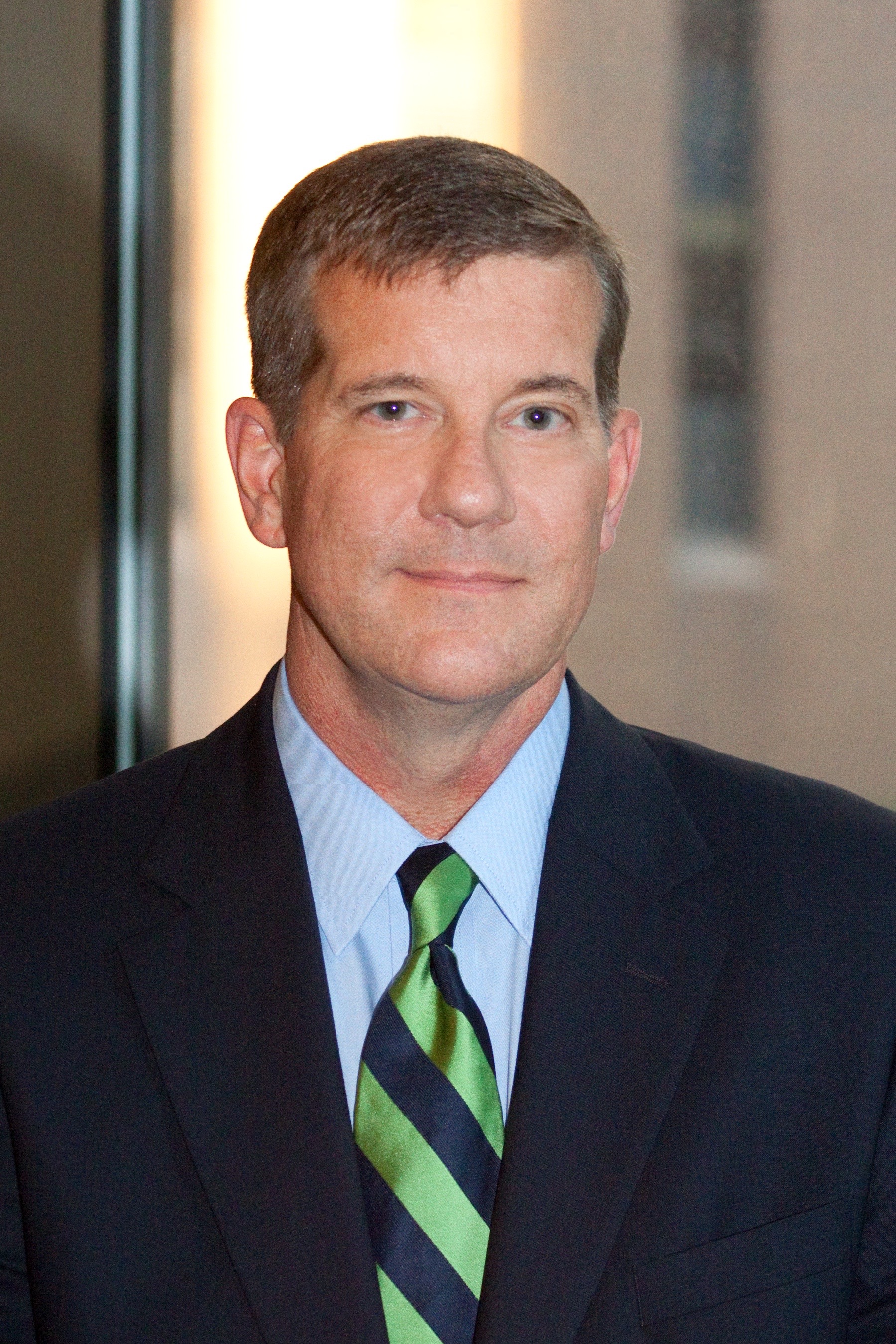
Maurice Wutscher Opens Austin Office, Adds Attorney Eric Rosenkoetter

ericrosenkoetter

Eric Rosenkoetter

National financial services law firm Maurice Wutscher LLP has opened its 11th office, hiring financial services attorney Eric Rosenkoetter to lead the firm’s Texas litigation matters in its new Austin office.

Rosenkoetter will practice in the firm’s Commercial Litigation, Consumer Credit Litigation and Regulatory Compliance groups, joining Maurice Wutscher’s skilled team of 25 attorneys focused on defense of the financial services industry in offices throughout the United States. In addition to Austin, Maurice Wutscher has offices in Chicago, Cincinnati, Flemington, Indianapolis, Miami, New York, Philadelphia, San Diego, San Francisco and Washington, DC.

Rosenkoetter has substantial experience as a litigation attorney and also brings a solid background as a compliance and transactional attorney for the financial services industry. In that role, he has provided strategic, business growth, legislative, compliance and regulatory advice to national corporations and trade associations. For example, he has drafted consumer contracts and disclosures designed to state-specific statutory requirements, and developed “Best Practices” guides and state-by-state compliance grids, for national financial services companies. He also conducted research and crafted a metrics report for a national trade association with analysis designed to counter the claims of advocacy groups.

Rosenkoetter’s experience also includes working for a national corporation as executive counsel, chief compliance and ethics officer, and director of legislative affairs, and as a federal lobbyist and director of government and public affairs for a national financial services trade association. In the government sector, he presided over approximately 6,000 state administrative hearings, served as a staff attorney for the Missouri Senate, and handled litigation in 33 counties as a regional managing attorney.

Rosenkoetter earned his Juris Doctor from Washington University School of Law, and his Bachelor of Business Administration from Southern Methodist University. He is admitted to practice law in Texas and Missouri.

Maurice Wutscher’s Austin office is located at 13785 Research Blvd., Suite 125, Austin, Texas 78750. Eric Rosenkoetter may be reached at (512) 672-7068 or via email at erosenkoetter@MauriceWutscher.com.

For more information, see mauricewutscher.com.

Maurice Wutscher Opens Austin Office, Adds Attorney Eric Rosenkoetter
http://www.insidearm.com/daily/collection-laws-regulations/collection-laws-and-regulations/maurice-wutscher-opens-austin-office-adds-attorney-eric-rosenkoetter/
http://www.insidearm.com/feed
insideARM


Accounts Receivable Management

Performant Financial Corporation Q2 Revenue Down 28%; Expects ED Announcement in September

Performant Financial Corporation (PFMT), one of the Department of Education’s Private Collection Agencies, yesterday announced financial results for its second quarter ended June 30, 2015. The company also hosted a conference call to discuss the results.

Second Quarter Financial Highlights

  • Total revenues of $41.3 million, compared to $57.4 million in the prior year period, down 28%
  • Adjusted EBITDA of $8.4 million, compared to $16.7 million in the prior year period
  • Adjusted net income of $2.3 million, or $0.05 per diluted share, compared to $7.2 million and $0.14 per diluted share, respectively, in the prior year period
  • Student lending revenue in Q2 was $31 million. Revenue attributed to the guaranty agencies was $20.5 million (vs. $20.5 million in Q2 of 2014) or roughly 48% of the total revenue for the company. Q2 revenue attributed to the ED contract was $10.5 million (vs. $14.6 million in Q2 of 2014) or roughly 25% of the total revenue for the company.
  • Student loan placement volumes during the quarter totaled $1.7 billion, which was down $200 million from the prior year. Note: Placement volumes were not broken down between guaranty agencies and ED.

The earnings report and press release provides the raw numbers.  The investor’s conference call provides additional color. As noted in our May 8, 2015 article on Q1 results, Performant’s earnings reports and investor’s conference call provides the ARM industry with a detailed view of the company’s experience with the Department of Education contract.

Highlights from the Conference Call

Lisa Im, Performant’s Chief Executive Officer offered the following:

1)      The company has not received a new placement from the Department of Education (ED) since the end of April, 2015. But, the last placement was larger than “normal.”

2)      ED conducts compliance audits on their vendors.  Comparative data provided by ED shows that, from a compliance perspective, the company was in the “best of 3 grouping.”

3)      The company has recently received a closing letter from the Consumer Financial Protection Bureau (CFPB) advising the company that they were closing their investigation of the company (an investigation that began with an April, 2013 Civil Investigative Demand (CID). The CFPB determined that no Enforcement Actions were necessary and the CID was closed.

4)      The company believes it likely that the ED RFP award will be announced by the end of September, 2015.

5)      The company feels strongly that “compliance” will be a significant factor in the ultimate ED vendor selection process and that the company is well positioned for contract selection from a compliance perspective.

6)      Once the ED contract selections are announced placements are likely to start more quickly than in the prior contract award as the company already has and maintains its Authorization to Operate (ATO) for the ED contract.

A replay of the conference call will be available through August 12, 2015, accessible by dialing 877-870-5176 (domestic), or 858-384-5517 (international). The passcode for the replay is 13614535. The replay of the conference call is also available on the Investor Relations section of the Company’s website at: investors.performantcorp.com

insideARM Perspective

Performant’s quarterly earnings report and conference call is always interesting to the ARM industry. As the only public company in the space, they provide the only “peak under the covers” to the business of collecting guaranteed student loans and the Department of Education.

Management’s insights into the ED RFP are particularly relevant as Performant is a long-time ED contractor and they provide the only public commentary on the status of the ED RFP. We have talked to other ED contractors over the past several weeks and are unable to obtain any public comment on the status of the RFP.  insideARM suspects that other agencies in the “hunt” for the ED contract would love to believe that Performant management is correct and the RFP decision will, in fact, be announced by the end of September.

Performant Financial Corporation Q2 Revenue Down 28%; Expects ED Announcement in September
http://www.insidearm.com/daily/debt-collection-news/debt-collection/performant-financial-corporation-q2-revenue-down-28-expects-ed-announcement-in-september/
http://www.insidearm.com/feed
insideARM

Accounts Receivable Management

Consumer Survey Underscores Issue of Mis-placed Regulatory Focus

Stephanie Eidelman

Stephanie Eidelman

The Consumer Federation of America and the North American Consumer Protection Investigators conduct an annual survey of state and local consumer agencies to ask about the top complaints they received in the previous year, the worst and fastest-growing complaints, new types of complaints, their biggest challenges and achievements, and their suggestions for new laws to better protect consumers. This year, 37 agencies in 21 states across America responded to the survey. This report, released on Wednesday, details the findings.

Some of the report highlights:

  • The 37 agencies in the survey received a total of 281,639 complaints last year. This does not reflect the much larger number of consumers who benefitted from enforcement actions that the agencies took or the public education they provided.
  • Based on figures provided by 35 agencies, the total amount they saved or recovered for consumers through complaint mediation, administrative procedures and enforcement actions exceeded $123 million.
  • The top three complaints continue to be auto-related problems, home improvement and construction, and credit and debt issues. Since these problems often result in significant impacts on consumers’ lives and involve some of the most egregious practices, consumers are more likely to make complaints about them than other issues.
  • The top fastest-growing complaint last year was identity theft. This is not surprising given the epidemic of data breaches around the country. Some agencies cited the use of consumers’ stolen personal information to impersonate them in order to claim their tax refunds as a particularly fast-growing and troublesome problem.
  • The top worst complaint last year was debt collection. These complaints included scammers posing as debt collectors attempting to extort money from consumers for phony debts as well as abusive practices to collect debts that consumers legitimately owed.
  • New complaints that agencies dealt with last year ranged from livestock thefts to phony offers to help students pay off or consolidate their loans. One new problem that several agencies mentioned was businesses that closed and reopened under the same names but with new owners refusing to honor agreements that consumers had made with the original owners.
  • While several agencies said that operating with budget cuts and limited resources was their biggest challenge in 2014, other challenges they faced included coping with retirements and other internal issues, dealing with disasters, keeping up with marketplace changes, improving systems and services, and effectively reaching constituents.
  • When asked what new laws are needed to better protect consumers, several agencies suggested that lawmakers should address “the sharing economy.” Consumer laws, which typically apply to business-to-consumer transactions, do not necessarily fit well with new forms of commerce such as when individuals provide services to other individuals through platforms such as Airbnb and Uber. Thus it may be unclear who is legally responsible if there are problems with these types of transactions.

The top five fastest-growing complaints in 2014:

  1. Identity theft
  2. Erroneous health care billing
  3. Home improvement
  4. IRS imposter scams
  5. Timeshare resales

Of course the top two have a significant effect on debt collection activities, as problems that originate at this level often get discovered during the collection process.

The report suggests that complaints about erroneous health care billing may be due in part to the failure of health care providers to submit information to consumers’ insurers in a proper and timely manner, which some agencies cited as a “new” complaint last year. Consumer confusion about what insurance will cover is probably another factor. A recent survey by Consumer Reports National Research found that nearly a third of privately insured Americans have been hit with medical bills that they thought their insurance would pay.

CFA defines an additional category, called “Worst Complaints,” as those survey respondents would categorize as worst based on the number of complaints about a particular topic or company, the dollar amount involved, the impact on vulnerable consumers, the outrageousness of the situation, or other factors.

The top five “worst complaints” for 2014:

  1. Debt collection
  2. Immigration service scams
  3. Do not call and robocall violations
  4. Door-to-door sales
  5. Used car sales

The survey asked respondents for their suggestions for new laws to better protect consumers. In addition to addressing the brand new world of “the sharing economy,” these were suggestions related to credit and debt were mentioned:

  • Require debt consolidation companies to be registered with the state and bonded, and to provide clear disclosures about what they do.
  • Require debt collectors and debt brokers to be registered.
  • Ban subprime auto loans with exorbitant interest rates.

The survey also asked about the biggest challenges agencies faced in the last year. Among others, several cited reaching vulnerable consumers with information about the constantly changing scams that target them; despite all of the community outreach that consumer agencies do, it is hard to ensure that people will recognize scams or will call for advice before they fall for them.

For instance, debt deceit/debt collection was among the worst complaints made to the District of Columbia Attorney General’s Office last year, and there was an increase in the number of complaints about fake debt collectors who make harassing phone calls or send threatening emails to scare consumers into sending money or providing their credit card or bank account information to satisfy a loan that doesn’t exist.

In some cases, they pretend to be from law enforcement agencies. One consumer received an email with what appeared to be an arrest warrant from the United States District Court and stating “In the Matter of Arrest for NON-PAID LOAN AND CHEQUE FRAUD.”

The CFA notes that courts do not send warrants by email, and the word “cheque” is another red flag of fraud; that is how “check” is spelled in Canada, where many scammers that target U.S consumers are located.

The CFA offers this advice to consumers

If someone calls about a debt that you don’t think is yours, it could be a mistake, a sign that you’re the victim of identity theft, or a fraudster trying to steal your money. Don’t send any payment or provide any financial or other personal information. Tell the person to send you the information in writing. Be very suspicious of unexpected emails about debts. If they have attachments, don’t open them, as they could contain malware – a program that would allow scammers to get into your computer. Look online for contact information for whoever the email appears to be from and check directly with them.

Additionally, it is a violation of the Fair Debt Collection Practices Act when company representatives misrepresent to consumers that they are from a law firm or law enforcement agency, threaten consumers with arrest or imprisonment, call them before 8 a.m. or after 9 p.m., contact their employers and divulge details of the debts to third parties, and collect amounts that exceeded what consumers owed under the original agreements creating the debts. Under federal law, you have the right to tell debt collectors not to contact you again. It’s illegal for them to call with annoying frequency or at certain hours, falsely say they’re going to take legal action, use obscene language, threaten bodily harm, or reveal information about your debt to someone else. You may also have rights under state law; check with your state or local consumer protection agency.

insideARM Perspective

The advice described above that the CFA offers to consumers is good. It is also representative of the problems I have seen for years in my analysis of complaints to the Federal Trade Commission (FTC), and then to the Consumer Financial Protection Bureau (CFPB). The biggest problem I see is that the majority of egregious complaints about debt collection are really about scammers; they are not about debt collectors. Do legitimate companies make mistakes? Yes. However the categories of those mistakes tend to be the more technical violations, not the terrible “dig up your mother” stories. The worst stories with the most harm are about companies that don’t properly identify themselves or are difficult to find.

When you look at complaint data related to scams vs. complaints related to legitimate firms, it looks different. Data about scams is really sparse. Maybe there is a phone number (if you call it, it’s likely been disconnected, or answered by an individual in a very unprofessional manner), there is almost never an address. There is rarely a company name — and if there is, it’s not a name of an actual, legitimate company. Complaints about legitimate companies have all of this information. Because they are legitimate. And while they sometimes mess up – and may deserve to be called out for it – they act in fundamentally legitimate ways. Which is why, generally, the complaints are resolvable.

Here is the best evidence:

Before the CFPB started collecting complaints, the FTC was the primary collector (no pun intended) of complaints at the federal level. In 2011-2012 the rate of reported complaints was approximately 50,000 per quarter. These were completely un-vetted for validity, duplication, or existence of an actual company.

The CFPB began collecting complaints in 2013, and handles them in a different way; they confirm the identity of the “complainee,” and the complaint does not appear in their numbers (or online reporting) if the company cannot be identified. For the 2nd quarter of 2015, the CFPB recorded approximately 7,300 debt collection complaints – less than 15% of the volume reported by the FTC. And of course, you recognize the company names because they are legitimate companies. I’m sure that the “most complaints” are not indeed against Enhanced Recovery Company, Encore Capital Group, or Portfolio Recovery Associates… they are against “companies” nobody has ever heard of and can’t locate.

Local and federal authorities rightfully spend a lot of their enforcement efforts on finding and shutting down scammers. They should consider carefully the many laws/rules in development that will make it so much harder for legitimate companies to operate, while scammers, by definition, will not follow the rules no matter what they are.

I wrote more about this a few weeks ago, when the CFPB published its first monthly report about complaints, and highlighted debt collection.

Consumer Survey Underscores Issue of Mis-placed Regulatory Focus
http://www.insidearm.com/opinion/cfa-annual-survey-underscores-issue-of-mis-placed-regulatory-focus/
http://www.insidearm.com/feed
insideARM

Accounts Receivable Management

Executive Change: PRA Group Names Chief Information Security Officer

NORFOLK, Va. — PRA Group (Nasdaq: PRAA), a global leader in acquiring non-performing loans, today announced that Devon Arendosh has been named chief information security officer.

Devon Arendosh

Devon Arendosh

Arendosh has more than 30 years of experience in information technology, with the past 10 years specifically focused on information security. She joins PRA from Markel Corporation where she served as director of IT security. She previously held roles with Allianz Global Assistance including global director of IT security and compliance, director of IT security and compliance, director of enterprise architecture, director of data and system services, and data services manager.

She earned a Bachelor of Science degree in information systems from Virginia Commonwealth University and a Master of Business Administration degree from Averett University. Her professional certifications include Certified Information Systems Security Professional (CISSP), Certified Information Security Manager (CISM), Certified in Risk and Information Systems Control (CRISC) and COBIT 5.

About PRA Group

As a global leader in acquiring non-performing loans, PRA Group returns capital to global banks and other creditors to help expand financial services for consumers in North America and Europe. PRA Group companies collaborate with customers to help them resolve their debt and provide a broad range of additional revenue and recovery services to business and government clients.

PRA has been recognized as one of Fortune’s 100 Fastest-Growing Companies for the past three years and one of Forbes’ Best Small Companies in America for eight consecutive years since 2007. For more information, please visit www.pragroup.com.

Media Contact:
Nancy Porter
Vice President, Corporate Communications
(757) 431-7950

Executive Change: PRA Group Names Chief Information Security Officer
http://www.insidearm.com/daily/collections-jobs-news/executive-change-pra-group-names-chief-information-security-officer/
http://www.insidearm.com/feed
insideARM

Accounts Receivable Management

New Whitepaper Examines Mobile Strategies in a Post-FCC/TCPA World

DialConnection, a leading provider of contact center software solutions and services for the collections, financial services, government, healthcare, investment banking, telemarketing and utilities industries, has a new whitepaper available for free download: “Mobile Strategies: Staying Productive While Staying Compliant.”

The whitepaper, developed with DialConnection’s expertise and their incredibly popular webinar, Mobile Strategies in the Ever-Changing Age of Compliance, Presented by DialConnection (playback link), looks at four specific best-practice strategies for mobile numbers.

from the whitepaper:

SunriseTime of day for outbound attempts – Simply identifying cellular numbers isn’t enough, however. Cell phones travel with the consumer. We see many organizations that have developed address and area code mismatch processes that identify exceptions to exclude from campaigns to manage risk. Some organizations choose to only dial cellular numbers between 8am PST and 9PM EST to ensure that all U.S. time zones are open. You should be analyzing mobile RPC rates by hour to determine what is appropriate for your organization.


Mobile Strategies: Staying Productive While Staying Compliant [download whitepaper here]

Mobile Strategies in the Ever-Changing Age of Compliance, Presented by DialConnection [watch playback here]

New Whitepaper Examines Mobile Strategies in a Post-FCC/TCPA World
http://www.insidearm.com/daily/collection-laws-regulations/new-whitepaper-examines-mobile-strategies-in-a-post-fcctcpa-world/
http://www.insidearm.com/feed
insideARM

Accounts Receivable Management

Mobile Strategies: Staying Productive While Staying Compliant

2015-07-DialConnection-Mobile-Strategies-WP-Cover-downloadable-templateRecent legislative rulings on the TCPA have highlighted the industry’s need for mobile strategies that assure compliance. Agencies who feel that contacting consumers via their mobile phones is now a closed door might be leaving money on the table, and not serving their clients to the best of their ability, while agencies ignoring strategy entirely – especially in light of the new ruling – are putting their reputation and livelihood at risk.

This whitepaper, developed by DialConnection and a companion to their webinar, Mobile Strategies in the Ever-Changing Age of Compliance, Presented by DialConnection (playback link), looks at four best-practice strategies for mobile numbers:

  1. Line-Type Identification
  2. Time-of-Day for Outbound Attempts
  3. Attempt Counters to Wireless Numbers
  4. Identifying Wrong Parties

Download the full guide from DialConnection today.

Mobile Strategies: Staying Productive While Staying Compliant
http://www.insidearm.com/freemiums/mobile-strategies-staying-productive-while-staying-compliant/
http://www.insidearm.com/feed
insideARM

Accounts Receivable Management

Lawmakers Suddenly Asking The Same TCPA Questions As Debt Collectors

Stephanie Eidelman

Stephanie Eidelman

According to a report on The Hill website, House members from both parties were concerned after suddenly realizing that the new Federal Communications Commission (FCC) TCPA ruling clarifying auto-dialer restrictions related to mobile numbers would hamper their own efforts to reach constituents.

In a twist of irony that would not be lost on those in the debt collection industry, Rep. Ben Ray Lujan (D-N.M.) noted that autodialed calls are sometimes the only method available, since online sign-up sheets or emails do not work for those who don’t have an Internet connection at home. “If the rule requires them to opt into this program, how would we reach out to 700,000-800,000 constituents for them to opt-in?”

Another Democrat, Rep. Anna Eshoo (D-CA) evidently noted that the 1991 law might be in need of updating if it is not flexible enough to keep up with changing technology.

This raises many interesting questions. To articulate a few:

  • Do lawmakers have the technology and processes required to manage this data?
  • Who will fund the expense of frequent scrubbing of lists against cell phone data?
  • Is it more important for consumers to receive information about a town hall with their local representative than, say, to be contacted about options to restructure their student loans before they rack up insurmountable interest and fees?

Perhaps those who have filed suit against the FCC now have some unexpected allies.

Lawmakers Suddenly Asking The Same TCPA Questions As Debt Collectors
http://www.insidearm.com/opinion/lawmakers-suddenly-asking-the-same-tcpa-questions-as-debt-collectors/
http://www.insidearm.com/feed
insideARM

Accounts Receivable Management

Stellar Recovery Announces Cutting-Edge Risk Management And Compliance Model

John G. Schanck, Chairman of Stellar Recovery, Inc. is pleased to announce the development and implementation of a cutting-edge risk management and compliance model, new to the industry. Stellar Recovery has contracted with a Florida law firm, the Assurance Law Group, which will be dedicated exclusively to serving the legal needs of Stellar Recovery, Inc. Together, Stellar Recovery and Assurance conducted an exhaustive analysis of historical risk trends, emerging legislative and regulatory environments, industry litigation challenges, and, more importantly, Stellar Recovery’s clients’ concerns and service expectations in the Accounts Receivable and Debt arena. The result is a relationship designed from the ground up to manage risk specific to Stellar Recovery, and with Assurance in fluid interaction with Stellar Recovery Operations.

Recognizing that highly regulated industries are frequently the target of opportunistic litigation, Stellar Recovery adopts a proactive rather than reactive strategic risk model. This business model combines the advantages of in-house legal services with those of the traditional outside law firm relationship. It is a risk management and legal model proven successful in multiple other industries for over 20 years, now modified to meet Stellar Recovery’s needs.

In addition to Assurance defending Stellar Recovery in all matters of litigation, every Stellar Recovery client will know that Stellar Recovery, through its relationship with Assurance, is and will remain at the forefront of regulatory compliance.  Every risk exposure will be steadily analyzed and loss matrixes created to identify favorable procedural changes to better serve all client levels. The strategic reduction of risk-related expenses will benefit not only Stellar Recovery, but will also comfort all Stellar Recovery clients with the knowledge that accounts placed with Stellar Recovery will be managed with heightened emphasis on insulating the client from legal risk.

“Our relationship with Assurance means Stellar Recovery will lead the industry in responding to the organized attacks on our industry. We will not accept unwarranted claims as simply an unavoidable cost of doing business. The accounts of our clients will be efficiently and effectively processed, with legal oversight at all levels, thereby reducing losses and increasing forecasting and profitability for Stellar Recovery, and client alike,” said Garrett Schanck, CEO of Stellar Recovery, Inc. “In addition, Assurance will provide a full range of traditional legal services, and interactive participation with our management teams on a daily basis, in areas such as human resources, employment law, insurance packaging, regulatory and licensing compliance, and commercial litigation.”

The attorneys of Assurance Law Group bring to bear a combined 55 years of experience encompassing all areas of Stellar Recovery risk, and its principal is experienced in the development and management of risk capture models. The relationship between Stellar Recovery and Assurance formally begins August 1, 2015.

Stellar Recovery, Inc. Corporate Headquarters is located in Jacksonville, Florida, with a satellite office in Kalispell, Montana.  Please visit our website at www.stellarrecoveryinc.com.

Stellar Recovery Announces Cutting-Edge Risk Management And Compliance Model
http://www.insidearm.com/daily/debt-collection-news/accounts-receivables-management/stellar-recovery-announces-cutting-edge-risk-management-and-compliance-model/
http://www.insidearm.com/feed
insideARM

Accounts Receivable Management

TSW Global Solutions Opens New Call Center Facility

YUMA, AZ – TSW Global Solutions announces the opening of its new Call Center facility in Ortigas Center, Philippines, with 200 call center seats.

TSW Global Solutions is a growing contact center company in the Philippines, striving to develop long standing associations with clients based on transparency, trust and high quality work.

Chief Operating Officer Tom Williams expressed his excitement over this new facility, “Now, as we have more seats and a facility set up to International Standard, TSW can definitely accommodate more clients.”

Services we provide:
Collections
Warm Transfer Calls
Inbound Services
Outbound Services
Telemarketing
Lead Generation
Business to Business Sales
Appointment Settings
Surveys

Williams sees the new release by the Federal Communications Commission (FCC) of the long-awaited TCPA Ruling, especially related to automated or robocalls and texts, as an opportunity to offer Collection and Transfer Call Services using a True Manual Calling.

TSW GLOBAL SOLUTIONS®

US HEADQUARTERS
3360 S 15th Avenue
Yuma, AZ 85365

PHILIPPINE CONTACT CENTER
36th Floor One San Miguel Building
#1 San Miguel Avenue Corner Shaw Blvd.
Ortigas Center, Pasig City Philippines
Email: info@tswglobalsolutions.com

TSW Global Solutions Opens New Call Center Facility
http://www.insidearm.com/daily/collections-jobs-news/accounts-receivable-jobs/tsw-global-solutions-opens-new-call-center-facility/
http://www.insidearm.com/feed
insideARM

Accounts Receivable Management

Another Reason For Collectors To Be Cautious When Calling Consumer Cell Phones

John Rossman

John Rossman

A majority of younger consumers today have no landline and rely solely upon a cell phone for communicating with others.  While the legal difficulties arising under the Telephone Consumer Protection Act for contacting a consumer on a cell phone are well-documented, a more nuanced issue took center stage recently.

On July 22, 2015, the CFPB issued a Consent Order assessing a total of $18.5 million against Discover Bank and other companies alleging that they – among other things – contacted consumers on their cell phones before 8 a.m. or after 9 p.m. in the time zone of residence of the consumer.  Read the full text of the consent order here

With legislation during the past decade allowing consumers to retain a cell phone number — even when changing carriers or plans — many consumers retain the same cell phone number (including area code) for years while sometimes moving to other parts of the country in different time zones.  This is especially true for college students who may travel across the country for school.

The Discover Consent Order Places the Burden on the Collector

In the Discover Consent Order, the CFPB alleged the following:

Prior to February 2013, Respondent initiated over 150,000 collection calls to the cellular phone numbers of student-loan borrowers before 8 a.m. or after 9 p.m. in the time zone of the consumer’s address.

For borrowers whose cell phone number area code corresponded with a time zone different from the time zone of the customer’s mailing address, Respondent’s collection calls frequently occurred before 7 a.m. and after 10 p.m. in the time zone of the consumer’s address.

Many of these consumers may have received multiple collection calls at these inconvenient times. Over 1,000 consumers received dozens of calls at inconvenient hours.

Further, in the Consent Order, the CFPB prohibited the following:

Placing any calls to consumers before 8 a.m. or after 9 p.m. as determined by the time zone of the consumer’s known address and the time zone of the consumer’s phone number, unless the consumer has expressly authorized Respondent to make calls within those time frames. To the extent Respondent has multiple addresses or phone numbers for the consumer, Respondent must ensure that any calls made to the consumer fall within the 8 a.m. to 9 p.m. window in each location in which the consumer might reside based on the address and phone information known to Respondent . . .(emphasis added).

How Can we Know the Time Zone where the Consumer Resides?

The Discover Consent Order will require changes in the scrubs that creditors and debt collectors perform to determine the place of residence of the consumer.  Certainly if there is information in the business records of the financial institution that the consumer stated his or her place of residence – or what times are inconvenient for a call – this could be compelling, but it is possible that none of these records accurately reflect the actual place of residence of the consumer. 

This order may require comparing the area code of the number called with the zip code of the consumer.  If there is a discrepancy among the phone number(s) and address(es) for the consumer in the records of the financial institution, the safest approach may be to ensure that calls are made at times that would be after 8 a.m. and before 9 p.m. in ALL TIME ZONES in which the records indicate the consumer may reasonably reside (provided that such times are not known to otherwise be inconvenient for the consumer). 

Given the data that must be weighed by a creditor or debt collector in determining where a consumer resides – the area code of the number called, the zip code of the residence of record, any statements by the consumer about his or her place of residence – it is certain that the Discover Consent Order will be the start of yet another flood of consumer lawsuits against the collection industry regarding the calling of consumer cell phones.


This article is provided only as a general discussion of legal principles and ideas. Every situation is unique and must be reviewed by a licensed attorney to determine the appropriate application of the law to any particular fact scenario. If you have a legal question, consult with an attorney. The reader of this publication will not rely upon anything herein as legal advice and will not substitute anything contained herein for obtaining legal advice from an attorney. No attorney-client relationship is formed by the publication or reading of this document. Moss & Barnett, A Professional Association, assumes no liability for typographical or other errors contained herein or for changes in the law affecting anything discussed herein.

Another Reason For Collectors To Be Cautious When Calling Consumer Cell Phones
http://www.insidearm.com/daily/collection-laws-regulations/collection-laws-and-regulations/another-reason-for-collectors-to-be-cautious-when-calling-consumer-cell-phones/
http://www.insidearm.com/feed
insideARM

Accounts Receivable Management