
Navient May Be CFPB’s Next Target For Legal Action

Navient Solutions, Inc. may be in legal trouble again. Late last week, the CFPB’s Office of Enforcement sent loan processing giant Navient a NORA (Notice and Opportunity to Respond and Advise) letter informing the company that it may recommend that the agency pursue legal action. The CFBP warned Navient that it may seek restitution, civil monetary penalties and corrective action against it.

The letter follows from an ongoing CFPB investigation into Navient’s disclosures, assessment of late fees and “other matters,” according to a Securities and Exchange Commission filing submitted earlier this week by Navient.

The CFPB’s NORA process is a procedural step and not a sure sign the agency will pursue legal action. Through the process, Navient will have the opportunity to explain to the agency why it thinks the agency should not pursue that action.

According to the SEC filing, Navient plans to participate in the NORA process and defend its actions. “NSI [Navient] continues to believe that its acts and practices relating to student loans are lawful and meet industry standards and, where applicable, the statutory or contractual requirements of NSI’s other regulators,” the company states. “As such, NSI intends to make a NORA submission to the CFPB.”

This is not the first time in recent memory that Navient has attracted negative attention from regulators. Last year the company ran afoul of the Federal Deposit Insurance Corp. (FDIC). The regulator accused the servicer of misleading consumers and maximizing late fees. The company agreed to pay nearly $37M in fines and announced it would chip in $42 million to affected borrowers in May of 2014.

The Department of Justice also recently investigated the company for the way it handled the student loans of active-duty soldiers.

The company broke away from Sallie Mae in 2014 and is now the largest servicer of student loans in the US.

“We’re dedicated to assisting our customers and helping them succeed, and continue to make enhancements to support our customers’ ongoing success,” notes Navient in its official statement. “We believe our practices meet or exceed standards and, where applicable, the statutory or contractual requirements of other regulators. Because of our data-driven outreach programs and one-on-one assistance our people provide to our 12 million student loan customers, loans serviced by Navient have higher income-driven repayment enrollment rates leading to a 40-percent lower default rate than the national average.”

insideARM Perspective

While this is not directly a debt collection story, the announcement is interesting as it is yet another example that the CFPB has been making the rounds within high profile firms in and around the ARM industry.

The CFPB recently told Department of ED contractor Performant Corp it would be closing it’s nearly two year investigation of the firm. No enforcement actions were necessary in that case.

Encore Capital Group (ECPG) announced earlier this month that it is in discussions with CFPB staff regarding practices and controls relating to their engagement with consumers that could result in a negotiated settlement or litigation.

PRA Group (PRAA) also mentioned as part of its Q2 earnings conference call that it has been engaged in ongoing discussions with the CFPB regarding debt collection practices and hopes to “narrow our differences and bring the matter to a conclusion.”

Navient May Be CFPB’s Next Target For Legal Action
http://www.insidearm.com/cfpb/navient-may-be-cfpbs-next-target-for-legal-action/
http://www.insidearm.com/feed
insideARM
Accounts Receivable Management

Ontario Systems Adds Sessions Firm Partners to Roster of PowerUp 2015 Presenters

MUNCIE, Ind. – Ontario Systems, a leading accounts receivable technology and services provider, announced it has added Sessions Firm partners David Israel and Michael Del Valle to the company’s roster of presenters at its annual customer and collection education conference, PowerUp 2015. Sessions, Fishman, Nathan & Israel, LLC, is the nation’s leading consumer protection defense firm, with nearly 50 attorneys practicing in 10 states.

Israel and Del Valle will discuss Consumer Financial Protection Bureau (CFPB) examination preparation, proceedings and aftermath with PowerUp attendees, including:

  • Examination timing, duration and costs
  • Pros and cons of using retained counsel
  • Simultaneous on-site visits by state and CFPB authorities
  • Confidentiality issues
  • Leading CFPB hot spots and compliance favorites
  • Staff and collector preparation
  • Documentation requirements
  • Post-examination activities and follow-up
  • Understanding CFPB ratings

“This year’s roster of presenters at PowerUp 2015 is already made up of the collection industry’s heaviest hitters,” says Rozanne Andersen, Chief Compliance Officer at Ontario Systems. “David and Michael only add to that cadre, representing the top attorneys in the world of consumer protection defense litigation and CFPB examination consulting. I’m confident their discussion of the CFPB’s examination process will be an eye opener for all, and one of the conference’s premiere presentations.”

More details and registration information about PowerUp 2015 are available at powerup.ontariosystems.com. The conference runs October 7-9 at the Indianapolis Marriott Downtown.

About Ontario Systems

Ontario Systems, LLC is a leading provider of accounts receivable and strategic receivables management solutions for the collection and healthcare industries. Offering a full portfolio of software, services and business process expertise, Ontario Systems customers include nine of the 10 largest collection agencies and three of the top six best health systems in the U.S., with 55,000 representatives in more than 500 locations.

To learn more about how Ontario Systems can help power up your receivables, visit OntarioSystems.com or email info@ontariosystems.com.

Ontario Systems Adds Sessions Firm Partners to Roster of PowerUp 2015 Presenters
http://www.insidearm.com/daily/collection-laws-regulations/collection-laws-and-regulations/ontario-systems-adds-sessions-firm-partners-to-roster-of-powerup-2015-presenters/
http://www.insidearm.com/feed
insideARM
Accounts Receivable Management

ConServe Sponsors ADA Step Out: Walk to Stop Diabetes

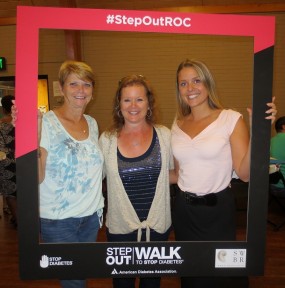
Rochester, N.Y. – Continental Service Group, Inc., d.b.a. ConServe, is proud to announce its support and involvement in the American Diabetes Association’s 2015 Step Out: Walk to Stop Diabetes campaign. Symbolizing ConServe’s commitment to its corporate mission of improving the human condition, the Rochester, N.Y-based organization has pledged to be an Exclusive Route Sponsor in order to help the ADA expand its outreach and impact.

2015 ADA sponsor - Step Out Walk

George Huyler, VP of Human Resources for ConServe, states that “ConServe is proud to partner with the American Diabetes Association as they serve and empower the community with a variety of educational programs, workshops and awareness campaigns for people living with the challenges of diabetes, as well as their friends and families.” He adds “ConServe employees commit every day to doing the right thing, at the right time, the right way. Helping to eliminate one of the leading causes of death in our society while promoting and inspiring a healthier lifestyle are noble efforts of which ConServe employees are especially proud.”

“In honor of the 29 million Americans diagnosed with diabetes and hundreds of local families that the American Diabetes Association helps, we are so excited to have ConServe support Step Out: Walk to Stop Diabetes as an Exclusive Route Sponsor said Nicole St. James, Manager of the America Diabetes Association’s Fundraising & Special Events. She continues “Thank you, from the 225 children who attended our signature camp, Camp Aspire, this summer. ConServe’s support will send more children with Type 1 diabetes to camp next summer. On October 17th, we will walk together to stop diabetes, one step at a time.”

About ConServe

ConServe has been ranked consistently as a top-performing agency by the federal government and the U.S. Department of Education. Representing less than 1% of collection agencies nationwide, ConServe has achieved the ACA International Professional Practices Management System (PPMS) certification, representing the collection industry’s standard for quality management, and has completed the SSAE 16 Type II Engagement. Nationally accredited by the Better Business Bureau (BBB) with an A+ rating, ConServe is a recipient of the Rochester Business Ethics Award, has repeatedly appeared on Inc. Magazine’s Inc. 5000 list of fastest-growing companies and has been named a Rochester Top 100 company 12 times in the last 13 years. ConServe has been voted a Best Place to Work in Collections (for the last three consecutive years) and was recognized in 2015 as the #1 Top Workplace in Rochester, N.Y. Training magazine named ConServe on its Top 125 list of organizations with the most successful learning and development programs in the world and the Greater Rochester Quality Council has presented ConServe with both the Customer Excellence and Operations Excellence Awards.

Visit ConServe online at www.conserve-arm.com

About the ADA

The mission of the American Diabetes Association is to prevent and cure diabetes and to improve the lives of all people affected by diabetes. The moving force behind the work of the Association is a network of more than one million volunteers, a membership of more than 441,000 people with diabetes, their families and caregivers, a professional society of nearly 16,500 health care professionals, as well as more than 800 staff members.

Visit the American Diabetes Association online at: www.diabetes.org

ConServe Sponsors ADA Step Out: Walk to Stop Diabetes
http://www.insidearm.com/doing-it-right/conserve-sponsors-ada-step-out-walk-to-stop-diabetes/
http://www.insidearm.com/feed
insideARM

Accounts Receivable Management

FDCPA Lawsuits Up Sharply YTD in 2015 vs. 2014

According to a monthly report by Webrecon, FDCPA litigation is up 17.5% YTD over the same period in 2014, with 6,888 cases filed through the end of July compared to 5,862 for the same period last year. FCRA cases also increased YTD compared with last year, by 26.8%. TCPA are still down for the YTD comparison, by 1.4%.

Source: Webrecon

FDCPA Lawsuits Up Sharply YTD in 2015 vs. 2014
http://www.insidearm.com/daily/debt-collection-news/debt-collection/fdcpa-lawsuits-up-sharply-ytd-in-2015-vs-2014/
http://www.insidearm.com/feed
insideARM

Accounts Receivable Management

Massachussetts Division of Banks Issues Results of Regulatory Review

This update was provided to us by Cornerstone Support.

On August 11, 2015 the Commonwealth of Massachussetts Division of Banks released this memo:

To the Chief Executive Officer Addressed:

RE: The Division of Banks Issues its Fourth Round of Results from its Regulatory Review Initiative

One of the key objectives for the Division of Banks is to complete a comprehensive review of all Regulatory Bulletins and regulations to determine opportunities to reduce unnecessary regulatory burden by streamlining, updating, or repealing requirements wherever possible. This initiative is a component of the Division’s strategic planning process. The Division believes it is helpful to issue periodic updates of the changes being made to date. Below are brief descriptions of such changes made in this fourth round of the review.

BANKS, CREDIT UNIONS, AND LICENSEES – GENERAL

1.1-101 Examination Policy

This Bulletin is revised to reflect updates to the Division’s examination policies and is significantly streamlined for clarity. The procedural aspects of the previous version are eliminated in order to focus this bulletin on the agency’s examination policies. It is also updated to include CRA for mortgage lender examinations. In addition, sections relative to the confidentiality of examination reports and related materials as well as the examination appeal process are moved to separate bulletins.

1.1-105 Confidentiality of Reports of Examination and Related Materials

The information in this Bulletin was formerly contained in Regulatory Bulletin 1.1-101 Examination Policies and Procedures, dated March 27, 1988, and updated as described above. With the significant streamlining and updating of that Bulletin, the sections relative to confidentiality are moved to this new bulletin. At the same time, the language has been updated where necessary.

LICENSEES ONLY

5.1-101 Enforcement Policy for Unlicensed Entities

This Bulletin sets forth the Division’s enforcement policies relative to unlicensed business activity. Licensing standards are intended to ensure that individuals and businesses operate honestly, fairly, soundly, and in the public interest. This Bulletin outlines measures the Division July 31, 2015 Page 2 may take against persons or entities engaging in unlicensed activity including: cease directives, monetary penalties, referrals to other regulatory authorities, and consumer alerts.

5.1-102 Experience Requirements for Mortgage Lender and Mortgage Broker Licensing; and Education Requirements for Mortgage Loan Originator Licensing

This Bulletin updates and formalizes experience and pre-licensing education requirements. In order to become licensed as a mortgage broker or branch manager, individuals must provide evidence of three years of full-time experience, or the equivalent in part-time experience, working for a licensed mortgage broker, mortgage lender, or financial institution exempt from licensing under G.L. c. 255E. If you seek to be licensed as a mortgage lender, the experience requirement increases to 5 years of full time, or the equivalent in part time experience. The Bulletin also sets forth pre-licensing education as well as continuing education requirements.

BANKS ONLY – RISK MANAGEMENT

3.2-101 Reserve Requirements for State-Chartered Stock Banks

This Bulletin is repealed in its entirety as the result of the passage of Chapter 482 of the Acts of 2014, An Act Modernizing the Banking Laws and Enhancing the Competitiveness of StateChartered Banks. Massachusetts state-chartered banks are now required to be at least adequately capitalized under applicable federal rules.

3.2-102 Audit Policy Requirements for Banks

This Bulletin is repealed in its entirety as the requirements are provided for in generally accepted auditing standards and FDIC guidance.

The changes reflected above are effective immediately and can be accessed from the Division’s website at http://www.mass.gov/dob, then click on “Financial Industry Legal Resources,” then click on “Regulatory Bulletins.” The Division will send additional updates as we make further progress on this streamlining initiative. We hope that you find this information beneficial.

Should you have any questions relative to this initiative, please contact Senior Deputy Commissioner Paul Gibson at (617) 956- 1536 or paul.gibson@state.ma.us.

Massachussetts Division of Banks Issues Results of Regulatory Review
http://www.insidearm.com/daily/debt-collection-news/mortgage-collections/massachussetts-division-of-banks-issues-results-of-regulatory-review/
http://www.insidearm.com/feed
insideARM

Accounts Receivable Management

Dept. of Education PCA Program Still a Driver of Small Business Growth

The U.S. Department of Education (ED) Private Collection Agency (PCA) program remains an opportunity for small businesses despite recent wrangling over five contractor suspensions in March and a bid process for large (“unrestricted”) contractors still incomplete after two years.

The U.S. Small Business Administration (SBA) reported in a 2014 publication that more than 99% of the 28.2 million businesses in the United States are small, like most in the ARM industry. Opportunities for small firms include working as a direct contractor, like the ones awarded last September, or as a subcontractor to those or five other unrestricted contractors still working on “award term extension” contacts, which have a two-year term that started in April.

Obama Forms Small Business Task Force as the PCA Program Grows

The government-wide goal for small business utilization is 23%. The Obama administration issued a Presidential memorandum in 2010, calling for changes that appear to have helped ED’s small business utilization numbers since then. Since passage of Health Care and Education Reconciliation Act of 2010, which made most Federal student loans originated after then direct loans, the PCA program has grown, as more loans have gone into the program faster, making PCA expenditures a sizeable part of ED’s spending. In 2012, ED received a “C” grade in an annual scorecard published by the SBA.  In the last two years, however, ED received an “A” rating, coinciding with the overall growth of the program, the inclusion of subcontracting in performance rankings, and the growth of those subcontracts.

Small Writing on the Wall

ED’s more recent focus on small business utilization was predictable. Goals have gone up over the last two years, with ED’s prime and subcontracting goals now at 20% and 33%, respectively. ED even indicated in its procurements that it intended to “increase its small business participation under the Default Collection Services’ contracts.”  The eleven restricted awards more than doubled the prior field of five. Requirements for these to subcontract to other small firms is new also.

Large bidders in January were asked to commit to transferring a percentage of work to small businesses for the life of new task orders.  The evaluation criteria valued this as one of only three factors against which ED would base awards. Don Taylor, President of Automated Collection Services, Inc., a large business in Nashville and a bidder, stated, “We’ve noticed that ED appears to be even more committed to including small businesses than ever before.  We applaud the department and fully endorse participation of small businesses as contractors or subcontractors in the program.”

What is a Small Business?

As the winds shift toward small businesses, not all of them are created equal, and a firm’s annual revenue is just the beginning.  Among other factors, a small business may not be affiliated with any large businesses to maintain that status. Businesses that purport to be small, which are not, can be challenged on their size.  The SBA regularly determines businesses to be other than small if, for example, they share common management with a large business, if they were formed recently by current or former owners, officers, family members, or key employees of a large business, or if they have a large business as a client exceeding 70% of revenue.  SBA recognizes many other forms of affiliation.

Subcontracting Opportunities for Small Businesses

Small business contracts awarded last year could last 12 years.  But small businesses can do business with small PCAs, particularly those owned by women, disadvantaged individuals, disabled veterans, or those operating in a Federal HUBZone. “We have had the opportunity to complete an RFI so far, but have not yet found a partner,” said Asuncion “Mike” Munoz, President of Revenue Collection Bureau in Philadelphia, a Federal HUBZone-certified small business. “We are looking forward to competing for more opportunities.”

The five remaining large PCAs can also hire subcontractors. Some may not wait until new contracts are awarded.  Keith Baker, a service-disabled veteran owner of Lien Enforcement, was asked about Federal mandates for PCAs to subcontract to such firms and said, “I think it’s great.  For me in particular, it feels good to know that our government has taken these steps to ensure disabled veteran owned businesses are included, considering the sacrifices those veterans have made while defending our country.”

More PCA Compliance Woes

ED’s suspension of five PCAs this past March may foretell a new era of scrutiny for PCAs, one in which an error rate higher than zero for perceived compliance violations can result in suspension.  PCAs also have a laundry list of things they must do in order to comply with their subcontracting plans to avoid breaching the contract or putting future contract awards at risk. PCAs must advertise subcontracting opportunities, for example, keep records of their outreach, and attend trade fairs offered by business development organizations offering sources for subcontractors, among a myriad of other things.

“We’re seeing more of a focus in these areas among our clients, both prime and sub,” said Leah Wilson Conger of Fed Cetera, a business development association that markets small firms to PCAs, consults with PCAs on subcontracting compliance topics, and holds periodic trade fairs to help small businesses get work in the space. “The most proactive PCAs are already contacting us to take a look at our members, and are doing what needs to be done to remain compliant in these areas.”

Whatever the PCA program is, it remains a massive employment source for thousands of American workers, many of whom have student loan repayment obligations to honor.  With 48.5% of all private sector jobs held by people working for small businesses, it’s a good bet ED’s continuing need for PCAs and strategy to foster small business utilization will continue unabated in the coming years.  Like other aspects of the program, it’s an opportunity with both risk and potential rewards for the many small businesses operating every day in the ARM industry. 

Dept. of Education PCA Program Still a Driver of Small Business Growth
http://www.insidearm.com/daily/debt-collection-news/debt-collection/dept-of-education-pca-program-still-a-driver-of-small-business-growth/
http://www.insidearm.com/feed
insideARM

Accounts Receivable Management

Executive Change: IC System Welcomes Vice President of Healthcare Services

St. Paul, MN – IC System is pleased to announce the addition of Shawn Yates to the IC System executive team. IC System is an industry leader in providing effective and compliant accounts receivable services to the healthcare industry. In his new role as Vice President of Healthcare Services, Shawn will build on this tradition by expanding IC System’s healthcare service offerings.

Shawn Yates

Shawn Yates

Shawn has spent his 18 year career helping health care providers and revenue cycle organizations improve their self-pay and accounts receivable processes. He started his career with a top 20 national healthcare system in Virginia, managing their hospital self-pay receivables and collections operations. He then managed the AR processes for United Health Care’s 7 million Medicare Advantage and Prescription Part D members. Most recently, he joined Experian Health to help providers with their revenue cycle process, utilizing one of the leading data & analytics solution sets in the country. As the Vice President of Healthcare Consulting for Experian Health he provided a broad yet unique knowledge of the entire revenue cycle – from registration to the back end collection operation – to develop custom solutions for clients.

“Shawn has a consistent track record of adding value to healthcare-focused organizations with his wide ranging set of skills,” said John Erickson, President IC System. “Shawn understands healthcare and the specific challenges facing healthcare revenue cycle leaders in today’s dynamic environment. We are excited to have him in the IC System family.”

Shawn is a native Virginian but currently resides in Austin, Texas. He graduated from Virginia Tech with a Bachelor of Science. He maintains his membership with HFMA and other national/regional healthcare associations.

About I.C. System

IC System, a privately owned company founded in 1938, provides accounts receivable management services for thousands of clients within many industries, including healthcare, financial services, retail, utility, and communications. Headquartered in St. Paul, IC System has a branch office in La Crosse, Wisconsin. For more information about IC System, please visit www.icsystem.com/healthcare.

Executive Change: IC System Welcomes Vice President of Healthcare Services
http://www.insidearm.com/daily/medical-healthcare-receivables/medical-receivables/executive-change-ic-system-welcomes-vice-president-of-healthcare-services/
http://www.insidearm.com/feed
insideARM

Accounts Receivable Management

COHEAO Asks Your Assistance To Extend Perkins Loan Program

Attention Perkins Loan Advocates:
Current and Future Perkins Loan Borrowers NEED YOUR HELP!

ISSUE:  This proven and longstanding loan program is in jeopardy.  In order for the Perkins Program to continue beyond the 2015-16 award year, Congress must reauthorize the program or extend the September 30, 2015 sunset date.

BACKGROUND: Throughout the 57-year history of the Perkins Loan Program, $7.9 billion in federal contributions have been leveraged with contributions from colleges to generate more than $36 billion in funding for low-cost student loans.  To date, more than 30 million students with need have benefited from Perkins Loans.

BENEFITS: Perkins Loans provide critical support to students with economic need, offering low-cost loans with flexible repayment terms and generous forgiveness options that are public-service oriented.  In 2013-2014, close to 500,000 students with need were awarded nearly $1 billion in Perkins loans.  This funding is critical to students who may not qualify for any other financing options, including more costly private loans, and therefore would be unable to complete their education.

WHAT YOU CAN DO:

Support the Perkins Resolution:

On June 3, 2015,  Rep. Luke Messer (R-IN) and Rep. Mark Pocan (D-WI) introduced a bipartisan resolution stating Congress’ support for the continuation of the Perkins Loan Program. Messer and Pocan, both members of the House Education and the Workforce Committee, are seeking additional cosponsors on the resolution. Please share H. Res 294 with your member of Congress and ask that they co-sponsor the resolution. Click here for a Sample Email to send in support of Resolution 294.

A Letter from COHEAO – Advocacy Efforts on the Future of Perkins Loans
 
List of Perkins Supporters Gathered by Congressman Pocan’s Office

Perkins Dear Colleague Letter:

On June 16, 2015,  Rep. Louise Slaughter (D-NY) issued a Dear Colleague Letter (DCL) to seek the support and signatures of other Members of Congress on her letter to the House Committee on Education and the Workforce supporting the reauthorization of the Federal Perkins Loan Program.This DCL amassed 95 signatures of support by Members of Congress!

Sign the Save Perkins Petition

When a supporter signs the petition, an email message is generated to the Congressional Member in the supporter’s district.  Please show your support for this proven program by signing the Save Perkins Now Petition and sharing the information with your colleagues, students and anyone else who understands the benefits of this long-standing program. Your voice matters! Please take one minute out of your busy day to sign this petition and make a difference!

Share the “Save Perkins Now” Video

Watch this 2 minute video to learn more about the Perkins Program and what is at stake! Share the video with students, friends and colleagues!

Contact Your Congressional Member

Alert your University President, Government Relations Office & Colleagues to contact their Congressional Member and ask them to include the Federal Perkins Loan Program in the Higher Education Act Reauthorization.  Let them know the importance of the Perkins Loan Program to your students and school.

COHEAO is the Coalition Of Higher Education Assistance Organizations.

More resources to assist in your advocacy efforts are included here.

COHEAO Asks Your Assistance To Extend Perkins Loan Program
http://www.insidearm.com/daily/govt-receivables/government-receivables/coheao-asks-your-assistance-to-extend-perkins-loan-program/
http://www.insidearm.com/feed
insideARM

Accounts Receivable Management

CFPB Takes Action against Springstone Financial, LLC; Collectors Should Take Note

Tim Bauer

Tim Bauer

The Consumer Financial Protection Bureau (CFPB) has ordered Springstone Financial, LLC (Springstone) to provide $700,000 in relief to victims of deceptive credit enrollment tactics. Springstone, headquartered in Westborough, Mass., is a wholly-owned subsidiary of San Francisco-based Lending Club Corporation.

The CFPB announcement states that many consumers who signed up for Springstone’s deferred-interest loan product at dental offices to pay for dental work were led to believe that the product was interest free. In fact, interest accrued from the date of the consumer’s purchase and was charged if the balance was not paid in full before the promotional period ended. Approximately 3,200 consumers who signed up for the product ultimately were charged and paid deferred interest.

The Bureau’s investigation found that providers who were trained and monitored by Springstone to market the deferred-interest loan product misled consumers about the terms and conditions of the product during the application process. In some cases, dental office staff told consumers that the deferred-interest product was a “no-interest” loan and failed to mention they would have to pay 22.98 percent interest on the loan if they didn’t pay it off in full by the end of the promotional period.

Under terms of the order Springstone must:

  1. Refund $700,000 to more than 3,200 consumers
  2. Conveniently repay those consumers


insideARM Perspective

This announcement is interesting to the ARM industry for at least two reasons.First, the subject of the action was a company that made loans in the HEALTHCARE space. There is still a smattering of individuals and companies in the ARM sector who believe healthcare is outside the purview of the CFPB. insideARM believes that is flawed thinking.

insideARM has previously reported  on the increased CFPB focus on healthcare debt. We also reported on the CFPB enforcement action against Syndicated Office Systems, LLC, a healthcare collection agency. This case continues that trend.

Second, this is appears to be a case where the CFPB investigation showed that representations made to consumers were inconsistent with written materials (the actual loan documents) AND that staff was either improperly trained or trained in such a way to intentionally mislead a consumer, a clear UDAAP violation.  The order highlights Springstone failure to properly train and monitor the individuals ‘selling” the product to the consumers.

Training and Monitoring are the backbone of any Compliance Management System.

CFPB Takes Action against Springstone Financial, LLC; Collectors Should Take Note
http://www.insidearm.com/opinion/cfpb-takes-action-against-springstone-financial-llc-collectors-should-take-note/
http://www.insidearm.com/feed
insideARM

Accounts Receivable Management

Second Circuit Holds Servicing Transfer Notice Not Exempt from FDCPA

Ralph Wutscher

Ralph Wutscher

The U.S. Court of Appeals for the Second Circuit recently reversed the dismissal of a consumer’s claim alleging that a mortgage loan servicer violated the federal Fair Debt Collection Practices Act by sending a servicing transfer notice that did not contain the disclosures required under the FDCPA, 15 U.S.C. 1692g.

A copy of the opinion is available at:  Link to Opinion.

The borrower argued that the defendant mortgage servicer violated the FDCPA by sending him two written communications:  (1) a RESPA transfer of servicing notice, informing the borrower that the mortgage servicer had become the servicer for the borrower’s mortgage loan; and  (2) a periodic payment statement sent several months after the letter.

As you may recall, when a debt collector sends an “initial communication with a consumer in connection with the collection of any debt,” the FDCPA imposes obligations on a debt collector to provide certain information about the loan, either in the initial communication or within five days thereafter by written notice.

The parties’ disagreement centered on whether the letter was sent “in connection with the collection of any debt,” which the FDCPA does not define. The mortgage servicer argued that because the purpose of the servicing transfer notice was to provide transfer-of-servicing information in order to comply with the federal Real Estate Settlement Procedures Act (RESPA), not to collect debt, it had no obligation to provide the information required by the FDCPA.

The district court agreed, finding that the servicing transfer notice was informational in nature, did not refer to any amount owed or threaten to take any action, and thus was not sent to induce the consumer to make a payment.

On appeal, the Second Circuit began by noting that the “scope of the FDCPA’s ‘in connection with the collection of any debt’ language” was a matter of first impression in the Second Circuit. It then quickly concluded that whether a communication is “in connection with the collection of any debt,” is “a question of fact to be determined by reference to an objective standard” rather than by the sender’s subjective intent.

The Second Circuit noted that such an objective standard to be “consistent with the FDCPA’s goal of protecting consumers: if a consumer receiving a letter could reasonably understand it to be a communication in connection with the collection of a debt, then the consumer is entitled to the protections Congress mandated for such communications.”

Citing precedent from the Sixth and Seventh Circuits, the mortgage servicer argued that–in order for a communication to be subject to the FDCPA–the communication must be designed to induce payment, not just convey information.  The consumer, relying on a 2014 district court decision in the Second Circuit, argued that the “information/inducement dichotomy” should be rejected because the phrase “in connection with” is a synonym for “related to, associated with, and with respect to” and does not include any element of inducement to pay.

Letter was ‘an Attempt to Collect a Debt’

The Second Circuit side-stepped the issue, “concluding that an attempt to collect a debt—which we believe the Letter was—qualifies as a communication ‘in connection with the collection of any debt.’”

The Appellate Court then held that, viewed objectively, the consumer sufficiently alleged that the servicing transfer notice was an attempt to collect a debt because it:  (a) referred to the consumer’s particular debt;  (b) instructed him to send payments to the new servicer at a particular address;  (c) contained boilerplate language expressly stating that “this is an attempt to  collect upon a debt” specifically referencing the FDCPA; and, (d) warned that he must dispute the debt’s validity within 30 days after receiving the letter or the debt would be assumed to be valid.

Rejecting the servicer’s argument that the purpose of the letter was merely to convey information required by RESPA, the Second Circuit reasoned that a reasonable consumer would take the letter at face value and understand it as an attempt to collect a debt.

In addition, the Second Circuit saw no reason why the servicing transfer notice could not serve more than one purpose. In a footnote, the Court stressed that although 15 U.S.C. 1692g provides that a communication required by certain statutes, such as the Gramm-Leach-Bliley Act, “shall not be treated as an initial communication in connection with debt collection for purposes of this section,” RESPA is not one of those data privacy statutes.

The Court also rejected the servicer’s argument that it would be unfair to deem the language required by the FDCPA as evidence that the letter was really an attempt to collect a debt, reasoning that recipient consumer “has no reason to know that the language is required by the FDCPA or to believe that the language mandated by § 1692e can safely be disregarded on that basis.” The Second Circuit pointed out that “[w]hile it may be unfortunate for debt collectors that the use of a defective notice helps give rise to an obligation to provide a proper notice, the solution is to improve the defective notice.”

Turning to the periodic payment statement, the Second Circuit determined that it did not have to decide whether the consumer adequately alleged the statement constituted a communication in connection with the collection of a debt because:  (a) the duty to provide the § 1692g notice arises only upon the initial communication with a consumer; and  (b) a consumer can only recover once for failure to comply with § 1692g’s notice requirements, regardless of the number of collection communications.

According to the Court, because the consumer plausibly alleged that the letter was sent “in connection with the collection of [a] debt,” any allegations pertaining to the later payment statement were irrelevant.

The Second Circuit concluded that because the consumer sufficiently alleged that the servicing transfer notice was an “initial communication … in connection with the collection of [a] debt, which required the debt collector to provide the consumer with a § 1692 notice, the district court “erred in dismissing the amended complaint and ruling as a matter of law that the Letter did not trigger § 1692g’s notice requirement,” and remanded the case for further proceedings.

Second Circuit Holds Servicing Transfer Notice Not Exempt from FDCPA
http://www.insidearm.com/opinion/second-circuit-holds-servicing-transfer-notice-not-exempt-from-fdcpa/
http://www.insidearm.com/feed
insideARM

Accounts Receivable Management