
LocateSmarter to Offer Sneak Peek of Manual Search Platform at 2016 ACA International Convention & Expo

Data company expands product suite to include both batch and manual skip tracing solutions

CEDAR FALLS, IA – June 14, 2016 – After two years of offering exclusively batch skip tracing products, LocateSmarter is expanding its product suite with the addition of a manual skip tracing platform called LocateSmarter Online. Projected to be released this July, LocateSmarter will be offering sneak peeks of the new platform this week at the 2016 ACA International Convention & Expo in Denver, Colorado.

LocateSmarter, a platinum sponsor of this year’s event, initially launched their batch skip tracing product at the 2014 ACA International Convention & Expo, so they are looking forward to using the conference again to introduce their manual search platform.

Tyler Benson, Product Manager of LocateSmarter Online, commented, “After being in development and beta testing for several months now, we are very excited to unveil our new manual platform at ACA. We have received some great feedback from our beta clients – there’s a deep appreciation for our ‘clean layout’ and ‘easy-to-navigate UI’ and we’re positive the rest of the industry will feel the same.”

In addition to the LocateSmarter Online sneak peek, LocateSmarter will be speaking during the Saturday conference session titled “Using Disposition Data to Close the Loop.” Chance Hoskinson, Product Manager of Batch Services, will share how three collection agencies are using call disposition data to improve recovery rates, mitigate risk and hold their vendors to higher standards.

Conference attendees are invited to visit booth 320 for a chance to view the new manual platform and also learn about LocateSmarter’s batch products such as Movali phone append, cell/VoIP identification and more. Those unable to attend can learn more by visiting www.locatesmarteronline.com.

About LocateSmarter®
LocateSmarter, LLC, a subsidiary of CBE Companies, was formed in 2012 with a mission to deliver next generation, cloud-based skip trace solutions for accounts receivable management and collection purposes. The company developed an online application focused on providing quality consumer data and a patented process that connects its users to multiple data providers and data sources.

LocateSmarter’s key values include:

  • Increasing regulatory compliance and operational efficiency by focusing on data quality
  • Providing measurable data so businesses can make educated decisions about their skip tracing strategies
  • Ensuring that businesses are able to quickly adapt and customize their products/processes in order to comply with government regulations and client requirements

For more information on LocateSmarter and its products, please visit www.locatesmarter.com or call 888-254-5501.

LocateSmarter to Offer Sneak Peek of Manual Search Platform at 2016 ACA International Convention & Expo

http://www.insidearm.com/daily/collection-technologies/collection-technology/locatesmarter-to-offer-sneak-peek-of-manual-search-platform-at-2016-aca-international-convention-expo/
http://www.insidearm.com/feed
insideARM


Accounts Receivable Management

Ontario Systems Acquires Columbia Ultimate Business Systems

MUNCIE, Ind. — Ontario Systems, a leading revenue cycle management (RCM) and accounts receivable management (ARM) software and services provider, announces it has acquired Columbia Ultimate Business Systems (CUBS™) of Vancouver, Wash. Joining together two ARM market software and services experts, the acquisition will benefit both organizations’ customers through expanded product offerings and access to an even broader set of compliance consulting services.

Both Ontario Systems and Columbia Ultimate are well-known brands in the ARM market, and each holds distinct market leadership positions in adjacent verticals. Ontario Systems provides RCM software and services to the healthcare market, counting five of the 15 largest and three of the top six best health systems in the U.S. as customers, actively managing more than $40 billion in receivables with its products. With 35 years in the government sector, Columbia Ultimate serves more than 100 state and municipal government customers in 27 states.

“Over the past 30 years, both companies have proven themselves as consistent innovators, attracting the best ARM customers in the space,” said Ron Fauquher, President and CEO of Ontario Systems. “We have always respected Columbia Ultimate as an organization that puts its people and customers first. We welcome their team to the Ontario Systems family, and we’re excited about the expanded growth opportunities that await us as a result of Columbia Ultimate’s leading position in the state and municipal government markets.”

In addition to opportunities in adjacent verticals, the merger combines two companies with broad product and services offerings and creates benefit opportunities for existing users of both companies. In the future, Ontario Systems plans to offer add-on software and services to Columbia Ultimate’s customers, such as the Contact Savvy® cloud-based contact management solutions, CFPB consulting services, and managed services.

“Finding a partner who is as committed to client service and employee culture as Columbia Ultimate was our priority, and we found this shared philosophy in Ontario Systems,” said Fred Houston, former President and CEO of Columbia Ultimate and current VP at Ontario Systems. “Beyond the people, I’m confident our customers will benefit from several of the Ontario Systems product and services offerings, helping move their businesses forward.”

The agreement includes Columbia Ultimate and RevQ products and brands such as The Collector System®, ManageMed®, RPCS®, Revenue Results®, Ajility™, and the Ultimate® line of solutions. The Intelitech Group™ will continue to be owned and operated independently.

More details about the Ontario Systems and Columbia Ultimate merger will be discussed at ACA Convention & Expo, June 16-18 in Denver. Please visit Ontario Systems at booth #301 or OntarioSystems.com.

About Ontario Systems

Ontario Systems, LLC is a leading provider of revenue cycle management (RCM) and accounts receivable management (ARM) software, services and solutions to the collections, healthcare and government industries. Established in 1980 and headquartered in Muncie, Ind., Ontario Systems also has a location in Vancouver, Wash., and employees in 27 states. Ontario Systems offers a full portfolio of software, services and business process expertise, including product brands such as Artiva RM™, Artiva HC™, Contact Savvy, Columbia Ultimate and RevQ. Ontario Systems customers include eight of the 10 largest ARM companies and five of the 15 largest hospital networks in the U.S. With Ontario Systems’ solutions, hospital network customers actively manage over $40 billion in receivables collectively.

Ontario Systems Acquires Columbia Ultimate Business Systems
http://www.insidearm.com/daily/featured-post/ontario-systems-acquires-columbia-ultimate-business-systems/
http://www.insidearm.com/feed
insideARM

Accounts Receivable Management

Federal Judge Rules in Favor of Debt Buyer in FDCPA Entrapment Case

Eighteen months after the filing of a putative Fair Debt Collection Practices Act (FDCPA) class action that arose out of a $131 balance on a Verizon account a New York Federal Judge has granted summary judgment in favor of the defendants and dismissed the lawsuit. A copy of the Order granting Summary Judgment can be found here.

The case is Huebner v. Midland Credit Management, Inc. Case No. 14-cv-6046 (BMC), United States District Court, Eastern District of New York. The case involved the following facts:

In 2010, plaintiff switched his phone service to Verizon. He previously had Verizon service but had changed to another carrier. As a result of his reversion to Verizon, the provider performed some work on plaintiff’s phone line to ensure he had adequate service. Verizon billed him a $131 fee for that work. Plaintiff advised Verizon that he should not have been charged this fee and he never paid the bill.

Midland Credit Management (MCM) and Midland Funding, LLC (Midland) acquired the debt from Verizon in July 2013. Midland purchased the debt and placed it with MCM for servicing. The account reflected that plaintiff owed Verizon $131.21.

Plaintiff is an attorney. On October 17, 2013, plaintiff called MCM. He had set up a tape recorder before making the call and recorded the entire call. During that call plaintiff asked what he had to do to dispute the debt; the agent asked him what the dispute was, and plaintiff repeatedly refused to describe it. However, plaintiff’s refusals were sufficiently indirect and oblique that each one caused the collection agent to ask another question in an effort to find out what the problem was with the debt. Plaintiff consistently evaded the questions.

Defendant’s records of plaintiff’s account contain the agent’s notes of the call, and show that she marked the account as “deleted” following the call. Defendant’s records also establish that on the same day, following the call, it sent plaintiff a letter advising him that it had ceased collection efforts and had instructed the Credit Reporting Agencies (CRAs) to delete the information MCM had reported regarding the account.

Defendant’s internal procedures recognize the options allowed under the FDCPA when it determines that a debt is disputed. Defendant can simply mark and report the debt to the CRAs as disputed, and either leave it in that category or attempt to confirm the validity of the debt and, if it can confirm validity, proceed with collection efforts. Alternatively, upon marking the debt as disputed, defendant can simply delete it, which it will presumably do if it determines that the debt is not worth the trouble of pursuing.

The records also showed that following the call, defendant coded the account as “289,” which, meant that the account was disputed and deleted. Within six days after the call, defendant sent multiple requests to Experian, TransUnion, and Equifax, starting on October 23, 2013, asking them to delete the item in question. These requests were reiterated on a monthly basis three times thereafter pursuant to defendant’s policy of issuing repeated requests to the CRAs to increase the likelihood that the agencies will comply with requests for deletion.

On October 15, 2014 Plaintiff filed suit against the defendants. Plaintiff alleged that defendant violated the FDCPA by attempting to collect a $131 debt plaintiff allegedly owed Verizon and purchased by the defendant. Plaintiff alleged that defendant’s attempt to seek an explanation from him when it marked his debt as disputed, as well as its failure to report his debt as disputed, were both illegal.

insideARM previously wrote about this case on February, 17, 2015. At that time the Judge in the case, The Honorable Brian M. Cogan, had issued an Order to Show Cause  why the action should not be dismissed, with fees awarded under 15 U.S.C. § 1692k(a)(3), and sanctions issued pursuant to Rule 11. As noted in that February 17, 2016 article, in that Order the Judge had some harsh commentary about the case:

“[This] case…goes beyond anything that the Court has seen. It represents a deliberate and transparent attempt by a sophisticated debtor to entrap a collection company into a technical violation. Even more problematically, plaintiff chose to bring this action even though there is a tape recording showing that the attempt at entrapment utterly failed. The collection company in this case did everything by the book, and yet has still found itself a defendant in an FDCPA action. There are substantial questions about whether this action should be allowed to proceed and whether defendant is entitled to recover attorneys’ fees for having had to defend it.”

On May 15, 2015 Judge Cogan issued his decision on the Order to Show Cause.  Judge Cogan again chastised the Plaintiff:

“In responding to the Order to Show Cause, plaintiff does not deny that he attempted to trick defendant into a violation of the FDCPA. Instead, he makes essentially two arguments. First, he claims that if I had a more complete record, which he has now supplied, I would have seen that defendant did, in fact, violate the FDCPA, for reasons to which he did not refer at the Initial Status Conference. Second, he alleges that because the Order to Show Cause criticized abuses of the FDCPA by some attorneys and plaintiffs, and because of the manner in which I have managed this case, I have demonstrated bias that mandates my recusal. As part of this argument, he contends that I have a financial interest in defendant, and therefore should not be hearing this case. Based on these allegations, he moves to vacate the Order to Show Cause, to have me recuse myself, and to certify for appeal my ruling on these motions in the event I deny them. Defendant has opposed plaintiff’s motion, urging that there is neither merit to his case nor to his motion for recusal.

……plaintiff’s motion for recusal is in part frivolous and entirely without merit. Had plaintiff done his research, he would have learned that I have no financial interest, as that term is defined in the Code of Conduct for United States Judges, in defendant, and that nothing in the Order to Show Cause, or in my management of this case, approaches the level necessary to warrant disqualification. With respect to the merits of plaintiff’s case, to the extent that the Order to Show Cause was based on only a partial view of the facts (and it appears now that it was), it was because plaintiff’s counsel, in violation of his obligations under Federal Rule of Civil Procedure 16, failed to give me any of the facts behind his claim other than his reliance on the recorded conversation, which proved nothing except plaintiff’s failed attempt to entrap defendant. Accordingly, for the reasons set forth below, plaintiff’s motion for recusal and related relief is denied. The case shall proceed in the normal course to determine if the new version of the claim that plaintiff has now set forth has any merit. However, I am sanctioning plaintiff’s attorney for failing to participate in the Initial Status Conference in good faith as required by Rule 16.”

The above background leads us to last week’s Order granting Summary Judgment. In that Order Judge Cogan writes:

“Even construing the facts most favorably to [plaintiff] (like assuming he never received either of the two mailings that defendant sent him), and applying the “least sophisticated consumer” standard (although plaintiff is a lawyer and anything but an unsophisticated consumer), see, e.g., Clomon v. Jackson, 988 F.2d 1314, 1318-19 (2d Cir. 1993), I cannot see a genuine issue of fact as to any of them. Defendant did exactly what it was supposed to do under the FDCPA. Indeed, defendant undertook this action even though any reasonable reading of plaintiff’s recorded call shows that he was trying to trick defendant into not complying with the FDCPA. Defendant failed to take the bait and allowed him to dispute his debt; it then stopped collecting on the debt and notified the CRAs.

Defendant’s policies instruct its employees to ask follow-up questions when a consumer advises that he is disputing his debt. I see no problem with that under the law at all. There is nothing unreasonable about allowing a debt collector to ask an individual to explain why he is disputing his debt, as long as it does not interfere with an individual’s ability to dispute that debt. Asking follow-up questions enables the debt collector to focus its investigation on what the problem is with the debt, rather than shooting in the dark. It might even allow the collection agency to resolve the dispute on the spot. If the consumer answers the question by saying, “I only owe $120, not $131,” the collection agent might well say, “fine, we’ll take it.” Problem solved.

What plaintiff did is not what the least sophisticated consumer would do, because the least sophisticated consumer would not be an experienced FDCPA lawyer trying to manufacture an FDCPA claim. He would not say that he is disputing the debt “because the debt is non- existent,” leaving the agent clueless. Rather, when asked why he wanted to dispute the claim, the least sophisticated consumer would simply say, “Verizon didn’t tell me they were going to charge me reinstituting service, and when they charged me, I refused to pay.” The truth seldom requires any sophistication.

Defendant’s motion for summary judgment is therefore granted, and the Third Amended Complaint is dismissed. Plaintiff’s motion for class certification is denied. The Clerk is directed to enter judgment accordingly.”

insideARM Perspective

The court records show the following totals:

  • 96 separate documents filed
  • 7 different attorneys representing the Plaintiff
  • 3 separate, lengthy Orders from the Judge Handling the case

It is difficult to provide meaningful perspective on three separate Orders with simple, clean, concise language from a United States District Court Judge. Simply reading the three Orders will provide all the perspective needed.

This case has been ongoing for 18 months. MCM had to spend considerable amounts in legal fees to defend the action. All on a $131 account! The obvious question is whether this is really the end of the line for this case.

Federal Judge Rules in Favor of Debt Buyer in FDCPA Entrapment Case
http://www.insidearm.com/daily/collection-laws-regulations/collection-laws-and-regulations/federal-judge-rules-in-favor-of-debt-buyer-in-fdcpa-entrapment-case/
http://www.insidearm.com/feed
insideARM

Accounts Receivable Management

insideARM First Party Summit for Credit Grantors and Call Center Providers

The second annual insideARM First Party Summit (FPS) will take place October 17-19, 2016, at the Eaglewood Resort & Spa just outside Chicago, and registration is now open. I invite you to look at the agenda, and take advantage of early bird pricing. We are also offering a pre-conference workshop that is guaranteed (literally – there’s a money back guarantee) to help you reduce your legal expense budget.

“First Party” is much more than just “Outsourcing” and “Collections.”  The line between care and collections has blurred in recent years. Customer experience is critical in both areas. This year the Summit will cover topics to include all first party work, whether worked internally or outsourced, and whether the work is considered customer care, customer service or collection. This is why we shortened our name, from First Party Outsourcing Summit to First Party Summit.

We will, of course, provide a focus on collection issues. The CFPB is expected to promulgate rules on first party collections, to include both work handled internally by the original creditor, but also collection work that is outsourced. We will discuss all the potential implications.

Last year’s inaugural First Party Outsourcing Summit was the talk of the ARM industry. First Party Outsourcing was a topic that had long been ignored at industry events. The capacity crowd exceeded all expectations, and attendees unanimously provided positive feedback. In light of the positive “buzz” about the event within the industry, this year the event is being held at a larger venue.

The FPS is designed for individuals from all industries

Last year speakers and attendees included representatives from Financial Services, Telecom, Utilities, Marketplace Lenders, Healthcare, Retail, Auto Financing, and other specialties.

The conference will feature Four Tracks:

  1. Legal and Compliance
  2. Operations
  3. HR, Training & QA
  4. Healthcare/Revenue Cycle

insideARM conferences are collaborative

We avoid lectures, and strive to get everyone engaged.  The typical session is led by at least two industry experts. In most sessions, the speaker/moderators “set up” the topic with a presentation for 15-20 minutes, the audience then breaks into small group discussions at tables for 10-15 minutes, then the session ends with a full group dialogue. Feedback on the format from last year’s attendees was extremely positive.

Registration now open –  Early Bird and group pricing

To register go to Second Annual insideARM First Party Summit – October 17-19, 2016

In response to requests from last year’s participants we have added discounted pricing for multiple attendees from the same company.

Final call for presentations

We have a few spots left to fill. Credit grantors, call center representatives, and call center service or product providers are invited to submit proposals for sessions.

Our goal is to provide a balanced program. We are also looking for fresh sessions to be led by speakers of the highest quality who represent the diversity of ARM/Call Center industry. Experience speaking at other industry events is not required.

To be considered please contact Tim Bauer at tbauer@insidearm.com or (770) 650-9872.

Limited sponsorship opportunities still available

The is no Exhibit Hall at the FPS. However, there are limited sponsorship opportunities, with a few still available. For information please contact Aaron Steinberg at  aaron@insidearm.com or (240) 499-3816.

insideARM First Party Summit for Credit Grantors and Call Center Providers
http://www.insidearm.com/daily/debt-collection-news/registration-now-open-for-the-first-party-summit-an-event-for-credit-grantors-and-call-center-providers/
http://www.insidearm.com/feed
insideARM

Accounts Receivable Management

Republicans Propose Dodd-Frank, CFPB Overhaul

House Financial Services Committee Chair Jeb Hensarling (R-Texas) unveiled the outline of a massive new Republican plan this week to overhaul or strip away nearly every aspect of the Dodd-Frank financial reform. The new plan, called the Financial CHOICE Act, would result in big changes to the Dodd-Frank, including a repeal of the Volcker Rule, the creation of new capital and liquidity standards for banks and, most relevant to the collections industry, a thorough strip-down and rebuild of the CFPB.

“Simply put, Dodd-Frank has failed,” Mr. Hensarling said, as quoted by several national newspapers. “It’s time for a new legislative paradigm in banking and capital markets.”

The proposed plan would significantly curb the Bureau’s independence by introducing checks and balances more common in other government regulatory bodies. Under the plan, the CFPB would not only get a new name – the Consumer Financial Opportunity Commission (CFOC) – but it would also get a new governance structure. The directorship model (and, presumably, the Bureau’s sitting Director) would be out. In its place the Bureau would have a five member, bipartisan commission that would have to operate under congressional oversight. The revamped Bureau would also have to contend with Inspector General oversight and would have to request permission from Congress before collecting information on the finances of consumers.

The new plan would also repeal the Bureau’s ability to ban bank products or services it deems “abusive,” and eliminate its indirect auto lending guidance.

Aspects of the plan have already drawn support from industry advocacy groups. The ACA has expressed support for the Republican plan to replacing the CFPB director with a bi-partisan commission.

The insideARM Perspective

The Act has almost no chance of passing any time soon, certainly not with a Democrat in the Whitehouse. In fact, President Obama wasted no time in criticizing the plan.

“Have we really forgotten what just happened eight years ago? It hasn’t been that long ago,” Mr. Obama said, as quoted in the New York Times. “And because of their reckless behavior, you got hurt. And the notion that you would vote for anybody who would now allow them to go back to doing the same stuff that almost broke our economy’s back makes no sense.”

What Hensarling’s plan aspires to do, however, is put financial regulatory reform , the merits of Dodd-Frank and even an assessment of CFPB powers squarely in the middle of the presidential debate this fall. For industry parties interested in CFPB reform, the best bet is a long game, and this isn’t a bad start.

Republicans Propose Dodd-Frank, CFPB Overhaul
http://www.insidearm.com/daily/featured-post/republicans-propose-dodd-frank-cfpb-overhaul/
http://www.insidearm.com/feed
insideARM

Accounts Receivable Management

Straetus Expands into the USA

Straetus, the world’s largest debt collection organization recently opened a subsidiary in Florida to run operations in North America. Straetus is already active in Europe, Russia, the Middle East and with this step, in the USA as well.

“Straetus considers the USA an emerging market, because of the payment culture of domestic companies. They are becoming increasingly uncertain and in the absence of a harmonized framework on late payments, payment terms remain a mere contractual issue and the average DSO (Days Sales Outstanding) tends to be high. Today, for every small and medium enterprise, it is crucial to have a professional debt collector as a partner. A partner who is involved from from the day the invoice is due,” says Emile Spruijt, CEO of Straetus International.

What Straetus offers is a unique business, where our franchisee serves both the client and is in charge of the collection process. But working as a franchisee, he/she does provide a professional level of service. Straetus combines the two of best worlds.

Straetus North America intends to sell 20 franchisees within the first 12 months and wants to continue to grow with 3-5 franchise locations per month. “These new Straetus debt collectors, will start to help local businesses with their receivables and operate within the franchise network, but under their own debt collection license.”

Straetus was founded in 2009 and still is the only franchise system in the debt collection industry.

For more information:

Straetus North America LLC

11380 Prosperity Farms Road #221E, Palm Beach Gardens, Florida 33410

pr@straetus.com

www.straetus.us

(918)771 3019


Straetus International B.V

Herengracht 450 – 1017 CA – Amsterdam – The Netherlands

Straetus Expands into the USA
http://www.insidearm.com/daily/debt-collection-news/straetus-expands-into-the-usa/
http://www.insidearm.com/feed
insideARM

Accounts Receivable Management

Executive Change: Olshan Joins Schreiber Law Firm

olshanJune 8, 2016 Salem, NH.  New England’s AV rated, premier, business and trial law firm, Schreiber/Cohen, LLC, is pleased to welcome Adam J. Olshan, Esq., to its senior legal team.  The law firm will be known as Schreiber/Olshan, LLC, effective July 1, 2016.
Adam has almost 25 years experience in the legal collection industry.  He is a former president of NARCA, the National Creditors Bar Association.  Adam is a nationally renowned, prolific collection law author, and speaker on creditors’ rights, compliance management system governance, state creditor bar association formation, and legal compliance. Adam has advocated on the industry’s behalf before state and federal regulators as well as judicial rules committees and state legislative committees.

Olshan says “I’m excited about joining the Schreiber team.  My many years of experience in the industry combined with Schreiber’s advanced analytics, technology and reputation make a great and unique fit.  We will create a new standard in the industry for the legal representation of creditors in the region.”

Adam is a 1988 graduate of Yale University and 1991 graduate of Boston College Law School.  He represents national creditors including financial institutions, institutional lenders, credit card issuers, auto lenders, and publicly traded global debt buyers.

The Schreiber team concentrates its practices representing creditors before the state and federal courts of Massachusetts, New Hampshire, Connecticut, Maine, and Vermont.  The law firm is celebrating its 30th anniversary this year providing excellence in the practice of law, 1986-2016.

Executive Change: Olshan Joins Schreiber Law Firm
http://www.insidearm.com/daily/collections-jobs-news/executive-change-olshan-joins-schreiber-law-firm/
http://www.insidearm.com/feed
insideARM

Accounts Receivable Management

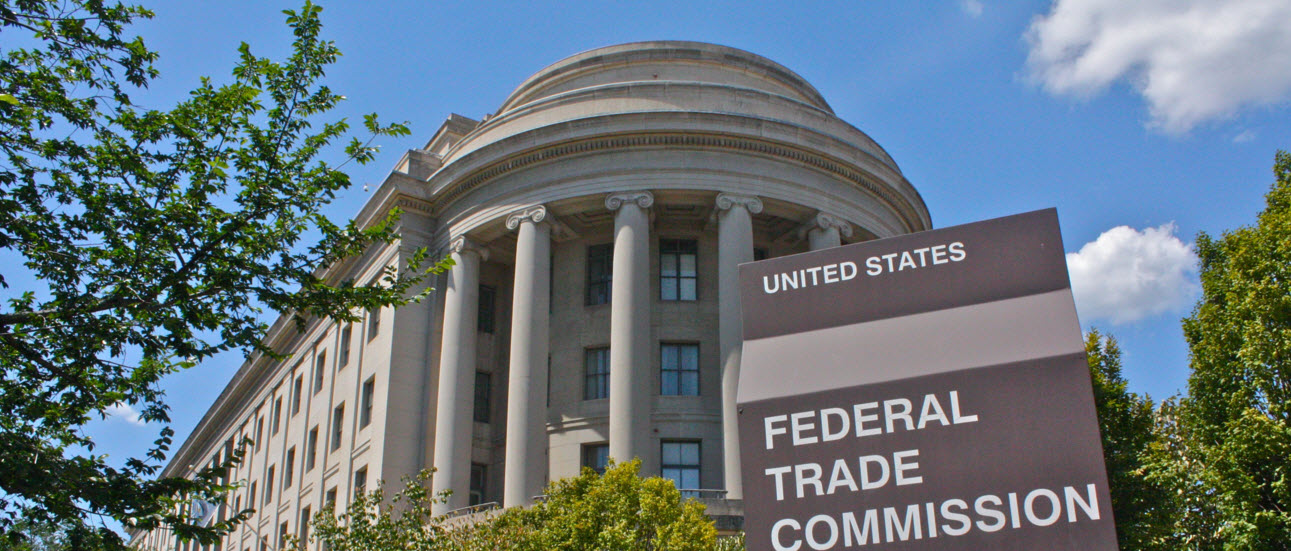
FTC Releases Annual Enforcement Report to the CFPB

This week, the Federal Trade Commission (FTC) announced the release of the 2015 edition of their Annual Financial Acts Enforcement Report to the Consumer Financial Protection Bureau (CFPB). The report details the various enforcement activities the FTC has engaged in regarding Regulation Z (Truth in Lending Act), Regulation M (Consumer Leasing Act), and Regulation E (Electronic Fund Transfer Act).

Under the Dodd-Frank Act, the FTC has the authority to enforce the Truth in Lending Act, Consumer Leasing Act, and the Electronic Fund Transfer Act. The CFPB has rulemaking authority regarding these laws.

The report details a range of FTC actions related to the extension of credit – including mentions of violations in automobile financing, payday lending, car title loans, consumer electronics financing, and forensic audit scams. There are also details about various other regulatory and educational actions undertaken by the FTC.

Actions related to several violations of Regulation E are mentioned in the report. Four cases deal with violations related to so-called “negative option” plans, where consumers incur recurring charges following the expiration of a product’s trial period. In those cases, companies were transferring funds electronically from consumer accounts without obtaining proper written authorization from the consumers in question. Two other cases involve payday lending violations – in one case, the FTC said a series of lenders couldn’t condition the extension of credit on consenting to preauthorized debits, and in the other, CWB Services was banned from the consumer lending business due to debiting accounts without the prior express consent of consumers.

The other major Regulation E point mentioned by the FTC is last year’s amendment of the Telemarketing Sales Rule. The new version of the rule bans the use of four payment methods – remotely created checks, remotely created payment orders, cash reload mechanisms, and cash-to-cash money transfers – which the FTC says “are favored by con artists and scammers and that provide little or no systematic monitoring to detect fraud.”

The FTC describes this report on their activity as being designed “for use in preparing the Consumer Financial Protection Bureau’s 2015 Annual Report to Congress.” A copy of the report has been sent to officials at the CFPB and the Federal Reserve Board.

FTC Releases Annual Enforcement Report to the CFPB
http://www.insidearm.com/ftc/ftc-releases-annual-enforcement-report-to-the-cfpb/
http://www.insidearm.com/feed
insideARM

Accounts Receivable Management

ABA and CBA Argue FCC Proposed Rule Conflicts with Congressional Intent

Yesterday, the American Bankers Association (ABA) and the Consumer Bankers Association (CBA) filed joint comments to the Federal Communications Commission’s (FCC)  May 16, 2016 proposed rule regarding non-telemarketing “robocalls” made to collect debts owed to or guaranteed by the United States. A copy of the 18 page response can be found here.

Editor’s Note: The FCC was required by Congress to propose rules to implement a provision of the Bipartisan Budget Act of 2015 (2015 Budget Act or Act). That provision exempted from the Telephone Consumer Protection Act’s (TCPA) prior express consent requirement autodialed and prerecorded calls “made solely to collect a debt owed to or guaranteed by the United States.” On May 16, 2016 the FCC published its proposed rule. Comments to the proposed rule were due on June 6, 2016.

In the joint comments to the proposed rules the groups noted that the FCC’s proposal does not fully comport with the Bipartisan Budget Act of 2015: “Clearly, both the Administration and the Congress recognize that borrowers trying to manage their finances responsibly are best served if they communicate with their lender. The Commission’s recent interpretations of the TCPA, however, fail to reflect technological change and consumer communication preferences, preventing consumers from receiving important communications from businesses and government entities on their mobile phones, communications that provide important information that consumers want and need to receive.”

The two groups argue that the Commission has improperly replaced the policy determination made by Congress with its own.

“The limitations in the proposed rule would (1) exempt only calls made after the borrower is delinquent or, alternatively, in default; (2) exclude from exemption calls made to a number that belonged to a borrower but has been reassigned unbeknownst to the caller; and (3) extend the call restrictions to landline calls, to make such calls even more difficult than under current law. These limitations—which have no basis in the text of the 2015 Act—would significantly impair the very communications that Congress exempted from the TCPA. Making those communications more burdensome and less efficient with borrowers who use cell phones—as the proposed rule would do—impedes what Congress sought to accomplish.”

A statement published on the ABA website states: “With half of U.S. households now “wireless only,” Congress saw a need to ensure that borrowers could communicate with creditors and servicers about their debts, particularly about loan modifications and other foreclosure alternatives. However, the FCC “improperly replaced the policy determination made by Congress with its own,” ABA and CBA said, exempting calls only for delinquent or defaulted borrowers, excluding numbers that unbeknownst to the caller no longer belong to the borrower and extending TCPA restrictions to landline calls.”

In framing their argument, the ABA and CBA start by pointing out that the TCPA is generally out of date:

“Enacted in 1991, the TCPA is primarily a privacy statute, written to protect consumers from intrusive and unwanted telemarketing calls, but it also has other purposes. One such purpose was cost reduction in a time when cell phones were considered a luxury item. The restrictions on automated calls to wireless numbers expressly were written, in part, to control the shifting of telemarketers’ advertising costs to consumers by the use of random and sequential generators to run mass calling campaigns. This restriction had merit in 1991 when wireless service was expensive, relatively rare, and almost never used by consumers as their primary means of telephone communication.

Borrowers increasingly expect the convenience of being able to use mobile financial services. Nearly 50% of U.S. households are now “wireless-only,” with that percentage rising to over 70% for adults between 25 and 29.8 Many low income consumers rely on their cell phone for Internet access and other communications, because purchasing multiple devices, such as landlines and laptops, can be prohibitively expensive. Recently, the Federal Deposit Insurance Corporation (FDIC) found that customers with limited involvement with their bank prefer text messages to e-mails when receiving alerts from financial institutions, because texts are faster, easier to receive, attention grabbing, and quicker and easier to digest.”

Moving into the specific elements of the proposed rule the comments note that the Commission has proposed limitations on the Exemption that contravene both the text and spirit of the 2015 Budget Act. Among the items noted were:

  1. The Commission Improperly Proposed to Limit the Exemption to Calls Made After the Borrower Is Delinquent or, Alternatively, in Default.
  2. The Commission Should Not Limit the Exemption to Calls Made to Numbers Provided by the Customer.
  3. The Exemption Should Not Exclude Calls Made to Reassigned Numbers.
  4. The Commission Should Not Impose Restrictions on Calls for Which Congress Did Not Grant Authority to the Commission to Restrict (Landline calls).

Finally, the joint comments point out the fact that the proposed rules are inconsistent with other federal legislation, including many mortgage servicing rules.

insideARM Perspective

insideARM supports the joint ABA/CBA comments.

It is easy to ignore the potential impact the FCC proposed rule can have on the ARM industry outside of those companies servicing “debts owed to or guaranteed by the United States.”

If the currently proposed restrictions are enacted, it is foreseeable we will hear arguments that the CFPB should impose similar call frequency restrictions on collection efforts on all debt. As proposed, the Commission’s rule imposes a limit of three calls that lenders may initiate to distressed borrowers under the Exemption. While the three call limit is for purposes of the TCPA exemption only, it is not hard to imagine consumer advocates arguing “If the FCC thinks a maximum of three calls is reasonable, then the CFPB should consider a maximum of three calls.” That type of extension or extrapolation of reasoning would not be good for the ARM industry.

ABA and CBA Argue FCC Proposed Rule Conflicts with Congressional Intent
http://www.insidearm.com/daily/collection-laws-regulations/aba-and-cba-argue-fcc-proposed-rule-conflicts-with-congressional-intent/
http://www.insidearm.com/feed
insideARM

Accounts Receivable Management

CFPB Files Lawsuit Against Payment Processor and Executives

On Monday, the Consumer Financial Protection Bureau (CFPB) announced a lawsuit against payment processor Intercept Corporation, accusing the company of enabling their clients to withdraw millions of dollars of funds fraudulently from consumer accounts. The lawsuit also names two top Intercept executives, Bryan Smith and Craig Dresser, for allegedly ignoring “clear signs of brazen fraud” by their clients.

Intercept Corporation is a third-party payment processor located in Fargo, North Dakota. Smith is Intercept’s president and Dresser is its chief executive officer. Each own 50 percent of the company. Intercept transmits electronic funds transfers through the Automatic Clearing House on behalf of clients including payday lenders, auto-title lenders, debt collectors, and sales financing companies.

In the lawsuit, filed in the U.S. District Court for the District of North Dakota, the CFPB alleges that Intercept, Smith, and Dresser violated the Dodd-Frank Wall Street Reform and Consumer Protection Act’s prohibition against unfair acts and practices by processing payments for clients without properly investigating the business practices of those clients, even after being told of numerous complaints about their clients from banks and consumers.

The Bureau says that Intercept “ignored blatant warning signs of potential fraud” by its clients by helping them facilitate withdrawals and other unauthorized charges against consumers. Allegedly, the extremely high return rates for transactions associated with certain clients, as well as previous FTC enforcement action against clients like Scott Tucker, should have been clear red flags to Intercept to stop doing business with those clients.

In addition to allegedly ignoring the signs of fraud, the CFPB says that Intercept “ignored complaints from banks and consumers about high return rates and unauthorized debits from their accounts, in some instances ignoring state law in the process. The Bureau also alleges that when a bank raised concerns about processing a payment related to a certain client, Intercept would just go to a different bank to process the payment rather than considering ending their relationship with the client.

The lawsuit is seeking monetary relief, injunctive relief, and penalties against Intercept, Smith, and Dresser under the Bureau’s UDAAP authority.

insideARM Perspective

In April of last year, insideARM reported that the CFPB had filed a lawsuit against a number of payment processors and telemarketer Global Connect for “enabling” fraudulent activity by processing payments for clients (Marcus Brown and Mohan Bagga) that they “knew, or should have known” were “engaged in unlawful conduct.” At that time, the CFPB referred to their action as part of a push to start “holding service providers accountable,” even though the payment processors in that example terminated their accounts with unscrupulous clients after they received complaints related to fraudulent behavior. The case is still working its way through the legal system, but so far judges have ruled that the companies should have known that the business practices in question were illegitimate.

In this new case, Intercept is alleged to have gone to extraordinary lengths to keep doing business with clients whose practices were being questioned by banks and consumers, in addition to ignoring those questions and complaints. Therefore, it appears there is less of a chance for Intercept to get a favorable resolution to the case.

Depending on the resolution of the action, the Intercept case could have a chilling effect on the technology environment in the debt collection industry. This case will need to be closely watched by ARM stakeholders.

CFPB Files Lawsuit Against Payment Processor and Executives
http://www.insidearm.com/daily/collection-laws-regulations/cfpb-files-lawsuit-against-payment-processor-and-executives/
http://www.insidearm.com/feed
insideARM

Accounts Receivable Management