Learn the Latest Industry Trends During ARM Quarterly Review Webinar

ROCKVILLE, Md. — Are you and your team up to date on the latest developments impacting the accounts receivable management industry?

Join Mike Ginsberg and Rozanne Andersen on August 4th at 2 p.m. ET as they engage in a fast-paced, hard-hitting discussion of the top trending topics that you need to know. Each subject will drive debate and commentary for leaders of the ARM industry.

Areas of focus include the economic state of the industry, crucial market segment developments in healthcare, financial services, and government, skewed data affecting the CFPB complaint portal, the latest deals making waves, and more.

Invite your team and come prepared to submit your questions to Mike and Rozanne during this free, essential presentation. Register now.

Learn the Latest Industry Trends During ARM Quarterly Review Webinar
http://www.insidearm.com/obs-in-focus/learn-the-latest-industry-trends-during-arm-quarterly-review-webinar/
http://www.insidearm.com/feed
insideARM


Accounts Receivable Management

Federal Jury Convicts Owner of Defunct “Collection Firm” for Fraudulent Scheme

Yesterday, a New York federal jury on Tuesday convicted the owner of a defunct debt collection firm over his alleged role in a $4.1 million fraud scheme involving fake arrest warrant threats against consumers.

John Williams, who owned Williams, Scott & Associates LLC, and operated the company out of Norcross, GA, was found guilty by a federal jury in Manhattan of conspiring to commit wire fraud. Williams faces up to 20 years in prison. His sentencing hearing is scheduled for October 28, 2016.

insideARM has covered this matter extensively over the past 20 months.

On July 2, 2014 we wrote about the Federal Trade Commission (FTC) obtaining a Temporary Injunction and Order Freezing assets.

On November 19, 2014 we wrote about the arrest of Williams and the criminal charges brought against him.

On November 21, 2014 we wrote about the responses from both DBA International and ACA International, publicly supporting the Federal Action against Mr. Williams and labeling the activities fraudulent and a scam.

Finally, on  January 8, 2016 we wrote about the FTC obtaining a permanent injunction against the final defendant in the case against Williams, Scott & Associates, LLC. An earlier order, in April 2015, banned John Williams, Williams, Scott & Associates, LLC; and WSA, LLC from debt collection and ordered them to pay $3.9 million.

insideARM Perspective

insideARM supports the efforts of the FTC, CFPB, and Federal prosecutors to rid the ARM industry of criminals and scam artists that use the disguise of a collection agency or debt buyer to carry out harmful and illegal activity.

Scams like this do significant harm to consumers. The subsequent stories about the cases also negatively impact the ARM industry. The entire industry is tarnished by the actions of the individual in this case.

Federal Jury Convicts Owner of Defunct “Collection Firm” for Fraudulent Scheme
http://www.insidearm.com/daily/debt-collection-news/debt-collection/federal-jury-convicts-owner-of-defunct-collection-firm-for-fraudulent-scheme/
http://www.insidearm.com/feed
insideARM

Accounts Receivable Management

Filing Proof of Claim on Time-Barred Debt Not an FDCPA Violation, 8th Circuit Court Rules

Yesterday, the Eighth Circuit Court of Appeals entered a ruling affirming a district court’s decision that a debt collector’s filing of a proof of claim in the consumer’s Chapter 13 bankruptcy case based on an out-of-statute debt was not a false, deceptive or misleading debt collection practice.

The case was Nelson v. Midland Credit Management, Inc., (Case No. 15-2984, Eighth Circuit Court of Appeals). A copy of the opinion can be found here.

Background

Midland Credit Management, Inc. (Midland) had filed a Proof of Claim in Nelson’s bankruptcy proceeding. Nelson had objected to the filing arguing it was time-barred. The Bankruptcy Court agreed and disallowed Midland’s claim.

Nelson then sued Midland, alleging that, by filing the proof of claim on a time-barred debt, Midland had violated the Fair Debt Collection Practices Act (FDCPA). The district court dismissed the lawsuit for failure to state a claim, holding that the FDCPA is not implicated by a debt collector filing an accurate and complete claim on a time-barred debt.

Nelson appealed the district court decision.

The Opinion of the Eighth Circuit

The Eighth Circuit Court of Appeals, by a 3-0 decision, affirmed the lower court dismissal.

Nelson had urged the Court of Appeals to follow the 11th Circuit Court of Appeals in their decision in  Crawford v. LVNV Funding, LLC . In that case, the 11th Circuit held that filing a proof of claim on time-barred debt is conduct that violates the Fair Debt Collection Practices Act (FDCPA). See the insideARM article on the Crawford case here.

Here the Eighth Circuit rejected the Crawford analysis.  The court wrote:

“This court rejects extending the FDCPA to time-barred proofs of claim. An accurate and complete proof of claim on a time-barred debt is not false, deceptive, misleading, unfair, or unconscionable under the FDCPA. The district court properly dismissed for failure to state a claim.”

insideARM Perspective

The issue of filing proofs of claim on time barred debt has received inconsistent treatment in the courts.  In November 18, 2014 insideARM published an excellent article on the issue by Donald Maurice.

The Nelson decision is now precedential, authoritative law in the Eighth Circuit (Minnesota, Nebraska, Iowa, Missouri, Arkansas, North Dakota, and South Dakota).  The Eleventh Circuit (which has jurisdiction over federal cases originating in the states of Alabama, Florida and Georgia) will still be subject to the Crawford analysis.

This is precisely the type of issue that should be uniform throughout the United States. The inconsistency could be addressed through the courts (a Supreme Court decision on the issue) or, perhaps some guidance on this issue could come out of the CFPB rulemaking.


Filing Proof of Claim on Time-Barred Debt Not an FDCPA Violation, 8th Circuit Court Rules
http://www.insidearm.com/daily/debt-buying-topics/debt-buying/8th-circuit-court-of-appeals-determines-that-filing-proof-of-claim-on-time-barred-debt-not-an-fdcpa-violation/
http://www.insidearm.com/feed
insideARM

Accounts Receivable Management

Minnesota’s Automatic Dialing Statute: You May be Liable for Calling a Wrong Number in Minnesota

Ellen Silverman

Ellen Silverman

All debt collectors and others who call Minnesota telephone lines using a prerecorded or synthesized voice message with an auto dialer should know about the Minnesota Automatic Dialing-Announcing Devices statute, Minn. Stat. § 325E.26, et seq. (“ADAD Act”).

In short, the Minnesota statute provides that if you call a Minnesota telephone line – residential or cell – using an auto dialer, without prior express consent, and without a current business relationship, and you use a prerecorded voice, you could be liable for actual damages, and attorneys’ fees.

Under the ADAD Act, connecting to a Minnesota telephone line using an automatic dialing-announcing device (“ADAD”) is generally prohibited, unless:

(1) the subscriber has knowingly or voluntarily requested, consented to, permitted, or authorized receipt of the message; or (2) the message is immediately preceded by a live operator who obtains the subscriber’s consent before the message is delivered.

Minn. Stat. § 325E.27(a) (2016). The only relevant exception is for “messages to subscribers with whom the caller has a current business or personal relationship.”  Minn. Stat. § 325E.27(b). Although the statute seems to have been aimed at curbing use of an ADAD by telemarketers, the statutory language is not limited and applies to all callers.

The result?  A debt collector who dials a wrong number in Minnesota and uses an automatic dialing-announcing device without first obtaining the subscriber’s consent through a live operator may be liable under the statute.

Although litigation over the ADAD Act has been limited to the Minnesota Attorney General, the ADAD Act provides for a private right of action. See Minn. Stat. § 325E.31. Importantly, private citizens may only pursue private claims under the Minnesota ADAD Act through Minnesota’s Private Attorney General Statute, which limits actions to those that benefit the public. See Ly v. Nystrom, 615 N.W.2d 302, 314 (Minn. 2000).

If a plaintiff is successful in a lawsuit under the ADAD Act, he/she may “recover damages, together with costs and disbursements, including costs of investigation and reasonable attorney’s fees, and receive other equitable relief as determined by the court.” Minn. Stat. § 8.31(3)(a).


Minnesota’s Automatic Dialing Statute: You May be Liable for Calling a Wrong Number in Minnesota
http://www.insidearm.com/daily/debt-collection-news/debt-collection/minnesotas-automatic-dialing-statute-you-may-be-liable-for-calling-a-wrong-number-in-minnesota/
http://www.insidearm.com/feed
insideARM

Accounts Receivable Management

June Was the Month of Giving for Diversified Consultants, Inc.

JACKSONVILLE, Fla. — Diversified Consultants Incorporated has been established within Jacksonville, Florida for over Twenty (20) years.  From their business model of always attempting to assist consumers, to creating a fantastic work environment for citizens (employees) from the community, to ensuring that their philanthropic mission is consistent with its core values, DCI continues to be an integral part of the Jacksonville business footprint.

This was evidenced this year as the employees of the company, during their employee appreciation day, took time to remember and appreciate those who ‘have need’ and set out to make a difference to those who are not as fortunate.  In June of 2016, Diversified Consultants Incorporated In connection with its Annual Employee Appreciation Day, held its annual food drive.  DCI is proud of the fact that its employees were able to report their largest and most productive food drive to date.  Staggeringly, DCI employees donated 4,416 LBS of non-perishable food items.  In addition to the food items, local charities had specifically requested of all things’ toothbrushes’ The DCI employees took this to heart and donated in excess of 750 toothbrushes.  The commitment of all of DCI employees in ensuring that they are giving back to their community was very evident this year.

Diversified Consultants Incorporated’s COO/CMO Gordon Beck made the following comment(s) “I am not surprised by the outpouring of generosity by DCI’s employees.  I see and interact with our employees every day.  Their commitment to themselves, their company, and their community is unequivocally the result of the culture here at Diversified and a reflection of who they are as people.  DCI realizes its role within the community and will always be on the forefront of community involvement

Additional information for Diversified Consultants Incorporated can be found at their web page: www.dcicollect.com

June Was the Month of Giving for Diversified Consultants, Inc.
http://www.insidearm.com/doing-it-right/june-was-the-month-of-giving-for-diversified-consultants-inc/
http://www.insidearm.com/feed
insideARM

Accounts Receivable Management

The Truth about Reg E Compliance

Electronic Signatures have become standard

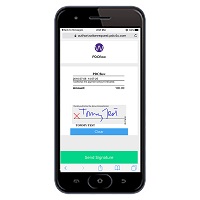
Phone with eSignatureConsumer habits are hard to change. However, once they are in place, behaviors can become so automatic, customers barely think about the activity. In fact, the majority of debit and credit card providers converting to the new chip technology opted for electronic signatures as the primary form of authorization, despite the fact that PIN numbers are significantly more secure. Why? Because that’s how customers are comfortable paying for goods and services.

Electronic signatures have become the standard for payment authorizations and loan contracts. Each signed debit or credit purchase signifies a signed contract by the customer, who does not actively think about the contract and obligation for repayment. It’s just automatic.

The CFPB Reg E Compliance Bulletin

Due to the increased popularity of electronic signatures, the CFPB issued a bulletin in November 2015 clarifying steps required to remain compliant with Reg E statutes concerning debt collection activities. Companies can capitalize on customers’ comfort levels with eSignatures, while remaining compliant with Reg E, provided they use software that follows the CFPB’s requirements.

The November Bulletin reiterated that Reg E compliance includes authorizations accepted through electronic means, the phone, and the computer. Preauthorized payments require authentication of the customer and a copy provided to the customer, in paper or electronic form, with evidence of the customer’s consent.

Verbal authorizations are acceptable as long as they are collected through a process associated with a contract, the customer has intent to sign, and the contract’s electronic communications are sent. Recording a code into a telephone keypad can satisfy Reg E compliance based on the electronic signature guidelines.

PDCflow simplifies Reg E Compliance

Fortunately for the industry, software companies like PDCflow, simplify the payment process, can obtain electronic signatures quickly, and fully comply with the new CFPB standards.

PDCflow developed proprietary software enabling you to obtain eSignatures through a simple, efficient, and compliant process. The software features Dual Authentication and Geo Location Tracking, which verifies the consumer’s identity and maintains evidence. The Signature can also be achieved through any touch device such as a mouse or mobile device, through its eSignature Flow system. Companies can send a document, such as the terms of a Recurring Payment Schedule, with the proper authorization language. The client signs and returns the form electronically, giving all parties signed copies instantly.

For more information on how eSignatures can make the process easy while remaining fully compliant click here or contact PDCflow at 877-732-4814


The Truth about Reg E Compliance
http://www.insidearm.com/revenue-resource/the-truth-about-reg-e-compliance/
http://www.insidearm.com/feed
insideARM
Accounts Receivable Management

Spokeo Challenge in Accretive Health Debt Collection Case Receives Mixed Result

Yesterday the U.S. District Court for the Southern District of Alabama affirmed the lower court’s decision in favor of the defendant in the case of Mahala A. Church v. Accretive Health, Inc. (Case No. 15-15708, United States Court of Appeals for the Eleventh Circuit)

A copy of the case can be viewed here.

The Appellant (Church) had filed a putative class action against Accretive Health (Defendant, or Accretive) alleging violations of the Fair Debt Collection Practices Act (FDCPA), claiming that Accretive failed to include required disclosures in a letter it sent to her advising that she owed a debt to its client, Providence Hospital.

Because the FDCPA applies only to “debt collectors,” the only issue raised at the time of summary judgment in district court was whether the debt in question was in default at the time it was obtained by Accretive.

At that time the court noted that:

  1. The FDCPA specifically exempts, “any person collecting or attempting to collect any debt owed or due or asserted to be owed or due another to the extent such activity . . . concerns a debt which was not in default at the time it was obtained by such person” 15 U.S.C. § 1692a(6)(F).
  2. Accretive argued that the debt was not in default at the time it was obtained from Providence Hospital.

The court agreed with Accretive, and as a result, granted summary judgment in favor of the company.

In her original pleadings, Church alleged that she “was very angry” and “cried a lot” as a result of her receipt of the letter. She did not allege, however, that she suffered actual damages.

Fresh off the recent Supreme Court decision in Spokeo v. Robins, which said that a plaintiff must have incurred actual damages (injury-in-fact) in order to have standing to sue, Accretive raised the issue of standing during the appeal in the Church case. The company argued that Church’s injury was not sufficiently concrete to support Article III standing because no actual damages were incurred.

Church countered that,

  1. Accretive didn’t raise this issue previously
  2. A violation of a procedural right granted by statute can in fact constitute injury-in-fact.

On the first matter, the court determined “we are obliged to consider standing sua sponte [of its own accord] even if the parties have not raised the issue.”

On the second matter, the court cites Havens Realty Corp. v. Coleman 455 U.S. 363, 373 (1982), which alleged that an African American “tester” inquiring about the availability of apartments to rent from a landlord was given different information (no apartments available) from that which was given to a white tester (apartments were available). Although the tester had no intent to rent an apartment and as a result – it could be determined – suffered no actual harm, it was determined that the Fair Housing Act (The Act) establishes a right to truthful information about the availability of housing, and that the misrepresentation constituted injury within the meaning of The Act.

The connection is then made between the right of the tester to the statutorily-created truthful housing information in the Havens case to the right of Church to her statutorily-created right to certain disclosures under the FDCPA.

The court therefore determined that this right, created by Congress, has also established an injury – not receiving such disclosures, and that “although this injury may not have resulted in tangible economic or physical harm that courts often expect, the Supreme Court has made clear an injury need not be tangible to be concrete (Spokeo, Inc., 578 U.S. at ___, 136 S. Ct. at 1549).

The court concluded that the injury-in-fact requirement was satisfied, and Church indeed had standing to bring the case.

After six pages devoted to the question of standing, the court, in one paragraph, established that it agreed with “the district court’s well-reasoned opinion granting summary judgment in favor of Accretive Health,” and affirmed the lower court’s decision.

insideARM Perspective

We have a series of thoughts on this:

A similar panel of 11th Circuit judges rendered a standing decision a day after Spokeo was announced (see Carriuolo v. General Motors) but didn’t consider Spokeo (perhaps they didn’t have the opportunity).  There is also a Wisconsin district court ruling holding more in line with Spokeo about the need for damages or harm to be real.  Gubala v. Time Warner Cable, Inc., No. 15-cv-1078-pp, 2016 U.S. Dist. LEXIS 79820 (E.D. Wis. June 17, 2016).

The FDCPA does not define the term “default.” For reasons that vary from industry to industry, but especially complex in healthcare, it is extremely difficult to pin down a consistent definition.

This case is very interesting in light of its relevance to the currently developing process of CFPB rulemaking for first party activity. Especially in the healthcare market, there is a significant amount of communication with patients regarding bills during the process of sorting out who is responsible to pay. This can take months. The point at which a patient is determined to be responsible is not consistent from hospital to hospital, or even for a particular patient, as each situation is unique. Although the letter that was sent to Church by Accretive is under its own name and references its relationship as a “third-party,” the content of the letter resembled “first party” type of communication.

While the CFPB is appropriately sensitive to patient rights, the contemplated idea of broader application of the FDCPA to so-called “first party” activities should be undertaken very carefully, as it could have the unintended consequence of cutting off communication with a patient during the process of identifying billing accuracy, charitable care, or other payment options. A bill is not the same thing as a debt in collection.

A final note, this appeals case was deemed by the court to be “unpublished.” “In the legal world, an unpublished opinion is a decision of a court that is not available for future citation as precedent because the court deems the case to have insufficient precedential value.”


Spokeo Challenge in Accretive Health Debt Collection Case Receives Mixed Result
http://www.insidearm.com/daily/debt-collection-news/debt-collection/spokeo-challenge-in-accretive-health-debt-collection-case-receives-mixed-result/
http://www.insidearm.com/feed
insideARM

Accounts Receivable Management

CFPB Requests Default Judgment Against Debt Settlement Company

The Consumer Financial Protection Bureau (CFPB) is moving forward with its case against World Law Group, asking a Florida federal court this week to issue a default judgment against several affiliates of the debt settlement company. The CFPB is asking the U.S. District Court of the Southern District of Florida to issue a judgment against Orion Processing LLC, Family Capital Investment & Management LLC, World Law Debt Services LLC, and World Law Processing LLC, alleging that they collectively scammed consumers out of millions of dollars and should pay approximately $147 million in penalties.

The case was initially brought by the CFPB against World Law Group in August 2015, after the Bureau said the debt settlement company collected some $67 million in up-front fees from consumers for “legal services” and then did little to help those consumers pay their debt. Specifically, the CFPB alleged that World Law Group violated the FTC’s Telemarketing Sales Rule (TSR) and UDAAP under Dodd-Frank by charging illegal upfront-fees and promising legal representation without intending to deliver such representation.

At the time the suit was filed, CFPB Director Richard Cordray criticized World Law Group by saying they “lured consumers with false promises of help from lawyers and collected millions in illegal upfront fees.”

In Tuesday’s request for a default judgment, the CFPB refers to the World Law Group’s “blatant violations of federal law, their bad faith conduct, and the significant harm resulting from their illegal activity,” saying the “gravity of this scheme was tremendous” and that the company “targeted financially-distressed consumers who were struggling to pay their bills” and “bilked these consumers” out of their money.

As insideARM reported in September, the U.S. District Court of the Southern District of Florida responded to the CFPB’s initial lawsuit by issuing a temporary injunction against World Law Group, freezing company assets. Since then, the debt settlement company and its affiliates have failed to respond to the lawsuit or defend themselves. The CFPB is thus asking the court to move forward and issue a default judgment, saying in Tuesday’s filing that “default judgment is appropriate here” because World Law Group has “failed to participate in the litigation in good faith.”

insideARM Perspective

insideARM applauds the CFPB for pursuing this matter.  There are many legitimate debt settlement/debt relief companies.  However, there are also many other companies that engage in the conduct alleged in this case. These companies promise to eliminate most or all of the consumers’ debt balance but in reality they are only in business to collect upfront fees.

It is difficult to turn on a radio or go to the Internet without listening or seeing an ad promoting these “services.” With taglines like, “You have the absolute right to settle your accounts,” or “The Obama administration has recently passed laws making it your absolute right to settle your debts,”  the slick marketing campaigns work. The numbers involved in the above case prove that consumers believe them.

insideARM would suggest that consumers thinking about debt settlement, go to www.ftc.gov and search for “Debt Relief Services” before consulting with any debt settlement or debt relief company.

CFPB Requests Default Judgment Against Debt Settlement Company
http://www.insidearm.com/daily/banks-and-credit-grantors/credit-grantors/cfpb-requests-default-judgment-against-debt-settlement-company/
http://www.insidearm.com/feed
insideARM

Accounts Receivable Management

FCC Rules TCPA Does Not Apply to Federal Government or its Contractors

On July 5, 2016 the Federal Communications Commission (FCC) issued a Declaratory Ruling (Ruling) that the Telephone Consumer Protection Act (TCPA) “does not apply to calls made by or on behalf of the federal government in the conduct of official government business, except when a call made by a contractor does not comply with the government’s instructions.” A copy of the Declaratory Ruling can be found here.

The Ruling was in response to petitions filed by a three third-party government contractors (Broadnet Teleservices LLC (Broadnet), National Employment Network Association (National Employment), and RTI International (RTI). The petitions requested clarification of how the TCPA applies to autodialed or prerecorded- or artificial-voice phone calls, including text messages, made by the government and government contractors.

Broadnet works with elected officials to set up so-called “tele-town halls,” where legislators can talk to their constituents. Broadnet asked whether they need to get express consent from each person involved in these calls.

RTI has contracts with federal agencies to do telephone research survey calls. It was concerned that they would be considered in violation of the TCPA because they were not being made by the government directly, but rather through a contractor with a federal agency.

The third petitioner, National Employment, is a contractor for the Social Security Administration (SSA).   Pursuant to the contract with SSA they make calls to people receiving government benefits. National Employment was asking the FCC to confirm that this sort of activity was exempt from TCPA prohibitions.

Specifically, the petitioners asked the FCC to clarify the definition of “person” as used in the TCPA. They asked,

  • Does “person” only mean an individual?
  • Does “person” mean a corporation?
  • Is the Federal Government a “person”
  • Is a contractor working on behalf of the government a person?

The FCC Ruling relies heavily on Campbell-Ewald Co. v. Gomez, a January 20, 2016 decision of the Supreme Court of the United States. The Ruling cites language from the case:

“The United States and its agencies, it is undisputed, are not subject to the TCPA’s prohibitions because no statute lifts their immunity.” While the Court indicated that a government contractor may be eligible for “derivative immunity” when it acts under authority validly conferred on it by the federal government, the Court emphasized that derivative immunity cannot shield a contractor when it “violates both federal law and the Government’s explicit instructions.”

The ruling states:

“The TCPA, as codified in section 227 of the Communications Act, makes it unlawful for any “person” within the United States, or any “person” outside the United States if the recipient is within the United States, to place certain calls to wireline and wireless telephone numbers, absent prior express consent, an emergency, or other exceptions. RTI and Broadnet ask the Commission to clarify that the term “person,” as used in section 227(b)(1), does not include the federal government. We find merit in these requests and therefore clarify that the term “person,” as used in section 227(b)(1) and our rules implementing that provision, does not include the federal government or agents acting within the scope of their agency under common-law principles of agency. Based on this clarification, as supported by the Supreme Court’s recent decision in Campbell-Ewald Co. v. Gomez, we grant the three Petitions before us to the extent indicated below.

Specifically, in response to the Broadnet Petition, we find that robocalls to organize tele- town halls, when made by federal legislators or agents acting under authority validly conferred by the federal government, are not subject to the TCPA’s robocall consent requirement, as long as the robocalls are conducted in the legislators’ official capacity and not, for example, as part of a campaign for reelection.

Similarly, we find that the TCPA does not restrict the kind of research survey calls described by RTI or the Social Security-related informational calls described by National Employment, provided those calls are lawfully made by the federal government or by agents acting under authority validly conferred on them by the federal government. We emphasize that in each of these scenarios, a call placed by a third-party agent will be immune from TCPA liability only where (i) the call was placed pursuant to authority that was “validly conferred” by the federal government, and (ii) the third party complied with the government’s instructions and otherwise acted within the scope of his or her agency, in accord with federal common-law principles of agency.

We also emphasize that this Declaratory Ruling focuses only on calls placed by the federal government or its agents, and does not address calls placed by state or local governments or their agents. (Emphasis added by insideARM)

insideARM Perspective

Commissioner Jessica Rosenworcel concurred with the Ruling, but issued a statement that raised an interesting issue, one that insideARM believes is quite compelling. Roswenworcel wrote:

“I concur because this declaratory ruling does not fully consider the impact of recent changes in the Telephone Consumer Protection Act that are presently before this agency.

In last year’s Bipartisan Budget Act, Congress modified the Telephone Consumer Protection Act to make clear that calls “made solely to collect a debt owed to or guaranteed by the United States” were not subject to the consent requirements for robocalls that otherwise apply under the law. At the same time, Congress instructed the Commission to conduct a rulemaking within nine months to consider regulations that “may restrict or limit the number and duration” of such calls.

This rulemaking began last month. It is still ongoing. So our actions here have an odd result. In effect, we prejudge the outcome of our narrower proceeding under the Bipartisan Budget Act by here providing a blanket exemption from the Telephone Consumer Protection Act to the federal government and its agents. Moreover, I am concerned that our decision risks trampling on the will of Congress. After all, if the federal government is truly outside the scope of the Telephone Consumer Protection Act, it is unclear why Congress would need to have specifically provided a debt-related exception to the law in the first place.” (Emphasis added by insideARM)

insideARM has written extensively about the TCPA provision in last year’s Bipartisan Budget Act. See our November 5, 2015 story. We have also written about the FCC Notice of Proposed Rulemaking (NPRM) to consider regulations in accordance with the 2015Bipartisan Budget Act. See our May 9, 2016 story and our June 16, 2016 story.

It is amazing that only Commissioner Rosenworcel recognized the fact that this Declaratory Ruling was connected to the NPRM. We suspect there will be significant legal discussion in the coming weeks on the correlation between this Ruling and the ongoing NPRM.


FCC Rules TCPA Does Not Apply to Federal Government or its Contractors
http://www.insidearm.com/daily/debt-collection-news/debt-collection/fcc-rules-tcpa-does-not-apply-to-federal-government-or-its-contractors/
http://www.insidearm.com/feed
insideARM

Accounts Receivable Management

MDHBA Annual Conference to be held in Annapolis this October

ELMHURST, Ill. — MDHBA, the Medical-Dental-Hospital Business Associates, will host its Annual Conference Oct. 27-28, 2016, at the Loews Annapolis Hotel, Annapolis, Maryland. The event features programming tailored for the healthcare accounts receivable industry. Presentations include:

  • Legal Issues Affecting the Healthcare ARM Profession
  • The Most Important Things You Need to Know About CFPB Compliance
  • The Age Old Question –  a look at the characteristics, learning styles and workplace preferences of four generations
  • Effective Marketing: Tips and Tricks of the Trade to Increase Revenue

MDHBA’s annual gathering is designed to benefit agencies and businesses that provide economic and related professional services to the healthcare industry. The event features networking opportunities, vendor presentations and exhibits, and social events designed to increase attendee interaction. If you would like to receive more information, please contact MDHBA at 630.359-4273, or visit the organization on the Web at www.mdhba.org.

About MDHBA

Medical-Dental-Hospital Business Associates is a nation-wide network of independent businesses that provide accounts receivable management services and products to the healthcare industry. Formed in 1939, MDHBA and its members set a tone of collaboration and continuous improvement within the demanding and competitive world of healthcare financial services. Representing nearly 30 agencies and 90 members nationwide, MDHBA provides a forum for idea exchange, continuing education and certification. For more information, contact: MDHBA, 350 Poplar Ave., Elmhurst, IL60126. Telephone 630.359-4273. Fax 630.359.4274. E-mail info@mdhba.org.

MDHBA Annual Conference to be held in Annapolis this October
http://www.insidearm.com/daily/debt-collection-news/mdhba-annual-conference-to-be-held-in-annapolis-this-october/
http://www.insidearm.com/feed
insideARM

Accounts Receivable Management