Working with New York’s Latest Debt Collection Regulations

Don Maurice

Don Maurice

New York’s Department of Financial Services published regulations on Dec. 3, 2014, which would require debt collectors to make additional disclosures to consumers following initial communications, provide consumers who dispute charged-off debt with certain information, adopt procedures concerning the applicability of statutes of limitations, maintain certain records and provide written confirmation of settlements, among other things.

The regulations (available here) are applicable to third-party debt collectors (those who collect debts owed to others) and debt-buyers.

On Jan. 15, I’ll be discussing the regulations in a DBA International webinar Working with New York’s Latest Debt Collection Regulations. In the meantime, here is a closer look at the regulations.

Who is Covered?

Though the definition of debt collector is similar to the federal Fair Debt Collection Practices Act’s, it is not the same. Like the FDCPA, the regulations cover “any person engaged in a business the principal purpose of which is the collection of debts,” or any persons who regularly engage in collecting, either directly or indirectly, debts owed to another. It expressly includes “a buyer of debt” within its definition of debt collector. You are subject to the regulations if you are located in New York or engage in collection activity in New York. It also exempts many of the same persons exempted from the FDCPA, like officers and employees of creditors while collecting the creditor’s debts in the creditor’s name. The regulations do not define a “creditor.” Instead they only define “original creditors” as persons who extend credit. The use of “creditor” appears to be an oversight.

Litigation Exemption

The regulations differ from the FDCPA in that they contain an exception for debt collection litigation activity. They exclude:

any person with respect to (i) serving, filing, or conveying formal legal pleadings, discovery requests, judgments or other documents pursuant to the applicable rules of civil procedure; (ii) communicating in, or at the direction of, a court of law or in depositions or settlement conferences or other communications in connection with a pending legal action to collect a debt on behalf of a client; or (iii) collecting on or enforcing a money judgment.

Time will tell whether this exclusion is broad enough to cover all debt collection activity by attorneys when solely using civil legal actions to collect debt. The exclusion should avoid conflicts between the professional responsibilities of attorneys, court rules, rules of evidence and procedures and these non-judicial regulations. Such conflicts remain a significant defect in the FDCPA which is exemplified by the infamous “Greco Disclaimer” borne from the lunacy of the court legislated “meaningful involvement” standard. Notably, some of the first “meaningful involvement” cases arose from New York. The regulations avoid these problems.

Problems for New York Based Debt Collectors

The regulations do not limit themselves to only New York “consumers.” This means they can be read to adhere to the activities of a New York debt collector collecting debt from persons who are not New York residents. Some have told me this was not intended.

Types of Debt Subject to the Regulations

The regulations are applicable to obligations or “alleged obligations” for the payment of “money or its equivalent” where credit has been extended to a consumer for money, property or a service. Unlike the FDCPA, the regulations do not expressly mention “insurance” as the subject of the credit transaction. It is unclear whether credit incurred by a consumer for insurance would be covered by the regulations.

Similar to the FDCPA, the credit must be extended “primarily” for “personal, family or household purposes.”

Unlike the FDCPA, a debt under the regulations does not include credit “provided by a seller of goods or services directly to a consumer.” However, the seller’s extension of credit must be “exclusively” for the purpose of enabling the consumer to purchase the goods and services “directly from the seller.” This provision particularly assists small businesses who provide credit for consumer purchases and often use small or local collection agencies to collect their debt. It also benefits many medical providers.

Two Forms of Initial Disclosures

If the debt being collected is subject to the regulations, debt collectors are required to use at least one and possibly two types of “initial disclosures.” Like the FDCPA, these disclosures are to be made to consumers within five days of your initial communication in connection with collection of a debt. One disclosure is applicable to all covered debts, while the other only must be made if the debt is “charged-off.” The regulation defines a charged-off debt as an “accounting action taken by an original creditor to remove a debt obligation from its financial statements by treating it as a loss or expense.” When collecting charged-off debt, both of the disclosures must be provided. Like the FDCPA, the disclosures can be provided in the initial communication. Unlike the FDCPA, the disclosures must be provided in writing.

Disclosures Applicable to All Debt

Debt collectors must disclose:

  • That the FDCPA prohibits them from engaging in abusive, deceptive and unfair practices, “including, but not limited to (i) the use or threat of violence; (ii) the use of obscene or profane language; and (iii) repeated phone calls made with the intent to annoy, abuse, or harass.”
  • And the following notice:

If a creditor or debt collector receives a money judgment against you in court, state and federal laws may prevent the following types of income from being taken to pay the debt:

1. Supplemental security income, (SSI);
2. Social security;
3. Public assistance (welfare);
4. Spousal support, maintenance (alimony) or child support;
5. Unemployment benefits;
6. Disability benefits;
7. Workers’ compensation benefits;
8. Public or private pensions;
9. Veterans’ benefits;
10. Federal student loans, federal student grants, and federal work study funds; and
11. Ninety percent of your wages or salary earned in the last sixty days.

Number 11 of the required disclosure references the New York Exempt Income Protection Act.

Disclosures Applicable to Charged-Off Debt

If you are collecting charged-off debt, these additional disclosures must also be made within the five-day period, unless it is contained in the initial communication:

  • The name of the original creditor; and
  • An itemized accounting of the debt, including:
    • the total amount of the debt due as of charge-off;
    • the total amount of interest accrued since charge-off;
    • the total amount of non-interest charges or fees accrued since charge-off; and,
    • the total amount of payments made on the debt since charge-off.

Some debts are placed pre-charge-off and are later charged-off while in debt collection. The regulations do not address whether the “charged-off” debt disclosure must then be made.

Time-Barred Debt Disclosure

If a debt may be subject to an expired limitations period, you’ll have to make another set of disclosures before accepting a payment. These disclosures apply to all debts, whether or not they have been charged-off. The regulations include the following safe-harbor disclosure:

We are required by regulation of the New York State Department of Financial Services to notify you of the following information. This information is NOT legal advice:

Your creditor or debt collector believes that the legal time limit (statute of limitations) for suing you to collect this debt may have expired. It is a violation of the Fair Debt Collection Practices Act, 15 U.S.C. § 1692 et seq., to sue to collect on a debt for which the statute of limitations has expired. However, if the creditor sues you to collect on this debt, you may be able to prevent the creditor from obtaining a judgment against you. To do so, you must tell the court that the statute of limitations has expired. Even if the statute of limitations has expired, you may choose to make payments on the debt. However, be aware: if you make a payment on the debt, admit to owing the debt, promise to pay the debt, or waive the statute of limitations on the debt, the time period in which the debt is enforceable in court may start again. If you would like to learn more about your legal rights and options, you can consult an attorney or a legal assistance or legal aid organization.

One sentence from the safe-harbor disclosure might be cause for concern under the FDCPA. It reads: “However, if the creditor sues you to collect on this debt, you may be able to prevent the creditor from obtaining a judgment against you. To do so, you must tell the court that the statute of limitations has expired.” You are not required to use the safe-harbor disclosure and can fashion your own addressing the specific items earmarked by the regulations for disclosure.

Time-barred Debt Policies and Procedures

In addition to making disclosures when collecting debt which may be subject to an expired limitations period, debt collectors must have policies in place to determine the statute of limitations applicable to the debts they are collecting and to allow them to determine whether the limitations period applicable to these debts has expired. Determining the applicable statute of limitations is no easy task given the countless borrowing statutes, contract choice of law provisions and state common law treatment of foreign limitations periods. Therefore, the limitations period may not be always determined by New York law.

Having such policies and procedures in place will assist in reducing risks associated with collecting debt subject to the defense of an expired limitations period.

“Substantiation” of Disputed, Charged-Off Debt

The substantiation requirements are a bit confusing. They apply only when collecting charged-off debt. And, it is important to understand that the process may require only making a disclosure to the consumer of how to request substantiation, rather than requiring the provision of “substantiation” itself. And what information constitutes “substantiation” goes beyond the type of information many courts have held satisfies the FDCPA’s “verification” requirements and has the potential to expose consumers’ non-public, financial information.

What Constitutes “Substantiation”?

Substantiation means:

  • A copy of a judgment, or
  • All of the following:

(1) (a)”the signed contract or application that created the debt” or, if neither “exists” a copy of (b) a document which demonstrates the debt was incurred by the “debtor” and only if this document was provided to the “alleged debtor” while the account was “active,” or (c) for a “revolving credit account” the “most recent monthly account statement recording a purchase transaction, payment or balance transfer…;”

(2) “the charge-off account statement” or its equivalent, “issued by the original creditor to the consumer;”

(3) “a statement describing the complete chain of title from the original creditor to the present creditor, including the date of each assignment, sale, and transfer; and”

(4) records that “reflect the amount and date of any prior settlement” made under the regulations’ Debt Payment Procedures.

Similarities and Differences With FDCPA

The substantiation process is not the same as “verification” under the FDCPA, but it shares a few similarities.

  • Unlike the FDCPA, substantiation can be requested at anytime. But a debt collector need only provide it once.
  • Like the FDCPA verification process, once substantiation is requested, all debt collection activity must cease until it is provided.
  • Unlike the FDCPA, both oral and written disputes can trigger the process, and the time and manner in which the debt collector responds to them differs.
  • Unlike the FDCPA, the regulations place a specific time period in which the debt collector must provide verification — 60 days from receiving the request for substantiation.

Oral vs. Written Disputes and Substantiation

There are some intricate timing requirements that differ for oral and written consumer disputes as noted above.

For oral disputes:

  • In the conversation where the debtor makes an oral dispute, debt collectors must take “reasonable efforts” to inform the consumer how to make a written request for substantiation.
  • Within 14 days of the verbal dispute, the debt collector must “provide the consumer clear and conspicuous written instructions on how to request substantiation of the debt.” It is not clear whether “providing” the consumer is the same as “sending” it to the consumer. Some may read “provide” as meaning the consumer has to have the written instructions by the end of the 14 days.

For written

  • “within 21 days of the debt collector receiving that writing, the debt collector must provide the consumer clear and conspicuous written instructions on how to request substantiation of the debt.”

Record Retention

Debt collectors must retain the consumer’s request for substantiation and all documents provided in response until the debt is sold, transferred or “discharged.”

Issues in Substantiation Process

Here are a few of the open issues with the process. I’ll cover more in the webinar:

  • It is not clear whether any dispute or certain specific types of disputes trigger the process. The wording of the regulations can be read to limit disputes to those concerning the “validity of the charged-off debt” or the “right to collect” it.
  • The process requires the debt collector to provide “clear and conspicuous written instructions on how to request substantiation of the debt,” but the regulations never specify what is to be contained in the instructions. This suggests the instructions are left to the debt collector’s sole discretion.
  • It is unclear whether a debt collector can simply stop collecting the debt instead of providing the substantiation disclosure or the substantiation itself.
  • Substantiation “must” be provided to the consumer within 60 days of the debt collector’s receipt of the substantiation request. It is possible to read this as meaning the regulations are violated if substantiation is not provided within the 60-day period.

Payment and Settlement Agreements

Payment arrangements (called “Debt Payment Procedures” by the regulations) must meet certain requirements at different stages of the collection process.

Requirements Applicable at Inception of Payment/Settlement Agreements

Within five business days of “agreeing to a debt payment schedule or other agreement to settle a debt,” debt collectors must provide consumers with:

  • A “written confirmation” of the “payment schedule or other agreement to settle the debt” which includes “all material terms and conditions” of the agreed payments and schedule; and,
  • A notice of which consumer funds are exempt, similar to the one required for all debts above.

While the regulations do not mandate that payment arrangements must be in writing, they do require debt collectors to provide debtors, within five days of the agreement, a “written confirmation of the debt payment schedule or other agreement.” The written confirmation must include the “material terms and conditions relating to the payments and schedule to which the consumer agreed.”

Quarterly Accounting

Debt collectors must provide the debt with at least a quarterly “accounting of the debt.” What constitutes an “accounting of the debt” is not specified.

Satisfaction of Debt

Within 20 days of a consumer satisfying a debt subject to the regulations’ debt payment procedures, the debt collector must send the consumer “written confirmation of the satisfaction of the debt that identifies the original creditor and the account number.” It is not clear whether the “account number” refers to the original creditor’s account number or, if purchased by a debt buyer, the debt buyer’s account number or the debt collector’s account number.

Email Communications

Email communications are restricted by the regulations. Debt collectors may only communicate with consumers if:

  • The consumer has voluntarily “provided an electronic mail account to the debt collector.” I assume it means the consumer identified an email address where she can be reached — and;
  • The consumer has “affirmed” that the email “account” is neither “furnished or owned by the consumer’s employer; and
  • The consumer has “consented in writing” to receive email “in reference to a specific debt.” The regulations then go on to say that a “consumer’s electronic signature constitutes written consent . . .”

Under the federal E-Sign Act, there’s a difference between an “electronic signature” and an “electronic writing.” Having an electronic signature does not necessarily mean you have an electronic writing. Subsequent commentary by NYDFS indicates that the writing and the signature can both be electronic.

No Private Right of Action

The regulations, themselves, do not provide for a private right of action. Plaintiffs attorneys I’ve spoken with have indicated their belief that they could allege an FDCPA violation based on a violation of the regulations. Courts have held that violations of other regulations or laws are not per se violations of the FDCPA, but have also found that such violations can trigger FDCPA liability in certain circumstances.

Civil Monetary Penalties

New York regulators have indicated that civil monetary penalties, under N.Y. Financial Services Law 408, may be imposed for violation of the regulations. Financial Services Law 408 provides for civil monetary penalties of up to $5,000 “per offense.”

Effective Date

Most of the regulations become effective March 3, 2015. Sections 1.2(b) (initial disclosures pertaining only to “charged-off debt”) and 1.4 (substantiation of “charged-off” debt) become effective Aug. 30, 2015.

Jan. 15 Webinar

Join me along with attorney Irwin S. Kirschenbaum of Kirschenbaum & Phillips, P.C. on Jan. 15, from 12 noon to 1 p.m. EST, for our analysis of many more interesting twists and turns in the New York regulations. We will explore the operational issues, best practices and consider various scenarios under which the regulations may or may not apply.

The presentation is one hour and qualifies for one DBA International Continuing Education Credit. Register here now before the webinar sells out.

Working with New York’s Latest Debt Collection Regulations
http://www.insidearm.com/opinion/working-with-new-yorks-latest-debt-collection-regulations/
http://www.insidearm.com/feed
insideARM

Accounts Receivable Management

West Corp. Divests ARM and Other Live Agent Business in $275 million Deal

West Corp. (NASDAQ: WSTC) announced late Wednesday that it has entered into a definitive agreement with Alorica, Inc., an Irvine, Calif.-based provider of CRM solutions, for the sale of several of West’s agent services businesses for approximately $275 million in cash.

Businesses to be divested include West’s consumer-facing customer sales and lifecycle management, account services, and receivables management businesses.

Underscoring how large the deal will be for West and Alorica, West noted that total revenues will be impacted by some $580 million and that EBITDA would decline by nearly $50 million. Approximately 25,300 West employees will move to Alorica and and West’s total employee count will go from approximately 35,000 to 9,700 after the deal is closed.

“The divestiture is consistent with the Company’s stated objective of focusing on higher growth, more profitable assets,” said Tom Barker, chairman and chief executive officer. “We expect this transformative action will result in a faster growing organization with enhanced revenue visibility and reduced customer concentration. We will also become a significantly less labor-intensive company.”

Alorica, for its part, is touting entry into several new markets and service offerings, including receivables management. Alorica previously did not offer debt collection services. West, through its West Asset Management division, is a leading provider of accounts receivables and debt collection services. The unit has 15 domestic and offshore locations. West is also a prime collection contractor with the Department of Education.

Alorica is also very excited to leverage West at Home, West’s program for allowing certain agents to make calls from remote locations.

“As a developer of one of the first work-at-home solutions, West utilizes state-of-the-art technology and a proprietary work force management system, Spectrum™, which will become a core component of Alorica’s work-at-home service offering,” the company said in a press release.

The transaction is expected to close in the first quarter of 2015, subject to regulatory approvals and other customary closing conditions.

Separately, West will lease to Alorica owned real estate used by the businesses being sold. West plans to pursue a sale of this real estate in the commercial markets and complete such sale as soon as practical following the sale of the businesses to Alorica.

West Corp. Divests ARM and Other Live Agent Business in $275 million Deal
http://www.insidearm.com/daily/debt-collection-news/debt-collection/west-corp-divests-arm-and-other-live-agent-business-in-275-million-deal/
http://www.insidearm.com/feed
insideARM

Accounts Receivable Management

Consumer Debt Delinquencies Continued Broad Decline in Third Quarter

Delinquencies continued to decline in last year’s third quarter, falling in seven out of 11 categories as the economy improved and consumers responsibly managed their finances, according to results from the American Bankers Association’s Consumer Credit Delinquency Bulletin.

The composite ratio, which tracks delinquencies in eight closed-end installment loan categories, fell 6 basis points to 1.51 percent of all accounts – a record low that is well under the 15-year average of 2.30 percent.  (See Historical Graphic.)  The ABA report defines a delinquency as a late payment that is 30 days or more overdue.

“Strong economic growth has boosted job creation and supported income growth, which has made it easier for consumers to meet their financial obligations,” said James Chessen, ABA’s chief economist.  “Lower gas prices helped free up resources for everything from new purchases to debt repayment.”

Bank card delinquencies ticked up slightly in the third quarter following two consecutive quarters of declines, rising eight basis points to 2.51 percent of all accounts. They remain well below their 15-year average of 3.77 percent.

“Bank card delinquencies have hovered near 15-year lows with only minor fluctuations over the past two years, and we expect that trend to continue,” said Chessen, who noted that bank card delinquencies have varied by only 14 basis points since the fourth quarter of 2012.  “While people are clearly ready to spend again as economic activity picks up, the overwhelming majority of consumers continue to keep debt at manageable levels.”

Delinquencies in two of the three home-related categories – property improvement loans and home equity loans – continued their downward trend in the third quarter, falling to 0.82 percent and 3.24 percent, respectively.  Delinquencies for home equity lines of credit edged up slightly, rising two basis points to 1.52 percent.

“As the housing market continues its slow and steady recovery, home-related delinquencies are following a parallel track,” said Chessen.  “Increased home prices have eased pressure on consumers, but stresses can still occur, particularly as home equity lines reach the fully amortizing period and payment requirements rise.  Banks continue to work with customers to ensure they can meet their obligations.”

Chessen is optimistic about the future as the economy continues its upward trend and consumer confidence improves.

“Consumers are on surer financial footing, which bodes well for future delinquency rates,” Chessen said.  “Consumers are smiling every time they fill up their tanks.  Every one-cent decline in pump prices puts about $1 billion back into consumers’ pockets, which means their paychecks are going much further.  The signs are pointing in the right direction, but consumers hold all the cards when it comes to continuing to prudently manage their finances.” (See Economic Charts.)

The third quarter 2014 composite ratio is made up of the following eight closed-end loans.  All figures are seasonally adjusted based upon the number of accounts.

CLOSED-END LOANS  

  • Personal loan delinquencies fell from 1.62 percent to 1.51 percent.
  • Direct auto loan delinquencies remained at 0.72 percent.
  • Indirect auto loan delinquencies fell from 1.55 percent to 1.51 percent.
  • Mobile home delinquencies rose from 3.56 percent to 3.64 percent.
  • RV loan delinquencies fell from at 1.09 percent to 1.03 percent.
  • Marine loan delinquencies fell from 1.34 percent to 1.21 percent.
  • Property improvement loan delinquencies fell from  0.97 percent to 0.82 percent.
  • Home equity loan delinquencies fell from 3.36 percent to 3.24 percent.

In addition, ABA tracks three open-end loan categories:

OPEN-END LOANS

  • Bank card delinquencies rose from 2.43 percent to 2.51 percent.
  • Home equity lines of credit delinquencies rose from 1.50 percent to 1.52 percent.
  • Non-card revolving loan delinquencies fell from 1.92 percent to 1.68 percent.


Consumer Debt Delinquencies Continued Broad Decline in Third Quarter
http://www.insidearm.com/daily/credit-card-accounts-receivable/credit-card-receivables/consumer-debt-delinquencies-continued-broad-decline-in-third-quarter/
http://www.insidearm.com/feed
insideARM

Accounts Receivable Management

Colorado AG Warns Consumers About Fake Debt Collectors

The Office of Colorado Attorney General John Suthers is warning residents to beware of a debt collection scam in which callers pose as law enforcement officials or government agencies.

Consumer complaints to the Attorney General reveal a sharp increase in Coloradans receiving threatening phone calls and emails from this particular fraudulent debt collector scam. By using personally identifiable information, including Social Security Numbers, the caller attempts to collect on alleged payday loan debt. Complaints about this scam have increased by 1,350 percent between 2013 and 2014.

Fictitious payday lender names being invoked include ACS Inc., ACS Legal Group, Ace Cash Services, Ace Cash Advance, Advance Cash Service and American Cash Advance. The familiarity of these names, along with strong-arm language like “you are in violation of federal banking regulations,” and use of official sounding agencies such as “United States of attorney” and “state investigation department,” are the most common elements found in the complaints.

“These scam artists pretend to be from companies with familiar-sounding names and use high-pressure demands to get people to pay using prepaid money cards,” explained Colorado Attorney General John Suthers. “The caller threatens to report you to the FBI, FTC and even to your employer if you don’t immediately pay up, however, law enforcement and government agencies do not threaten to arrest or prosecute people for their unpaid debt and do not send arrest warrants via email.”

Suther’s office offered the following warning signs that a debt collection call is probably a scam:

  • Threats of arrest or prosecution
  • Claims of being law enforcement or a government agency
  • Strong allegation language: “Collateral Check Fraud,” “Theft by Deception”
  • Typos and grammatical errors: “Court House,” “law suit,” “United Stetes of America”
  • Requests amount owed be paid via prepaid card or money transfer
  • Requests for personally identifiable information
  • Refusal to provide a mailing address
  • Refusal to mail proof of debt, referred to as a “validation notice.”

The alert recommended that any consumer receiving such calls should directly ask the caller for his/her name, company, address, and phone number. The AG noted that legitimate debt collection operations will provide this information when asked.

Colorado AG Warns Consumers About Fake Debt Collectors
http://www.insidearm.com/daily/debt-collection-news/debt-collection/colorado-ag-warns-consumers-about-fake-debt-collectors/
http://www.insidearm.com/feed
insideARM

Accounts Receivable Management

Court Allows FDCPA Suit Where Assignment of Judgment Failed to List Current Balance of Debt

Ronald Canter

Ronald Canter

In a ruling bound to increase compliance concerns for purchasers of bad debts and collection law firms hired to enforce judgments against consumers, the United States Court of Appeals for the Fourth Circuit in Powell v. Palisades Acquisition XI, held that the filing of an assignment of judgment is a collection action subject to the Fair Debt Collection Practices Act (FDCPA).

The Circuit panel reversed a lower court decision dismissing a consumer’s lawsuit based on the reasoning that the filing of the assignment in the court where the judgment was entered was not an action to collect the debt. The appellate court rejected this analysis, explaining that “it would be incongruous…to hold that an assignment of judgment filed in a debt collection action is not similarly subject to the FDCPA, given that a debt collector who obtains a judgment…stands in exactly the same position as a debt collector who files an assignment of judgment. Both have the right to collect on their judgments.”

The consumer’s suit in Powell asserted that the debt buyer and its collection law firm misrepresented the amount due in the assignment by overstating the judgment amount by almost $1,300, an error resulting from the failure to list payments made after judgment. The appellate court rejected arguments of the debt buyer and its law firm, which had been accepted by the lower court, that the misstated amount was not a material misrepresentation because the total amount due was now greater because of accruing interest.

In ordering a remand to the trial court, the Fourth Circuit directed the court to consider the defendants’ bona fide error defense. The Court referred to the deposition testimony of the lawyer for Palisades who filed the Assignment of Judgment that the error as to the amount was not known to him and had been made by a paralegal. Based on this record, the Court determined that “on remand, the court should give the defendants an opportunity to develop the (bona fide error) defense.”

Debt buyers who purchase open judgments can take only small comfort in the fact that the FDCPA’s bona fide error defense may operate to avoid liability given the substantial expense and time devoted to defending this kind of lawsuit. It is likely that this decision will spur “copycat” lawsuits by eager consumer advocates seeking to take advantage of missteps and miscalculations by debt buyers and their counsel when seeking to enforce assigned judgments. Hopefully, this word to the wise and compliance driven debt buyer will suffice to avoid the errors that faced the debt buyer in Powell.

Ronald S. Canter, Esq. is the founding member of The Law Offices of Ronald S. Canter, LLC of Rockville, Maryland. Canter’s firm recently announced an Of Counsel relationship with Bedard Law Group. He is a member of the Bars of Maryland, Pennsylvania, Florida and the District of Columbia. He is also admitted to practice in federal courts through the United States, including the Supreme Court and several courts of appeal.

Court Allows FDCPA Suit Where Assignment of Judgment Failed to List Current Balance of Debt
http://www.insidearm.com/daily/debt-buying-topics/debt-buying/court-allows-fdcpa-suit-where-assignment-of-judgment-failed-to-list-current-balance-of-debt/
http://www.insidearm.com/feed
insideARM
Accounts Receivable Management

FTC Charges Data Broker with Facilitating the Theft of Millions of Dollars from Consumers’ Accounts

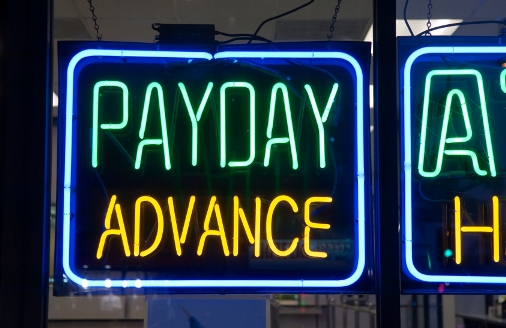
A data broker operation sold the sensitive personal information of hundreds of thousands of consumers — including Social Security and bank account numbers — to scammers who allegedly debited millions from their accounts, the Federal Trade Commission charged in a complaint filed today.

According to the FTC’s complaint, data broker LeapLab bought payday loan applications of financially strapped consumers, and then sold that information to marketers whom it knew had no legitimate need for it. At least one of those marketers, Ideal Financial Solutions – a defendant in another FTC case – allegedly used the information to withdraw millions of dollars from consumers’ accounts without their authorization.

“This case shows that the illegitimate use of sensitive financial information causes real harm to consumers,” said Jessica Rich, Director of the Federal Trade Commission’s Bureau of Consumer Protection. “Defendants like those in this case harm consumers twice: first by facilitating the theft of their money and second by undermining consumers’ confidence about providing their personal information to legitimate lenders.”

The defendants collected hundreds of thousands of payday loan applications from payday loan websites known as publishers. Publishers typically offer to help consumers obtain payday loans. To do so, they ask for consumers’ sensitive financial information to evaluate their loan applications and transfer funds to their bank accounts if the loan is approved. These applications, including those bought and sold by LeapLab, contained the consumer’s name, address, phone number, employer, Social Security number, and bank account number, including the bank routing number.

The defendants sold approximately five percent of these loan applications to online lenders, who paid them between $10 and $150 per lead. According to the FTC’s complaint however, the defendants sold the remaining 95 percent for approximately $0.50 each to third parties who were not online lenders and had no legitimate need for this financial information.

The Commission’s complaint alleges that these non-lender third parties included: marketers that made unsolicited sales offers to consumers via email, text message, or telephone call; data brokers that aggregated and then resold consumer information; and phony internet merchants like Ideal Financial Solutions. According to the FTC’s complaint, the defendants had reason to believe these marketers had no legitimate need for the sensitive information they were selling.

In the FTC’s case against Ideal Financial Solutions, between 2009 and 2013, Ideal Financial allegedly purchased information on at least 2.2 million consumers from data brokers and used it to make millions of dollars in unauthorized debits and charges for purported financial products that the consumers never purchased. LeapLab provided account information for at least 16 percent these victims.

The complaint notes that LeapLab hired a key executive from Ideal Financial as its own Chief Marketing Officer and then knew that Ideal used the information purchased from it to make unauthorized debits. Yet, the complaint alleges, the defendants continued to sell such information to Ideal.

The defendants in the case, Sitesearch Corp., LeapLab LLC; Leads Company LLC; and John Ayers, are alleged to have violated the FTC Act’s prohibition on unfair practices.

FTC Charges Data Broker with Facilitating the Theft of Millions of Dollars from Consumers’ Accounts
http://www.insidearm.com/daily/collection-technologies/collection-technology/ftc-charges-data-broker-with-facilitating-the-theft-of-millions-of-dollars-from-consumers-accounts/
http://www.insidearm.com/feed
insideARM

Accounts Receivable Management

Executive Change: Christopher Rezendes to Windham Professionals as Chief Sales and Marketing Officer

Windham Professionals, Inc. is delighted to welcome its new Chief Sales and Marketing Officer, Christopher Rezendes.   With a fifteen year track record growing revenues for Fortune 1000 companies, Chris is well-positioned to take advantage of Windham’s market-leading position and strong focus on operational excellence.  Chris will report to Christine Timmins Barry, President & Chief Executive Officer of Windham.

“It was very important to the Windham team that we hire an exceptional individual to lead our sales and marketing function, and we achieved that with Chris.  Windham has enjoyed a 32-year track record of growth and success in the student loan marketplace, and our focus on values, compliance, and customer service truly sets us up for further success.” said Christine Timmins Barry.  “I’m thrilled to have Chris join my leadership team, and his impressive track record of securing new clients and growing the business will be integral to our strategic plans in 2015 and beyond.”

“I’m incredibly excited to have been invited to join Windham” said Christopher Rezendes.  “I can see the sense of commitment from everyone with whom I’ve interacted.  The chance to share Windham’s excellence to a broader set of clients is an awesome opportunity, and I look forward to building a strong portfolio mix and continue to grow and diversify the Windham brand.”

Prior to joining Windham, Chris was the Chief Sales Officer at CSS, a leading technical support firm, and he also served as Vice President of Sales at Convergys Corporation (NYSE: CVG)  Before joining Convergys in 2008, Chris was Director of  Sales, Americas at Amdocs (NYSE: DOX).   He is a former United States Marine Officer and Naval Aviator and a graduate of Bridgewater State University.  Chris will be based in the Greater Boston area.

Executive Change: Christopher Rezendes to Windham Professionals as Chief Sales and Marketing Officer
http://www.insidearm.com/daily/debt-collection-news/debt-collection/executive-change-christopher-rezendes-to-windham-professionals-as-chief-sales-and-marketing-officer/
http://www.insidearm.com/feed
insideARM

Accounts Receivable Management

UK Launches $35 billion Debt Collection Project Headed by Equifax’s TDX Group

The government of the United Kingdom announced an initiative to recover some $35 billion in debt from back taxes, student loans, vehicle registrations, and other arrears. A new company will be formed to handle the contract, facilitated by the TDX Group, an Equifax company.

In a multi-year agreement, Integrated Debt Services, Ltd. will launch with six Government Departments as initial customers who have committed to using its capabilities as a single gateway to access the increased capacity and capability of the private sector. The initial departments named were HM Revenue and Customs (HMRC), the Department for Work and Pensions, the Home Office, the Student Loans Company, the Legal Aid Agency, and the Driver and Vehicle Licensing Agency (DVLA).

Integrated Debt Services is forming under the auspices of TDX Group, a leading debt placement services and debt management platform company in the UK. TDX Group was purchased by U.S.-based Equifax earlier this year.

The scope of debt services to be contracted through Integrated Debt Services will include:

  • Provision of analytics (data cleansing and enrichment services) where required by departments
  • Provision and management of collection activity by debt collection agencies
  • Litigation and enforcement services

“This is a strategic opportunity that is well-aligned with the strength of our TDX debt management capabilities and is a great initial step which will be supported by a series of commercial agreements to be signed in early 2015,” said Equifax Chairman and CEO Rick Smith. “We are pleased with the UK Government’s recognition of the expertise we will bring as a partner, enabling them to facilitate fair and effective collection of over £22 billion in outstanding debt to that country’s government.”

The UK has recently leveraged the private sector for the collection of debts, most notably with the expansion of a program to use collection agencies to recover tax debt.

UK Launches $35 billion Debt Collection Project Headed by Equifax’s TDX Group
http://www.insidearm.com/daily/debt-collection-news/debt-collection/uk-launches-35-billion-debt-collection-project-headed-by-equifaxs-tdx-group/
http://www.insidearm.com/feed
insideARM

Accounts Receivable Management

Circuit Court Upholds Long Prison Sentence for Collection Agency Exec

The Second Circuit Court of Appeals Monday upheld a four year federal prison sentence for a former collection agency executive who orchestrated a $12 million fraud scheme over the course of four years.

Peter Pinto, formerly CEO of Oxford Collection Agency, pled guilty more than two years ago to conspiracy to commit wire fraud, bank fraud, and money laundering and a count of wire fraud. The fraud was pervasive and systemic, leading to the arrest and sentencing of several Oxford execs, including members of Pinto’s family.

Pinto was sentenced to 48 months in federal prison, which he is currently serving in West Virginia. But he filed an appeal to the duration, arguing that his sentence was “substantively unreasonable.”

A three judge panel in the Second Circuit ruled Monday that Pinto’s sentence was not unreasonable. In fact, the 48 month term of incarceration fell “substantially below the applicable Guidelines range.”

The judges took into consideration the fact that Pinto cooperated with the government in his guilty plea. But they also noted the “serious nature of Pinto’s fraud scheme (which caused losses in excess of $12 million)” in upholding the four-year sentence.

“We cannot say that the sentence imposed by the District Court fell outside ‘the range of permissible decisions,’” the panel wrote.

Between approximately January 2007 and March 2011, Oxford collected debts on behalf of various clients in the bank card/credit card, telecom, and consumer credit industries under the pretense that they would report all such collections to their clients. Instead, the Pintos and others caused Oxford to routinely withhold collected debts from certain clients, running up what was referred to internally as a client’s “backlog.” The Pintos and others then diverted various funds from their client remittances and used them for their own ends.

During this time, Richard Pinto – Peter’s father — served as the chairman of the board of Oxford, and Peter Pinto served as the president and chief executive officer, overseeing the company’s daily activities. The company was headquartered in Fort Pierce, Fla., with additional offices in Melville, N.Y. and Scranton, Penn.

Starting in April 2007, the Pintos secured a line from credit from Connecticut-based Webster Bank without informing the lender about Oxford’s significant client backlogs or outstanding payroll taxes. The Pintos and others sent falsified financial statements to Webster Bank, eventually increasing the credit line to $6 million and subsequently laundered funds from the credit line to promote the ongoing fraud scheme against their clients. During that same period, the Pintos also solicited millions of dollars in investments from various investors without ever disclosing to their investors the existence of their backlogs. The Pintos also transferred some of the investor funds into Richard Pinto’s personal bank account without investor knowledge.

In addition to the bank and wire fraud, another member of the Pinto family, Patrick, and a bank executive with U.S. Bank in Ohio, Wilbur Tate, were charged with bribery. Beginning in approximately August 2008 and continuing for more than two years, Oxford Collection Agency executives engaged in a bribery scheme with Tate in order to obtain and retain the business of U.S. Bank.

As part of the scheme, Oxford executives initially provided Tate with boxes of expensive cigars, and subsequently sent Tate monthly cash payments of between $2,500 and $5,000, which were hidden in cigar boxes and mailed to Tate’s residence in Mason, Ohio.

Three non-Pinto former Oxford executives also pled guilty to fraud and other charges for their roles in the illegal proceedings of the company.

Circuit Court Upholds Long Prison Sentence for Collection Agency Exec
http://www.insidearm.com/daily/debt-collection-news/debt-collection/circuit-court-upholds-long-prison-sentence-for-collection-agency-exec/
http://www.insidearm.com/feed
insideARM

Accounts Receivable Management

American Profit Recovery Adopts Three Families for Holidays

American Profit Recovery, a collection agency in Michigan with additional offices in Massachusetts and North Carolina has adopted three more families this holiday season for their Adopt a Family Program.

Team members in American Profit Recovery’s Michigan office purchased over 75 gifts for three struggling families in their community. Staff went out and bought toys for the children and household items for the rest of the families, making their holidays just a little bit better. They also raised over $1,300 to support these families further.

The Adopt a Family Program, now six years running has helped 14 families in both Massachusetts and Michigan. Staff members alone have raised over $6,500 to help purchase all kinds of gifts for these families in need. They wrap each gift and prepare them for delivery to each family. In all, over 300 gifts have been purchased over the six years for local families.

APR employees with gifts for the families

APR employees with gifts for the families

“It gives all of our staff great pleasure to be able to break away from the regular duties of our business and truly help those in need,” states Jeff DiMatteo, a partner at American Profit Recovery. “The program allows our team to get involved at a whole other level and really make a difference for families.”

American Profit Recovery (APR) is a collection agency with offices in Massachusetts, Michigan, and North Carolina. Founded in 2004, APR specializes in the collection of third-party debt in industries such as medical/dental, banking, trades, lawn care and other professional services. With early intervention and a strong focus on ethics and diplomacy with consumers, APR works hard to preserve the relationship between client and consumer with an ultimate goal of keeping the business relationship intact. The firm serves approximately 3,500 clients nationwide. American Profit Recovery and their team have earned many awards including Best Places to Work in Collections, The ACA International Foundation Fellow Award and Banker and Tradesman’s Gold Readership Award. 800-711-0023 http://www.americanprofit.net/

American Profit Recovery Adopts Three Families for Holidays
http://www.insidearm.com/daily/debt-collection-news/debt-collection/american-profit-recovery-adopts-three-families-for-holidays/
http://www.insidearm.com/feed
insideARM

Accounts Receivable Management