Is It Illegal to Charge Credit Card Convenience Fees?

John Rossman,  Moss & Barnett

John Rossman,
Moss & Barnett

There is a cost associated with a business accepting payments via credit card.  Depending on the type of credit card, bank and payment processor used by the business, that cost can vary for each transaction.  However, most consumers expect and demand that businesses will accept credit cards as a payment method.

For the collection industry, whose members often accept a volume of payments, the fees associated with accepting credit card payments from consumers can be a substantial sum of money every month.

Recent litigation and changes to the law regarding the ability of collection agencies to assess credit card convenience fees raises numerous questions.  In the latest episode of the Debt Collection Drill, attorneys John Rossman and Mike Poncin tackle the issue of credit card convenience fees and the rapidly evolving law that governs such fees.

Listen here:


http://www.insidearm.com/wp-content/uploads/TDCD_ep48.mp3


Is It Illegal to Charge Credit Card Convenience Fees?
http://www.insidearm.com/daily/debt-collection-news/accounts-receivables-management/is-it-illegal-to-charge-credit-card-convenience-fees/
http://www.insidearm.com/feed
insideARM

Accounts Receivable Management

CFPB Finalizes Rule to Supervise Nonbank Auto Finance Companies

Yesterday the Consumer Financial Protection Bureau (CFPB) published a rule that will allow the agency to supervise larger nonbank auto finance companies for the first time.

Auto loans are the third largest category of household debt, behind mortgages and student loans. American consumers had about $900 billion in auto loans outstanding in the fourth quarter of 2014.

To understand the significance of this rule one needs to understand the automobile financing market, the players, and the terminology used in the market. The key terms are “banks,” “non-banks,” “direct lender/lending,” “indirect lender/lending,” and “captive” lenders.

When buying a car Consumers can, if able, pay cash for the vehicle. However, most consumers finance the purchase of the vehicle through some type of loan. Auto loans are financed by both banks (including Credit Unions) and nonbanks.    The consumer can obtain a loan either through direct financing, where they seek credit directly from a lender, or through indirect financing, where an auto dealer typically enters into a retail installment sales contract that it then sells to a third-party.

Banks, credit unions, and nonbank auto finance companies provide credit to consumers both directly and indirectly. Some nonbank finance companies are “captive” nonbanks, meaning they are owned by auto manufacturers and generally do only indirect lending.

The CFPB already supervises auto financing at the largest banks and credit unions. Yesterday’s rule extends CFPB supervision to any nonbank auto finance company that makes, acquires, or refinances 10,000 or more loans or leases in a year.

Under this new rule these nonbanks would be considered “larger participants,” and the Bureau may oversee their activity to ensure they are complying with federal consumer financial laws, including the Equal Credit Opportunity Act, the Truth in Lending Act, the Consumer Leasing Act, and the Dodd-Frank Wall Street Reform and Consumer Protection Act’s (Dodd-Frank Act) prohibition on unfair, deceptive, or abusive acts or practices.  (Editor’s Note: This is analogous to the 2012 CFPB Rule on “Larger Participants” in the debt collection space.)

Under the new rule, which was initially proposed in September 2014, the CFPB estimates that it will have authority to supervise about 34 of the largest nonbank auto finance companies and their affiliated companies that engage in auto financing. The CFPB believes these companies together originate around 90 percent of nonbank auto loans and leases, and in 2013 provided financing to approximately 6.8 million consumers.

The rule also defines additional automobile leasing activities for coverage by certain consumer protections of the Dodd-Frank Act. This part of the rule was necessary as the automobile leasing market continues to grow. The CFPB estimates that more than a quarter of new cars are acquired through leases.

In conjunction with the publication of the new rule the CFPB also updated its Supervisory Manual & Examination with examination procedures on how the Bureau would monitor the entities that it will be under its supervision.

What does this mean to the consumer? Quite simply the CFPB will now be supervising almost all auto lending activity, from direct lending to indirect lending originated at car dealerships. The rule will include supervision of many “sub-prime” loans that are most often made by non-banks. Historically those loans were not subject to CFPB supervision.

The new rule is going to allow the CFPB to supervise all types of activities of the non-bank lenders; from loan origination through credit reporting and collection efforts, through default scenarios including repossession and finally, recovery efforts.

The new rule will take effect 60 days after publication in the Federal Register.

CFPB Finalizes Rule to Supervise Nonbank Auto Finance Companies
http://www.insidearm.com/daily/banks-and-credit-grantors/auto-finance-receivables/cfpb-finalizes-rule-to-supervise-nonbank-auto-finance-companies/
http://www.insidearm.com/feed
insideARM
Accounts Receivable Management

Graduation: ARM-U 2015 Highlights Need for Regulatory Clarity

ARM-U 2014This is an industry hungry for insight into operations and compliance. Regulatory goalposts shift, disappear, or re-appear without warning. Information that seemed clear one day can turn muddled and confusing as soon as you try to explain it to your collectors or upper management. It has never been more apparent, the great need for educational programs that level the playing field for all involved.

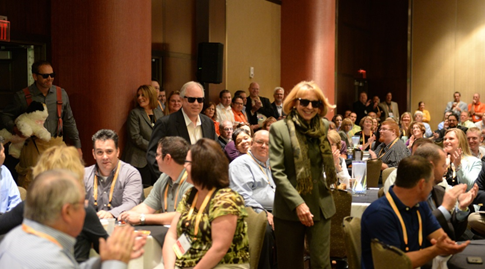
On Wednesday, insideARM launched its 2015 ARM-U program: two days, six webinars, that focuses specifically on compliance and operations questions the ARM industry struggles with continually. We were able to offer this program entirely free, and online, thanks to the generous support of our sponsors, BillingTree and LexisNexis.

Turnout was amazing: over 600 industry professionals — from first- and third-party collectors, to creditors, to collection attorneys, to debt buyers — making time in their day to listen to presentations from a variety of experts: John Bedard on the challenges and safe harbors of Regulation E; Terri Haley and Tim Bauer of the iA Institute on the best practices in vendor oversigh/management; and Ballard Spahr, giving some much needed clarity and a detailed walk-through of what a CFPB investigation will entail.

As a moderator for all the sessions, I was struck by the thoughtful quality of the questions. The common (and often unfair) picture of this industry is: anything to collect. But what I was seeing and hearing in all of these sessions was an eagerness and drive to get things right. And a wish for regulatory clarity.

That was also telling: while some questions had definite answers from panelists (a full series of reports is planned, pulled from each of the six presentations), many of the questions highlighted confusion within many of the laws and regulations themselves. While the FTC requires one thing, the CFPB may require something entirely different — and often contradictory. And because there is little cohesion among state laws, compliance suffers across the board.

Still, even recognizing the areas of confusion can help an agency in their compliance plan. Better still, though, would be some kind of definitive answer.

As insideARM prepares the next semester of ARM-U, we’d love the chance to hear from you about topics you’d be most interested in seeing, presented in a comprehensive way. Join me in the comments below, or send an email: editor@insideARM.com.

Graduation: ARM-U 2015 Highlights Need for Regulatory Clarity
http://www.insidearm.com/daily/debt-collection-news/accounts-receivables-management/graduation-arm-u-2015-highlights-need-for-regulatory-clarity/
http://www.insidearm.com/feed
insideARM

Accounts Receivable Management

TCPA Rulings Expected to Have Substantial Impact on Financial Services Industry

FCC Chairman Tom Wheeler’s TCPA “Fact Sheet” on forthcoming declaratory rulings issues should scare the heck out of any business using any telephone to reach potential, current or former customers. I believe the rulings will have a substantial impact on customer operations in the financial services industry.

I expect the Declaratory Rulings to touch a number of crucial issues driving TCPA litigation.

Businesses that want to call a customer’s cellphone using an “automated telephone dialing system” (ATDS) need the prior express consent of the “called party.” The Fact Sheet hints that the proposal “clarifies and reiterates” the consent required to do so. It better, because there are at least three interpretations of the “called party” being bandied about — 1) the recipient of the call, 2) the “owner” or “subscriber” of the cellphone account or 3) a person who has authority of the subscriber to allow the number to be called. The last option involves a person who provides the cellphone number of another, such as a spouse, domestic partner or housemate, but does not use or subscribe to the cellphone herself.

The nature and extent of the necessary consent also remains in flux.

If a business wants to contact its customer, it isn’t likely to do it using a phone system that randomly dials telephones. It is not going to use a phone system that sequentially dials numbers either. Businesses that leverage technology to increase the accuracy and integrity of their customer contacts will use a system that dials the telephones of its customers. But dialing technology that does not have the capacity to dial random or sequential numbers has still been found by some courts to fall within TCPA regulation. Other courts have disagreed, limiting TCPA regulation to systems that only have the present capacity to dial random or sequential numbers.

Chairman Wheeler’s Fact Sheet states that an ATDS must have the “capacity to dial random or sequential numbers.” The Chairman’s emphasis on the word “capacity” could mean that there will be exceptions for certain telephone technology as not all telephony systems have the capacity to dial random or sequential numbers. But that hope is muted by the Chairman when he goes on to say something very worrisome – the proposed rulings would prevent the use of “changes in calling technology design” or “calling from a list of numbers” that “skirt consumer consent.”

Calling from a list of numbers is probably the only way businesses can effectively telephone their customers. And there’s a lot of technology that can do this, even though they are not intended to dial “from a list of numbers.” Some systems have auto redial and can call back a telephone that was originally busy, without further intervention. Technology that schedules the time for the customer call and then makes the call is widely available. But if the proposed rulings are too expansive, this technology could pose a TCPA risk if the calls are deemed to be made “from a list of numbers.”

Since the Third Circuit’s 2013 decision in Gager v. Dell Financial Services, permitting a consumer to revoke prior consent to receive calls made using an ATDS, it has become the current fashion for TCPA complaints to allege the plaintiff had revoked their consent sometime before the alleged offending calls began.

At this point, there is no consensus as to how a person can revoke their prior express consent to receive a phone call that was initiated by an ATDS. Some decisions have allowed it to be orally delivered, but others have required it to be in writing. The nature and content of the revocation also remains an unresolved issue.

The FCC Chairman’s Fact Sheet suggests we should expect a ruling on revocation that would allow consumers to revoke consent “in any reasonable way at any time.”

Though it appears debt collection calls are not getting a pass from continued TCPA regulation, it remains to be seen what impact the rulings may have on such calls.

ATDS calls that would alert a consumer to certain events – the Chairman noted fraud alerts and medication refills – may get a limited exemption. But the Fact Sheet made an ambiguous reference to these calls or texts as “free.” If this means the consumer cannot be charged for receiving the call or text, then the exemption is likely worthless.

The risks of dialing a wrong number using an ATDS remain large and it is likely to stay that way unless the rulings add something beyond what is stated in the Fact Sheet. All we know now is that the ruling proposes to exempt “one call” to a wrong number.

Maurice Wutscher LLP will host a webinar on June 22 to analyze the new rulings. For more information and to register, click here.

TCPA Rulings Expected to Have Substantial Impact on Financial Services Industry
http://www.insidearm.com/daily/collection-laws-regulations/collection-laws-and-regulations/tcpa-rulings-expected-to-have-substantial-impact-on-financial-services-industry/
http://www.insidearm.com/feed
insideARM

Accounts Receivable Management

CFPB Announces Consumer Advisory Board Meeting, June 18 in Omaha, NE

Director Richard Cordray will be present, and topics will include trends and themes in consumer financial markets and recent proposals related to payday loans, auto-title loans, and other longer term credit products. Here is the meeting agenda. 

CenturyLink Center Omaha
455 N. 10th Street
Omaha, Neb. 68102

This event is open to the public, however an RSVP is required. A recording will be available after the event. Send an email to RSVP.

CFPB Announces Consumer Advisory Board Meeting, June 18 in Omaha, NE
http://www.insidearm.com/cfpb/cfpb-announces-consumer-advisory-board-meeting-june-18-in-omaha-ne/
http://www.insidearm.com/feed
insideARM

Accounts Receivable Management

Convergent Revenue Cycle Management, Inc. Promotes Don Barrett to Senior Vice President of Sales and Marketing

WOODLAND HILLS, Calif. – Convergent Revenue Cycle Management, Inc., a national provider of healthcare revenue cycle management and patient access solutions to top hospitals, is pleased to announce that Don Barrett has been promoted to Senior Vice President of Sales and Marketing. Barrett has 12 years of experience in the healthcare finance industry, and for six years, he served as Convergent’s Regional Vice President of Sales.

The top salesperson for Convergent service lines for multiple years, Barrett will now oversee all aspects of sales and marketing for the Convergent healthcare division, which offers PatientQuest™ patient access, self-pay collections, third-party reimbursement, receivables management and customer service solutions.

“I’m confident Don’s successful sales record and peer support will help Convergent continue to expand its client base,” said Mark Schanck, President of Convergent Revenue Cycle Management, Inc. “Further, with his solid industry knowledge, Don will ensure the company continues to provide healthcare customers quality products, service and support.”

Barrett started his career in the healthcare finance industry in 2003 as an Account Manager for AIM Healthcare, now known as Optum, where he worked with major accounts including Cleveland Clinic, University Hospitals, Lake Health and Summa Health System. He has a Bachelor of Arts degree in Finance and Marketing from Baldwin-Wallace College in Berea, Ohio, and he is an active member in the Healthcare Financial Management Association (HFMA) and the American Association of Healthcare Administrative Management (AAHAM).

“I’m excited to focus my energy and expertise on helping the Convergent team achieve its strategic sales goals,” Barrett said. “In addition, I’m happy to be in a position where I can continue to foster and monitor the continued success of Convergent’s existing healthcare clients.”

About Convergent Revenue Cycle Management, Inc.

Convergent is one of America’s largest business process outsourcing, patient service, revenue cycle and receivables management companies. Convergent’s healthcare division offers patient-focused contact center technology and regulatory expertise to help hospitals and healthcare providers improve financial operating performance, enhance the patient experience, and improve relationships between patients and providers. In 2014, Convergent was acquired by Account Control Technology Holdings, Inc., which offers comprehensive business process outsourcing solutions for the consumer, education, financial, government, healthcare, telecom, utility and other markets. For more information on Convergent, visit www.convergentusa.com or call 561-862-1999.

Convergent Revenue Cycle Management, Inc. Promotes Don Barrett to Senior Vice President of Sales and Marketing
http://www.insidearm.com/daily/medical-healthcare-receivables/medical-debt-collection/convergent-revenue-cycle-management-inc-promotes-don-barrett-to-senior-vice-president-of-sales-and-marketing/
http://www.insidearm.com/feed
insideARM

Accounts Receivable Management

Ontario Systems Opens Registration for PowerUp 2015, in Indianapolis October 7-9

MUNCIE, Ind. – Ontario Systems, a leading accounts receivable technology and services provider, opened registration today for PowerUp 2015, its annual customer conference and receivables education event, with details available at powerup.ontariosystems.com. Designed to further discussion around, and discover solutions to, the ARM and healthcare receivables industries’ most pressing challenges, this year’s conference will feature presentations from the company’s Chief Compliance Officer, Rozanne Andersen, along with Ball State University Distinguished Professor of Economics Michael Hicks and others.

This year’s event will be held at the Indianapolis Marriott Downtown, October 7-9. A recent Meetings & Conventions Gold Key Award winner, and 4-diamond hotel, this year’s venue features a unique configuration, integrating it right into the heart of downtown. Indianapolis was named by USA Today Travel readers as the nation’s “Best Convention City” in 2014, and attendees will be within walking distance of more than 250 restaurants and taverns, as well as the city’s Circle Centre Mall.

Potential attendees can view the full list of speakers, schedule and general information on the PowerUp website. Discounted earlybird prices last until July 10. Pricing for the event remains the same as last year.

“In an era of hyper-connected media and technology, sometimes the best way to cut through all the noise and learn about the issues that matter most is to get together in person,” says Ontario Systems Marketing VP, Casey Stanley. “Every year, we push to deliver an event that gives our extended Ontario Systems family – our customers, prospects, partners and employees – the information, discussion, solutions and fun that make going back to the office the week after an exciting proposition. We intend to do the same this time around, and we look forward to seeing everyone in Indianapolis in October.”

About Ontario Systems
Ontario Systems, LLC is a leading provider of accounts receivable and strategic receivables management solutions for the collection and healthcare industries. Offering a full portfolio of software, services and business process expertise, Ontario Systems customers include nine of the 10 largest collection agencies and three of the top six best health systems in the U.S., with 55,000 representatives in more than 500 locations.

To learn more about how Ontario Systems can help power up your receivables, visit OntarioSystems.com or email info@ontariosystems.com.

Ontario Systems Opens Registration for PowerUp 2015, in Indianapolis October 7-9
http://www.insidearm.com/daily/collection-technologies/collection-technology/ontario-systems-opens-registration-for-powerup-2015-in-indianapolis-october-7-9/
http://www.insidearm.com/feed
insideARM

Accounts Receivable Management

10 Questions to Ask Your Vendor Prior to Selecting a Collection Software Solution: Part 2

Lex Patterson

Lex Patterson

In our previous blog, we walked you through the first five questions you should ask your collection software vendor. We didn’t want to leave you hanging, so here are the Final Five questions.

As my business and the industry evolves, how flexible are your products?

As we have mentioned before, the collection industry is greatly changing and has been for some time now. We see it every day. We have noticed that our most successful customers are working to be overall providers for their clients and are moving “upstream”. To do this, many work on behalf of their clients as a billing solution or pre-collect. Our successful customers are evolving into other industries or departments as the 3rd party collection space faces further government and credit card regulation. Make sure that the solution(s) you are evaluating addresses your business needs today, but that the solution(s) also provides flexible ways to adapt for your future business plans and goals.

How are you addressing compliance within your products and software solution?

If industry compliance is an afterthought for your vendor and it’s not built into the core application with configurability to adapt accordingly to necessary regulations, continue to evaluate your vendor solutions. If your vendor isn’t on the leading edge of regulation and compliance, then continue to research your vendor pool.  Ask your vendor:

○     Does the system offer built-in compliance or do I need other “modules” that I will be charged extra for?

○     Is the system configurable to adapt to the state regulations that I am licensed in?

○     Does the system offer an enforced compliance architecture, where business rules are applied, followed, enforced and documented?

○     How does your product addressRegulation-E? Are there integrated services?

How easy is it for me to get my data for reporting during business operation, and in the event I want to move to another vendor?

It is one of the most important questions to ask your vendor candidates.  Make sure that you have complete and full access to your data during operation via an easy to use, graphical, report writer that doesn’t require a programmer to use.  Both technically and legally, make sure you will have access to your data in the event that you do decide to leave your vendor.  Thoroughly review the vendor’s proposed license and/or service level agreements (if they are proposing a hosted system along with data conversion).

Describe your project management, implementation, training, data conversion, custom development services that you will provide to quickly and efficiently get my organization live and using your products?

Any software product geared towards the accounts receivable and collection management market is only as good as the team who helps implement, train and consult, convert data and provide custom interface(s) development required for the go-live of the project. Be sure to ask thorough and detailed questions regarding this process of your system implementation project.  If there are not clearly defined, explained or provided references for you to review, be cautious.

What is your average turnaround time on a customer support request?

The service level and experience after implementation is complete is vital to your business success; you need a technology partner who is an extension of your office or organization and who can ensure your technical and functional requests are rapidly handled. If your vendor cannot provide the average turnaround time on a customer support request or if the references you contact provide negative information regarding customer service after the sale, spend your valuable dollars elsewhere.

Every expense you incur is critical in your operations and selecting the right technology partner is the most critical decision you will make. We look forward to getting the privilege to earn your business in this important decision. Contact DAKCS today to arrange youronline or onsite consultation today.

10 Questions to Ask Your Vendor Prior to Selecting a Collection Software Solution: Part 2
http://www.insidearm.com/connections-elevated/10-questions-to-ask-your-vendor-prior-to-selecting-your-collection-software-solution-part-2/
http://www.insidearm.com/feed
insideARM

Accounts Receivable Management

2 Days, 6 Webinars: ARM-U is a Free Online Event for Compliance and Operations Professionals

ARM-U 2015 starts next Wednesday, June 3, at 11.00 a.m. with a Keynote Webinar Presentation on Regulation E, presented by John Bedard. These educational presentations have been generously underwritten by our sponsors, BillingTree and LexisNexis (both of whom are presenting).

Registration to this free event is still open, and is a perfect opportunity for anyone in a compliance or operations role in your agency.

[REGISTRATION LINK]

“It’s going to be two days, six webinars, and probably more of my voice than anyone wanted to hear — but the speakers we’ve lined up and the topics being presented are just top-notch,” Mike Bevel, an editor and insideARM and the Director of Education for the Compliance Professionals Forum, said.

Registrants can attend as many of the webinars as they want (“Ignore that message that says ‘You’re expected to attend all the sessions,’” Bevel assured attendees. “While I believe all six sessions are can’t-miss, we also recognize that people have jobs, responsibilities, and lunch.”). And for those who have to miss one of the presentations, they’re all being recorded and will be made available afterwards.

The full schedule of presentations follows:

3 June 2015

11.00 a.m. – 12.30 p.m. EDT: A Deep Dive into Reg E
Presenter: John Bedard, Bedard Law Group
Join John Bedard for an in-depth look at Regulation E that specifically focuses on the pitfalls and danger zones (and confusions) faced by debt collectors.

1.00 p.m. – 2.30 p.m. EDT: Managing Compliance Risk Associated with Third Party Vendor Relationships
Presenters: Terri Haley, Compliance Professionals Forum & Tim Bauer, The iA Institute
Most organizations utilize third-party vendors for everything from mailing advertising and invoices to outsourcing entire service and product lines from the initial sale to the final payment. But how well do organizations manage risk related to third-party services? This presentation focuses on best practices in managing third-party service providers and vendors and key practices and considerations internal auditors should consider when evaluating Company management practices over these vital service partners.

3.00 p.m. – 4.30 p.m. EDT: CFPB Exam Prep Workshop
Presenters: Kim Phan, Stefanie Jackman, Amy Wall-Monte, Ballard Spahr
CFPB views an effective, up-to-date compliance management system to be the cornerstone of any effective compliance program. Our co-presenters, Stefanie Jackman and Kim Phan, will identify, analyze, and address a variety of trouble spots in debt collection and provide customized advice relating to what each attendee’s compliance management system should look like. Attendees will leave with a checklist of practical tips and strategies for implementing an effective compliance management system that reflects the needs of their individual debt collection companies. This is program is designed to share and develop operational strategies for complying with legal and regulatory issues currently impacting debt collections.

4 June 2015

11.00 a.m. – 12.30 p.m. EDT: How to create and implement a data integrity plan
Presenter: David Mertz, Global Debt Registry
In many of the consent decrees that the FTC has signed with ARM industry members since the 2009 there is a requirement for a data integrity program. What is a data integrity program? Is this something that I should be implementing in my business? Why is data integrity important? Am I required to set up a data integrity Program? How does this differ from my Compliance Management System? When I set up and implement a data integrity program, what benefits should I expect to realize? What are the risks if I don’t?

1.00 p.m. – 2.30 p.m. EDT: Consumer Disputes and your Compliance Management System
Presenters: Linda Straub-Jones and Annette Gaines, LexisNexis
A large part of your Compliance Management System (CMS) is consumer disputes. Properly detailing, tracking and handling disputes is a must. But were you aware that there are actually two types of consumer disputes you need to handle, and each has a slightly different process. In this session we will talk about consumer disputes that are originated from data you have received from your data providers.

3.00 – 4.30 p.m. EDT: The ABC’s of EFTA, Regulation E. and ESIGN
Presenters: Dave Yohe, BillingTree & David Kaminski, Carlson & Messer LLP
Understanding the context of the laws, regulations, staff interpretations and operating guidelines that shape your payment and collections policies can help you simplify operations and anticipate change. This discussion looks at scenarios and simple ways to maintain compliance, related case law and risk management for electronic payment collection. This presentation is appropriate for any industry collecting regular payments from consumers.

[REGISTRATION LINK]

2 Days, 6 Webinars: ARM-U is a Free Online Event for Compliance and Operations Professionals
http://www.insidearm.com/daily/debt-collection-news/accounts-receivables-management/2-days-6-webinars-arm-u-is-a-free-online-webinar-event-for-compliance-and-operations-professionals/
http://www.insidearm.com/feed
insideARM

Accounts Receivable Management

After Four Years Benjamin M. Lawsky Departs NYDFS as Superintendent

Benjamin M. Lawsky, Superintendent of Financial Services, announced today that he will depart the New York State Department of Financial Services (NYDFS) in late-June after four years serving as the newly created agency’s first superintendent. Superintendent Lawsky was unanimously confirmed to his position by the New York State Senate in May 2011.

A summary of NYDFS initiatives and enforcement actions is contained in its Annual Report, which can be viewed,here.

Superintendent Lawsky said: “I am deeply proud of the work our team has done building this new agency and helping strengthen oversight of the financial markets. We have assembled a great team at NYDFS and I have full confidence that the critical work of this agency will continue seamlessly moving forward. I also want to thank Governor Cuomo for the trust he showed in appointing me to this position and for providing us with the opportunity to serve the people of New York. On a personal level, I am deeply grateful to the Governor, who has been an incredible mentor and amazing friend to me over the past eight years.”

After Four Years Benjamin M. Lawsky Departs NYDFS as Superintendent
http://www.insidearm.com/daily/debt-collection-news/accounts-receivables-management/after-four-years-benjamin-m-lawsky-departs-nydfs-as-superintendent/
http://www.insidearm.com/feed
insideARM

Accounts Receivable Management