CFPB’s Taskforce on Consumer Financial Law Wants to Hear from Debt Collectors in RFI

The Consumer Financial Protection Bureau’s (CFPB) Taskforce on Federal Consumer Financial Law—established by Director Kraninger in January 2020—took its first step toward its mission by submitting a Request for Information (RFI). In the RFI, the Taskforce seeks input from the publish on areas in should focus on—specifically stating they want input from those involved with third-party and first-party debt collection markets.

To generalize, the Taskforce is looking for information on the current state of consumer financial products, laws, and regulations in order to determine how to best optimize the balance between consumer access to such products without compromising consumer protection. Some questions asked in the RFI include:

  • What areas of the consumer financial services markets are functioning well? Defined as being fair, transparent, and competitive.
  • What areas of the markets would benefit from regulatory change?
  • Are there areas in current laws and regulations that are “of significant ambiguity or inconsistency in the regulations?”
  • “Where have regulations failed to keep up with rapid changes in consumer financial services markets?”
  • Whether clear, bright-line rules are favorable to a “principle-based” approach in regulations?
  • Credit reporting—are current protections sufficient? 
  • Credit reporting—are requirements for companies to regarding procedures to ensure the accuracy of credit reports sufficient?
  • Data breaches—would a federal law or regulation be desirable in order to have a uniform national standard for data breach obligations?

The prevalent question in some of these sections is:

Are there any obligations in these regulations or statutes that impose a burden not justified by the corresponding consumer benefit?

Submitting Comments

Comments to the RFI will be due 60 days after the RFI is published in the Federal Register, which has not yet occurred. Instructions on submitting comments are included in the RFI document.

[article_ad]

insideARM Perspective

While the CFPB has already heavily focused on the debt collection industry in its recent rulemaking, industry members should respond to this RFI for multiple reasons.

First and foremost, the Taskforce explicitly requests input from the debt collection markets. Does this mean there will be further regulations down the road beyond the current proposed rules? Who knows, but if there are, debt collectors need to have their voices heard. 

This is also an opportunity to address certain areas of current legal and regulatory difficulty for debt collectors. For example, the large chunk of a debt collector’s legal budget that is dedicated solely to paying out settlements to crafty plaintiffs’ counsel, caused by the one-sided nature of the FDCPA’s attorney fee provision, who bring—as E.D.N.Y. calls them—”lawyer’s case[s]” should be eye-opening. Or how about the incredible burdens that credit repair organizations are causing to debt collectors, which ultimately harms consumers, by flooding debt collectors with massive volumes of form credit disputes—again with the goal to seek out a legal settlement from a debt collectors—making it difficult for debt collectors to separate true disputes from the chaff? 

There are many, many topics that can be addressed, and insideARM urges not just industry groups, but individual companies and firms, to submit responses to this RFI.

CFPB’s Taskforce on Consumer Financial Law Wants to Hear from Debt Collectors in RFI

http://www.insidearm.com/news/00046075-cfpbs-taskforce-consumer-financial-law-wa/
http://www.insidearm.com/news/rss/
News
All the latest in collections news updates, analysis, and guidance

CFPB Releases 2019 FDCPA Report; Announces Extension Of Comment Period

The CFPB’s annual report on its activities with debt collection was released on March 20. You can find the full report here.

There are several items that deserve calling out:

1) False Representation of the Amount and Legal Status of the Debt (Section 807(2)(A) of the FDCPA)

In its examinations conducted in 2019, the Bureau found that “one or more” agencies falsey represented the amount due and incorrectly assessed/collected “interest not authorized by the underlying contracts between the debt collectors and the creditors.”

Adding interest to accounts is not without risk — whether its assessing it or properly noting it on the collection letters — and most RESEARCH ASSISTANT members would rather not add interest charges at all, due to the liability issues that come along with this practice.

2) Failure to Disclose in Subsequent Communications That Communication is from a Debt Collector (Section 807(11) of the FDCPA)

In its examinations, the CFPB also noted that some agencies weren’t explicit in every communication with a consumer that the call or letter was from a debt collector.

“In response to these findings, the collectors revised their Section 807(11) policies and procedures, monitoring and/or audit programs, and training.”

3) Failure to Send Notice of Debt (809(a) of the FDCPA)

“Examiners found that one or more debt collectors failed to send the prescribed validation notice within five days of the initial communication with the consumer regarding collection of the debt, where required.”

4) Debt Collection Amicus Briefs

5) Bureau Law Enforcement Actions

6) Supplemental Notice of Proposed Rulemaking: Extension on Comments for Time-Barred Debt Collection

“Additionally, the Bureau announced today that it is extending the comment period on its Supplemental Notice of Proposed Rulemaking (SNPRM) implementing the Fair Debt Collection Practices Act (FDCPA). The SNPRM, which proposed to require debt collectors to make certain disclosures when collecting time-barred debts, provided a 60-day public comment period that was set to close on May 4, 2020. Given the challenges posed by the COVID-19 pandemic, the comment period will be extended to June 5, 2020.”

insideARM previously published an article regarding the extension of the comment period. It can be found here

CFPB Releases 2019 FDCPA Report; Announces Extension Of Comment Period
http://www.insidearm.com/news/00046076-cfpb-releases-2019-fdcpa-report-announces/
http://www.insidearm.com/news/rss/
News

All the latest in collections news updates, analysis, and guidance

NACARA Issues Message Amid COVID-19—Consumers, Contact Collectors; Regulators, Recognize Collection Agency Hardships

Editor’s Note: For all related insideARM articles and other information, please check insideARM’s COVID-19 Impact resources page.

Today, the North American Collection Agency Regulatory Association (NACARA) issued a message regarding the COVID-19 health crisis, which includes guidance for consumers, regulated entities, and regulators.

[article_ad]

NACARA acknowledges the unprecedented situation caused by the pandemic, both for consumers and debt collectors alike. 

NACARA writes: 

[I]t is imperative that regulators be sensitive to the fact that collection agencies may be facing significant hardship in supporting full operations and serving customers during this health crisis (especially given the size, scope, and complexity of operations from collection agency to collection agency).

Due to this, as well as executive orders that limit the operations of debt collection businesses, debt collectors may be limited “in their ability to service their clients and debtors altogether.” NACARA urges reasonableness among regulators, including flexibility with work-from-home restrictions for debt collectors and regulatory deadlines.

As for a message to consumers, NACARA states: 

If you are concerned about your ability to make timely payments or otherwise meet your debt obligations, contact your collection agency as soon as possible. While many people and businesses may find this difficult, keep in mind that a collection agency can’t offer help without communication. Payment assistance, including deferral of payments, or other mitigation options may be available.

NACARA also urges regulated entities to work with consumers during this time:

At a minimum, regulated entities should take reasonable steps in an attempt to offer assistance to all consumers and commercial debtors who have suffered a loss of income due to this emergency or have otherwise experienced impacts that could affect their ability to repay their debts.

The message lists several actions that businesses could take, such as foregoing reporting of payment information, offering payment plan modifications or forbearances, and to proactively reach out to consumers to provide information available assistance.

[article_ad]

insideARM Perspective

Amid a flurry of calls for an all-out ban of collection efforts over the past few days, NACARA’s message is more reasoned and thought through. The ARM industry appreciates NACARA’s understanding of the nuances of not just the debt collection industry, but of the role it plays in helping consumers through some of the hurdles presented whenever consumers are faced with difficult financial times. Debt collectors do more than just collect—they provide vital information and resources to consumers. They answer questions, they can implement hardship measures such as amending or delaying payment plans, informing creditors of the consumer’s inability to pay, and inform the consumer of special assistance plans tailored to their type of debt. And, as NACARA states, “a collection agency can’t offer help without communication.”


NACARA Issues Message Amid COVID-19—Consumers, Contact Collectors; Regulators, Recognize Collection Agency Hardships
http://www.insidearm.com/news/00046071-nacara-issues-message-amid-covid-19consum/
http://www.insidearm.com/news/rss/
News

All the latest in collections news updates, analysis, and guidance

Mass. AG Seeks to Ban Outbound Debt Collection Calls, Enacts Other Measures Amid COVID-19 Crisis

Editor’s Note: For all related insideARM articles and other information, please check insideARM’s COVID-19 Impact resources page.

Updated to clarify prohibition is for telephone calls.

Massachusetts’ Attorney (AG) General seeks emergency measures amid the COVID-19 crisis, including a ban on outbound collection calls and legal enforcement of unpaid debt. The AG also joins a coalition of other state attorneys general to implore ED to take stronger measures to protect student loan borrowers.

New Mass. Emergency Debt Collection Rules

Today, the AG filed with the Mass. Secretary of State a new set of rules that outline unfair and deceptive practices during the COVID-19 emergency. The notice of the adoption of these emergency rules states:

Under the present circumstances, certain practices by creditors and debt collectors are unfair and deceptive and violate the Massachusetts Consumer Protection Act.

The new rule covers a period until 90 days after the adoption of the regulation or until the expiration of the state of emergency, whichever occurs first.

Prohibitions on Legal Enforcement of Debt

Under the new rule, it is an unfair or deceptive act or practice for any creditor or debt collector to seek legal remedies for debt, such as initiating, filing, or threatening to file any new collection lawsuit or seek an equitable remedy (such as garnishment, seizures, or repossessions). There are certain exceptions, such as actions for loans secured by mortgages on real property or, in some circumstances, for a utility regulated by the Dep’t. of Public Utilities or Dep’t. of Telecommunications and Cable.

Prohibition on Outbound Collection Calls

The new rule also includes a sweeping prohibition on outbound debt collection calls. The rule states that it applies “only to debt collectors.” However, the definition of “debt collector” under this rule includes debt buyers. It is unclear whether agencies who do first-party work fall under this category.

According to the rule:

[I]t shall be an unfair or deceptive act or practice for any debt collector to initiate a communication with any debtor via telephone, either in person or by recorded audio message to the debtor’s residence, cellular telephone, or other telephone number provided by the debtor as his or her personal telephone number, provided that a debt collector shall not be deemed to have initiated a communication with a debtor if the communication by the debt collector is in response to a request made by the debtor for said communication.

The rule does not contain a prohibition on answering inbound calls. 

Exceptions to the outbound call prohibition include informing a consumer of a rescheduled court appearance and for debts secured by a mortgage on real property. 

[article_ad]


Imploring ED to Expand Protections for Student Loan Borrowers

In addition to filing these new rules, the Attorney General joined 26 other state attorneys general to implore the U.S. Department of Education (ED) to take stronger measures to protect federal student loan borrowers during this time.

Earlier this week, ED announced that it will suspend legally enforcing debts through seizures such as wage and tax return garnishments. The attorneys general are asking ED Secretary DeVos to halt involuntary collection efforts on all federal student loans. ED’s prior guidance extended to loans held by the department, but the AGs request that it extend to Federal Family Education Loans and Perkins Loans as well.

The AGs also request that ED automatically enrolling student borrowers who request a forbearance or become delinquent in their loans into the Income Driven Repayment plan for $0/month payments without needing to apply for such.

insideARM Perspective

iA reached out to Manny Newburger, the leader of Barron & Newburger, P.C.’s Consumer Financial Services Law Practice Group, to get his thoughts on the AG’s emergency rules. Newburger states:

The regulations are clearly a well-intentioned effort on the part of the Attorney General to provide relief to those who need it. Unfortunately, they still represent a prior restraint on speech that is not content-neutral. They also restrict access to the courts, a constitutionally protected right. Most troublingly, they impose these restrictions across the board, without regard to whether the consumer has suffered an adverse economic impact as a result of the current emergency.

I respect and appreciate the need to protect those who have been devastated by the shut-down. I do not understand why those victims of COVID-19 are being placed on an equal footing with those who have remained fully employed at businesses that have remained fully operational.

Mass. AG Seeks to Ban Outbound Debt Collection Calls, Enacts Other Measures Amid COVID-19 Crisis
http://www.insidearm.com/news/00046067-mass-ag-bans-outbound-debt-collection-cal/
http://www.insidearm.com/news/rss/
News

All the latest in collections news updates, analysis, and guidance

Ohio Governor and Dep’t. of Health Issues Stay at Home Order

Editor’s Note: For all related insideARM articles and other information, please check insideARM’s COVID-19 Impact resources page.

Ohio joins the growing list of states—which can be found here—who have issued stay-at-home or shelter-in-place orders. The Director of Ohio’s Department of Health has issued an order for Ohio residents to stay at home, and that all non-essential business and operations must cease.

The order lists what it deems to be essential businesses. Under the financial and insurance institutions section, the order lists banks, consumer lenders, credit unions, payday lenders, and “affiliates of financial institutions.”


Ohio Governor and Dep’t. of Health Issues Stay at Home Order

http://www.insidearm.com/news/00046070-ohio-governor-and-dept-health-issues-stay/
http://www.insidearm.com/news/rss/
News

All the latest in collections news updates, analysis, and guidance

North Carolina A.G. Suspends Collection of State-Owned Debts Amid COVID-19 Pandemic

Editor’s Note: For all related insideARM articles and other information, please check insideARM’s COVID-19 Impact resources page.

North Carolina’s Attorney General announced yesterday that he is taking action to alleviate the financial burdens of residents during the coronavirus pandemic. In a similar chord to the path taken by New York, North Carolina will immediately suspend N.C. Department of Justice’s efforts to collect debts owed to the state. 

The Attorney General is also asking local and municipal utilities to maintain access to vital necessities for N.C. residents, including water, power, and gas.

The Attorney General states:

North Carolinians who are struggling with their health, have been laid off from their job, or are facing cuts to their income in the wake of COVID-19 should not have to bear additional burdens that will further harm their health or their finances.

[article_ad]

North Carolina A.G. Suspends Collection of State-Owned Debts Amid COVID-19 Pandemic
http://www.insidearm.com/news/00046068-north-carolina-g-suspends-collection-stat/
http://www.insidearm.com/news/rss/
News

All the latest in collections news updates, analysis, and guidance

TEC Services Group, Inc., Along with Sponsor Corporate Advisory Solutions, Announce the Return of the Scholarship Program for 2020

SARASOTA, Fla. — TEC Services Group, Inc. is pleased to announce their annual Scholarship Program has returned for 2020, now in its fifth year. TEC is also excited to announce Corporate Advisory Solutions (CAS) as a sponsor again this year. The program is open to employees of the Accounts Receivable Management (ARM) industry and their dependent children. Selected participants will be awarded up to $1000 in scholarship funds. Applicants are eligible to receive an award up to four times during the term of their undergraduate program.

TEC began the program in 2016 to promote continuing education for the ARM community and to recognize academic excellence in students. To be eligible to participate, applicants must be a United States citizen and will be required to participate in an essay, provide academic achievements and community involvement.

[article_ad]

“TEC has partnered with CAS to bring this scholarship program to the ARM industry once again.” Tom Sweat, President of TEC Services Group commented that “Our companies remain focused on giving students the opportunity to expand their knowledge while reducing student debt and Michael Lamm’s commitment to giving back to the ARM community remains paramount to this program’s success.”  TEC and CAS are committed to helping companies expand through mergers and acquisitions and are there to drive success.”

For more information about the program or to request an application, please contact TEC directly at (941) 375-0300 or Scholarship@TECsg.com. All applications and supporting materials must be received on or before May 31, 2020.  Scholarship recipients will be announced in July 2020.

For more information about Corporate Advisory Solutions, please visit https://corpadvisorysolutions.com.

TEC Services Group, Inc., Along with Sponsor Corporate Advisory Solutions, Announce the Return of the Scholarship Program for 2020
http://www.insidearm.com/news/00046069-tec-services-group-inc-along-sponsor-corp/
http://www.insidearm.com/news/rss/
News

All the latest in collections news updates, analysis, and guidance

Managing A/R from Afar: How Well Are Your Remote Agents Performing?

Editor’s Note: This article previously appeared on the Ontario Systems Blog and is republished here with permission.

All COVID-19 related articles published by insideARM can be found here

The healthcare industry’s remote A/R workforce is growing fast, as more providers and RCM service providers discover the benefits of this arrangement and build the infrastructure to make it work. According to a 2019 Deloitte survey, 56% of executives surveyed plan to have at least some contact center employees working at home in the next two years.

While this is a positive trend, A/R leaders are struggling to manage their remote agents’ performance. Many are forced to rely on agents’ self-reporting, which can be unreliable and doesn’t lend itself to effective performance management.

[article_ad]

If your remote A/R team isn’t firing on all cylinders, you’re still miles away from optimizing your revenue cycle.

What’s the secret to helping remote A/R agents become more effective and engaged in their jobs? How can you make informed decisions about how best to use the talent you have? How can you do all this with ease while scaling your operation?

The answer to all of the above is real-time performance data put to good use. 

Remote A/R Agent Performance: The Crucial Data You’re Missing

If you have remote A/R agents, you need real-time visibility into a variety of qualitative and quantitative performance measures including:

  • How collectors are using their time (how much time spent on the phone, how much time they spend on hold, number of claims worked per hour, etc.)
  • How appropriately and effectively they interact with payers and patients
  • Any procedural errors they might be making
  • Opportunities they may be missing to follow up on claims or serve patients better

With these data, you can take significant steps to improve productivity, ensure compliance with employer and payer standards, and keep engagement and morale high through timely encouragement and feedback. You can also compare productivity levels to reallocate your resources for the best possible results.

These are the keys to not only cutting days in A/R, but also improving efficiency and creating a more motivated, loyal workforce.

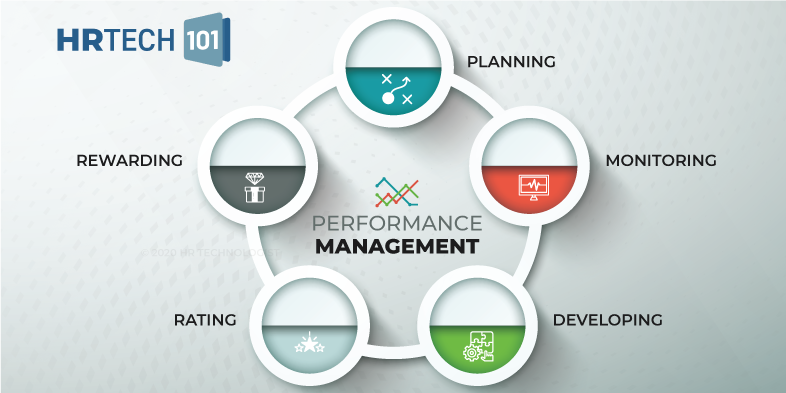
Continuous Performance Management (CPM): What Remote Agents Need to Succeed

A/R performance management

Source: HR Technologist

“Traditionally, performance management has been a forward-looking solution based entirely on hindsight. But organizational culture is evolving to one of continuous feedback powered by technology, where managers can foresee problems based on current employee performance and initiate any form of course correction to bring the employee back on track.” – HR Technologist

4 Ways to Use Real-Time Data to Manage Remote A/R Agents

You require certain things of your remote agents to keep the revenue cycle humming. They need certain things from their managers to understand the importance of their role and increase their value to the organization.

If you’re looking to take charge of performance management, energize your team, and improve their results over time, these four capabilities are mission-critical.

[article_ad]

Voice and data monitoring

Without detailed, timely information related to every call made and every account worked, it’s tough to assess (let alone improve) remote agents’ performance. Managers should be able to listen in on agents’ calls, whether in progress or recorded, and monitor all account-related activities and updates as they occur.

Dashboard displays

Every agent and manager should have a dashboard display that streams real-time data including accounts worked per payer call, hold times, call volumes, time spent on the phone, etc. This shared view allows managers to deliver valuable coaching as needed and gives agents the means to self-correct.

Performance alerts

Setting daily and monthly performance goals is critical. So is monitoring agents’ progress and knowing when they aren’t making the most of their time or advancing toward their goals. Any signs of declining performance should trigger timely notifications so managers can intervene early and effectively.

Collector rankings

Friendly competition is a powerful motivator. It boosts engagement, builds team cohesion, and drives progress. Agents should always know, at a glance, how they rank against the team’s top performers so they can use the data at their disposal to try to improve their standing.

Next Up: Automating QA to Drive Efficiency and Progress

Manual quality assurance (QA) processes have plenty of downsides for A/R leaders and teams. Among the biggest are the time managers must spend mining data and scoring agents (leaving less time for coaching and training) and agents’ perceptions of bias and unfairness.

For providers with remote teams, automation can turn QA into a less burdensome, more valuable performance management tool. In a future post, we’ll explain how automated QA works and why it’s a must-have for the A/R front line.

Managing A/R from Afar: How Well Are Your Remote Agents Performing?
http://www.insidearm.com/news/00046060-managing-r-afar-how-well-are-your-remote-/
http://www.insidearm.com/news/rss/
News

All the latest in collections news updates, analysis, and guidance

New State Shelter-in-Place Orders, Non-Essential Business Shut Down Guidance (NV, CT, IL, LA, MA, MD, NJ, NY, OH)

Editor’s Note: All COVID-19 related articles published by insideARM can be found here

The situation is rapidly changing each day as states decide how best to slow the spread of COVID-19. Over the past few days, several states have issued shelter-in-place orders or updated guidance on what types of businesses are and are not permitted to continue running as usual.

Nevada

Nevada’s governor initially provided guidance for the closure of non-essential businesses. On Friday, that guidance is no longer a recommendation, but an order. In effect until April 16, 2020, the governor has officially ordered businesses “not essential to providing sustenance and for the everyday safety, health, and wellbeing of Nevadans” to shut down. 

Specifically of interest to our readers, an update notice from the Nevada Department of Business and Industry, Financial Institutions Division clarifies that collection agencies are non-essential. 

Based upon the above, a collection agency is deemed a non-essential business at this time. Accordingly, the Nevada Financial Institutions Division must enforce the Governor’s mandatory emergency directive and direct all collection agencies holding a license under Nevada Revised Statutes Chapter 649 and located in this State to close effective midnight tonight until April 16, 2020, unless otherwise modified or withdrawn by Governor Sisolak. All collection agencies holding a license or certificate under Nevada Revised Statutes Chapter 649 and located out-of-state must cease collection efforts with Nevada consumers/residents effective midnight tonight until April 16, 2020, unless otherwise modified or withdrawn by Governor Sisolak.

The governor’s notice adds:

By signing the directive, I am granting local governments the authority they do not currently have to impose civil penalties—including fining and revoking licenses—of businesses that do not shut down…If businesses defy this directive and stay open, state AND local law enforcement will the ability to treat this as a criminal act after all other options have been exhausted.

New and Updated Shelter-in-Place Orders

Over the weekend, several states have issued new or updated shelter-in-place orders. Those states include (in alphabetical order): 

[article_ad]

Connecticut

On Sunday, March 22, Connecticut’s governor released guidance to businesses on how to proceed mind the previously-issued state-wide orders. Connecticut issues a stay-at-home order on March 10. Then, on March 20, the governor issued another executive order that directs the use of telecommuting options where possible and that non-essential business entities reduce their in-person workforce no later than 8pm on Monday, March 23.

Collection agencies are not explicitly listed in the guidance as being essential businesses, but other related businesses are, such as: financial institutions such as banks, accounting and payroll services, and legal and accounting services. 

Illinois

On Friday, March 20, the governor of Illinois issued an executive stay-at-home order. The order requires that non-essential businesses cease operations unless they are able to perform via telecommuting from residences. Section 12 of the order lists businesses considered as “essential.” Under the financial institution subsection, the order lists the following businesses as essential:

  • Banks
  • Consumer lenders, including but not limited, to payday lenders, consumer installment lenders, and sales finance lenders
  • Credit unions
  • “Affiliates” of financial institutions.

Louisiana

On Sunday, March 22, Louisiana’s governor issued a stay-at-home order that is effective until April 12. Louisiana residents are ordered to stay home except for essential outings. 

Maryland

Today, Maryland’s Office of Legal Counsel issued interpretive guidance as to what businesses fall under the essential category of the governor’s March 19, 2020, order closing all non-essential businesses. Related to the financial sector, the guidance states that the following—among others—are considered essential: 

  • Banks and credit unions
  • Non-bank lenders
  • Payment processing companies
  • Accounting and bookkeeping firms

Massachusetts

Today, Massachusetts’ governor issues an emergency order, which requires all non-essential businesses to close their physical workplaces and facilities. The order is effective as of Tuesday, March 24, through April 7 at noon. The governor also provided a list of businesses considered essential. For financial services, the following are considered essential:

  • Workers who are needed to process and maintain systems for processing financial transactions and services (e.g., payment, clearing, and settlement; wholesale funding; insurance services; and capital markets activities)
  • Workers who are needed to provide consumer access to banking and lending services, including ATMs, and to move currency and payments (e.g., armored cash carriers)
  • Workers who support financial operations, such as those staffing data and security operations centers

New Jersey

The governor of New Jersey has issued a state-wide “stay at home” order, which also requires the closure of all non-essential retail businesses. Banks and financial institutions are listed as exceptions to this order. 

New York

New York’s governor issued an executive order directing non-essential businesses to close in-office personnel functions as of 8PM on Sunday, March 22. The order lists the following financial institutions as essential: banks, payroll, accounting, and services related to financial markets. 

Ohio

Ohio’s governor issued a shelter-in-place order, effective at 11:59pm tonight (Monday, March 23) until April 6, unless otherwise amended. The order requires that residents stay home except for essential outings. The order requires non-essential businesses to close. Ohio uses the U.S. Department of Homeland Security’s definition of essential business

insideARM Perspective

Other than in Nevada, there is no explicit guidance on whether or not collection agencies fall under the definition of essential business. We will keep track of any developments—such as the update about Nevada, which provided clarification. In the meantime, companies should speak with their legal counsel to determine if they fall under the “essential” business category.

New State Shelter-in-Place Orders, Non-Essential Business Shut Down Guidance (NV, CT, IL, LA, MA, MD, NJ, NY, OH)
http://www.insidearm.com/news/00046043-new-state-shelter-place-orders-shut-down-/
http://www.insidearm.com/news/rss/
News

All the latest in collections news updates, analysis, and guidance

FCC Takes Narrow View of TCPA “Emergency Purposes” Exemption for Coronavirus-Related Texts

A lot of firms have been taking stabs with misleading “emergency purposes” TCPA blogs regarding the coronavirus epidemic- hazarding a guess about what is, and is not, permissible without any guidance from the FCC on the subject. (Really inappropriate in my view.) We stayed clear of doing so, and now you’ll see why.

On Friday the FCC issue its FIRST and ONLY declaratory ruling on the subject—again don’t believe some of the misleading headlines you may have seen out there on this— and its clarifications are narrow. On its own motion the FCC exempted certain calls related to the coronavirus pandemic from TCPA requirements—but only calls made by certain callers regarding certain topics:

First, the caller must be from a hospital, or be a health care provider, state or local health official, or other government official as well as a person under the express direction of such an organization and acting on its behalf. Second, the content of the call must be solely informational, made necessary because of the COVID-19 outbreak, and directly related to the imminent health or safety risk arising out of the COVID-19 outbreak.

(Emphasis added.)

[article_ad]

The FCC goes on to expressly clarify that certain forms of Covid-19 related messages are not emergency in nature. These include “advertising a commercial grocery delivery service, or selling or promoting health insurance, cleaning services, or home test kits.”

Ruling available here: Coronavirus Ruling

We will have further analysis tomorrow. But for those of you wondering about the scope of the “emergency purposes” exemption—this is the definitive guidance you’ve been waiting for. More to come.

Editor’s note: This article is provided through a partnership between insideARM and Squire Patton Boggs LLP, which provides a steady stream of timely, insightful and entertaining takes on TCPAWorld.com of the ever-evolving, never-a-dull-moment Telephone Consumer Protection Act. Squire Patton Boggs LLP—and all insideARM articles—are protected by copyright. All rights are reserved.

FCC Takes Narrow View of TCPA “Emergency Purposes” Exemption for Coronavirus-Related Texts

http://www.insidearm.com/news/00046045-fcc-takes-narrow-view-tcpa-emergency-purp/
http://www.insidearm.com/news/rss/
News

All the latest in collections news updates, analysis, and guidance