Verifacts, LLC. Volunteers at Sauk Valley Foodbank

STERLING, Ill. — VeriFacts, LLC recently volunteered at the Sauk Valley Foodbank in Sterling, IL to help feed hundreds of local families who are facing food insecurity. 

While VeriFacts. has been tackling the challenges of being a small business during the COVID-19 pandemic, food banks have been battling not just the increased demand for meals, but also a drop in the number of volunteers. To support families from the local community who are also hurting during these times, the VeriFacts team volunteered at the Sauk Valley Foodbank to package 300 boxes of food. The Sauk Valley Foodbank distributes the boxes to local food pantries for distribution within the community. With each box feeding a family of 4, the team helped to ensure that approximately 1,200 people have access to food. 

The Sauk Valley Foodbank is a 501(c)(3) charitable organization that began in 2001 after the United Way of Whiteside County formed a committee to address the increased demands on local food pantries after the closure of large manufacturing businesses in the area. The organization began with two pallets of donated food almost two decades ago and has now grown to handle more than 2 million pounds of food per year. The Sauk Valley Foodbank doesn’t distribute directly to those in need, instead, it supplies food to local food pantries and other agencies. 

“We have all felt the impact of the COVID-19 pandemic and our team knows how important it is to give back to our community, especially in times of crisis,” says Stephanie Clark, Chief Executive Officer of VeriFacts, LLC. “By volunteering for just one day, we helped to package meals for 300 families who are facing hunger, giving them one less thing to worry about during these challenging times. We feel that it is essential to step in and step up to help our neighbors during these uncertain times. We hope that through our service, we inspire others to give their time or share their talents to help lessen the impact of the pandemic in their own communities.”

With local food banks struggling to meet the needs of the community, the VeriFacts team is not only volunteering for one day at the Sauk Valley Foodbank. “We realize that the needs in our community are amplified by the coronavirus outbreak,” continues Ms. Clark. “The Sauk Valley Foodbank is doing essential work to ensure that our community has enough to eat. Over the next few weeks, we will continue to volunteer and package meals that will be distributed by local food pantries to those who need it the most. We are a small company with a big heart, and we are humbled to be able to make such a large impact with such a simple donation of time.” 

To volunteer, make a donation, or get more information about the Sauk Valley Foodbank, please visit their website at saukvalleyfoodbank.org.

About VeriFacts, LLC

A leading service provider to the receivables management industry for over 25 years, VeriFacts, LLC  is committed to offering guaranteed customer location and employment verification services to creditors across the nation. The VeriFacts brand has become synonymous with high-quality service and a positive customer experience.

Verifacts, LLC. Volunteers at Sauk Valley Foodbank
http://www.insidearm.com/news/00046478-verifacts-llc-volunteers-sauk-valley-food/
http://www.insidearm.com/news/rss/
News

All the latest in collections news updates, analysis, and guidance

Circuit Split on Standing Gets Wider: 11th Circuit Tosses FDCPA False/Misleading Claim

The U.S. Supreme Court decision in Spokeo v. Robins was all the rage when it was first released in 2016. In reality, it caused a messy aftermath of case law related to Article III standing that ultimately led to a big circuit split in the FDCPA context. This week, the Eleventh Circuit Court of Appeals (11th Circuit) further solidified this split when it found that a plaintiff who claims consumers might be misled by a debt collection communication, but he himself was not misled, lacks Article III standing to bring an FDCPA claim.

[article_ad]

Factual and Procedural Background

In Trichell v. Midland Credit Mgmt, Inc., at issue were collection letters sent by defendant to several consumers. The letters contained “preapproved” discounted payment plans on time-barred accounts. The letters also included a time-barred debt disclosure that read, “The law limits how long you can be sued on a debt and how long a debt can appear on your credit report. Due to the age of this debt, we will not sue you for it or report payment or non-payment of it to a credit bureau.”

Two plaintiffs sued defendant in two separate lawsuits, both alleging that this language was false and misleading. One suit alleged that the language could mislead a consumer into thinking that defendant could could sue or credit report the account—the ol’ “will not” versus “cannot” wording debacle of time-barred debt disclosures. The other suit alleged that the language was misleading because it did not warn about the consequences of a partial payment on a time-barred debt.

The district court dismissed each case, and both were appealed to the 11th Circuit. In its decision, the 11th Circuit combined the cases.

Decision on Standing

According to the decision, neither party argued standing in their respective initial briefs, and standing was not discussed in the district court opinions. Yet, standing became the crux of the cases after the 11th Circuit, on its own accord, requested that the parties brief the issue. The appellate court concluded that both plaintiffs lacked standing, whichever way the issue was sliced.

Poignantly, the court found:

With no plausible allegation that they were ever at substantial risk of being misled, Trichell and Cooper cannot show standing based on such a risk to others.

The court delved into several different theories of standing, and came to the same conclusion in each.

Theory 1: No detrimental reliance

First, the court looked at history to see when an intangible injury—such as the one here, since plaintiffs failed to show that they themselves were actually misled by the letters—qualifies as concrete. The closest example the court could find to a false/deceptive/misleading claim is one of misrepresentation, which requires that the plaintiff relied on the misrepresentation to their detriment and had actual damages. Plaintiffs were unable to show either element in their claims before the 11th Circuit.

Theory 2: Congressional intent

Next, the court looked at congressional intent to determine whether Congress intended intangible, purely statutory damages to meet the standing threshold. The court notes:

The FDCPA’s statutory findings contain one sentence identifying the harms against which the statute is directed: “Abusive debt collection practices contribute to [a] number of personal bankruptcies, to marital instability, to the loss of jobs, and to invasions of individual privacy.” 15 U.S.C. § 1692(a). These serious harms are a far cry from whatever injury one may suffer from receiving in the mail a misleading communication that fails to mislead.

The FDCPA’s private cause of action reinforces this analysis. It provides that a person may recover “any actual damage sustained by such person as a result of” an FDCPA violation and “such additional damages as the court may allow.” 15 U.S.C. § 1692k(a). This formulation suggests that Congress viewed statutory damages not as an independent font of standing for plaintiffs without traditional injuries, but as an “additional” remedy for plaintiffs suffering “actual damage” caused by a statutory violation.

CLT ad - Try it for free

Theory 3: Standing based on risk

Next, the court rejected plaintiffs’ arguments that they had standing based on risk. The court was unpersuaded with the idea that potential risk to others is sufficient. Instead, it found that plaintiffs failed to show that the letters posed any risk of harm to themselves, and that any risk that may have existed dissipated by the time the suit was filed. Regarding the latter, the court noted that the “complaints explain perfectly well why the collection letters were arguably misleading,” which indicates that plaintiffs could not allege that they would be misled in the future.

Theory 4: Standing based on informational injuries

Last, the court rejects plaintiffs’ theory that their standing is based on informational injuries. The primary reason for this rejection was because, unlike other statutes where informational injuries might serve as standing, the FDCPA sections invoked by the plaintiffs are not public disclosure statutes that require the disclosure of certain information. Instead, these invoked sections only requires that if a debt collector communicates with a consumer, that communication must not be misleading.

And the gravamen of the plaintiffs’ complaints is not that they sought and were denied desired information, but that they received unwanted communications that were misleading and unfair. The informational-injury cases thus are inapposite.

insideARM Perspective

Regardless of the way the standing issue is sliced, the 11th Circuit found that plaintiffs lacked Article III standing because they themselves were not misled by the communication. This is huge, and might put the kibosh on the myriad false/deceptive/misleading claims brought by the frequent filer attorneys in the 11th Circuit.

In its decision, the court recognizes that there is a circuit split on this issue. Might this be yet another industry-related case that sees its way up to the U.S. Supreme Court’s steps? That would sure be interesting.


Case Law Tracker

Want to easily track jurisdictional splits and be the first to know when they’re resolved?
The iA Case Law Tracker helps you do that in less time than it takes to pour your morning cup of coffee.

Circuit Split on Standing Gets Wider: 11th Circuit Tosses FDCPA False/Misleading Claim
http://www.insidearm.com/news/00046470-circuit-split-standing-gets-wider-11th-ci/
http://www.insidearm.com/news/rss/
News

All the latest in collections news updates, analysis, and guidance

Tom Yodzis Joins Brown & Joseph

ITASCA, Ill. — Brown & Joseph, an international commercial collection agency for Insurance Premium Recovery announces that Tom Yodzis, formerly with CNA Insurance and Zurich Insurance, has joined the team at Brown & Joseph and Altus

Tom brings over 35 years of experience in the insurance industry, most of it leading billing and collection departments with three different insurance carriers. Most recently, Tom served as Assistant Vice President at CNA Insurance. Prior to that, he spent 15 years at Zurich Insurance in a similar role.

“Brown & Joseph’s commitment to the insurance industry for premium recovery solutions is unparalleled in the collection industry. As a long-term client, I knew I could count on them,” Tom commented. 

“And now as a team member of Brown & Joseph, I am looking forward to sharing these same capabilities and attributes with insurance carriers.”

In 1996, Tom joined the Insurance Collection Executives (ICE), a group of like-minded professionals in the insurance industry confronted with the challenges for collecting premium receivables. For over 40 years, ICE has provided Insurance Collection Executives a forum to promote and encourage the exchange of ideas of mutual benefit and to discuss pertinent subjects of interest to the insurance industry. 

Seeing a need to expand the group, Tom led the organization’s transformation in 2005 and served as its first President for 10 years. Since then, Tom has remained on the Board of Directors. During his tenure with ICE, Tom helped ICE to be recognized as the premiere Insurance billing and collection conference for Insurance Executives.

“Tom brings invaluable insight into our business as a client while at CNA and Zurich. I have known Tom for more than 10 years and could not be more excited to bring yet another asset to our insurance clients with Tom’s vast knowledge of the insurance industry,” commented Mike Baldwin, CEO of Brown & Joseph and Altus.

In his new role as Vice President of Sales, Tom will work closely with Sales and Operations to support Brown & Joseph and Altus’s impressive growth trajectory.

For more information on the services Brown & Joseph and Altus provide to insurance carriers, please contact:

Tom Yodzis
Vice President of Sales
(847) 758-3000 ext. 533
TYodzis@brownandjoseph.com

Tom Yodzis Joins Brown & Joseph

http://www.insidearm.com/news/00046471-tom-yodzis-joins-brown-joseph/
http://www.insidearm.com/news/rss/
News
All the latest in collections news updates, analysis, and guidance

Thinking Differently About Getting Your Calls Through in the New Age of STIR/SHAKEN

This article is part of the iA Think Differently series. Written by or recorded with members of the iA Innovation Council, the series of articles and videos showcases thought leadership in analytics, communications, payments, and compliance technology for the accounts receivable management industry.

As timelines for STIR/SHAKEN implementation, mandated by the TRACED Act, move closer and closer, conversations about call authentication through STIR/SHAKEN have started to trump conversations about call blocking and labeling analytics. There is a lot of information published online about STIR/SHAKEN, some technical, some hypothetical, but our purpose here is to discuss the challenges associated with STIR/SHAKEN call authentication and the enterprise caller.

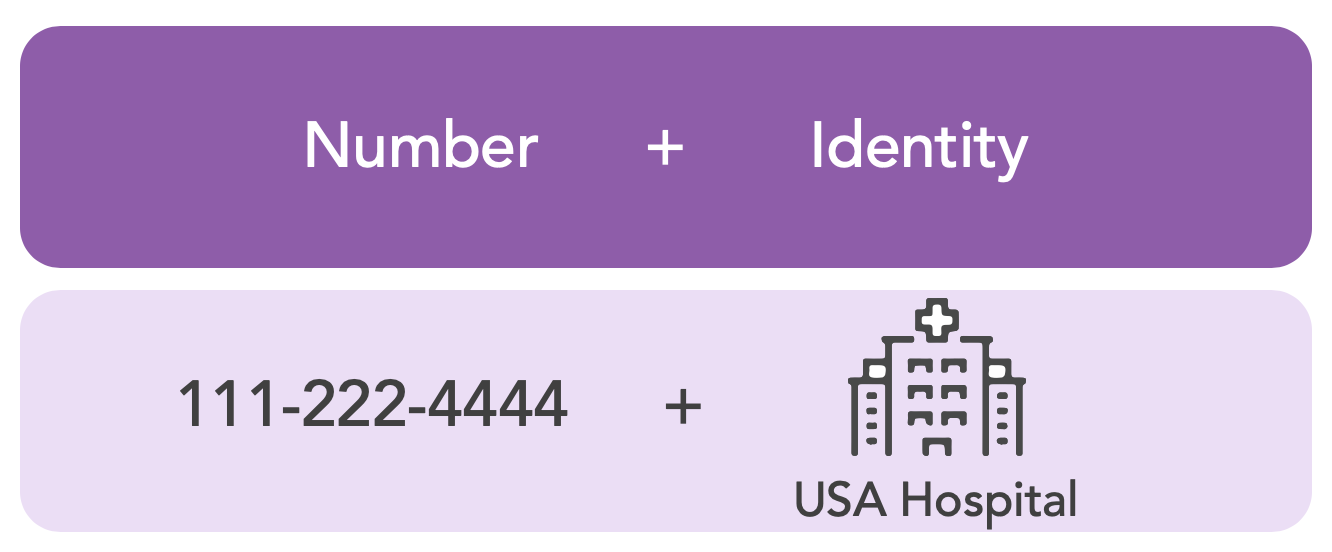
Let’s start with some definitions. In the STIR/SHAKEN standard, “Verified Caller” is the end result to be presented at the terminating side of the call. This verified status will be visually depicted on the called party’s mobile device with a graphic icon such as a green checkmark, which will let you know the calling party (ex. USA Hospital via the phone number 111–222–444) has been verified through STIR/SHAKEN.

There are data checks necessary to present Verified Caller to the called party. There are also various parties involved in the data checks, as well as two competing solutions proposed by the industry to capture and elevate those data checks to the point of entry where verified calling entities enter the STIR/SHAKEN framework (i.e. the Delegated Certificates Solution vs. the Central Repository Solution).

STIR/SHAKEN KYC ‘data checks’ validate the relationship between who you are and what number you’re using.

To achieve Verified Caller, the STIR/SHAKEN standards define two data checks to be performed by the originating service provider. These involve vetting and verifying the enterprise through a ‘Know Your Customer’ (KYC) process as well as a verification process to ensure the entity is authorized to use the phone number. This may sound straight forward as a concept, but when put to practice in real-world call center examples, it becomes way more complex.

The challenges faced when no one has verified who you are and what number you’re using.

The majority of originating service providers cannot actually attest to the authorized number + verified identity of the call originating on their network for enterprise callers such as hospitals, schools, utility, government entities, and more. This is because the originating service provider does not have a direct relationship with the calling enterprise — the enterprise may be nested a few levels down, behind a BPO and a CPaaS provider, for example. Therein lies the complexity of the originating service provider “vouching for” a business they don’t actually know and have never directly interacted with. This is where the KYC process is required to connect the dots between the originating service provider, and the brand actually represented in the call (the enterprise caller) and its associated phone number to be displayed to a called party.

Point of Entry to Endpoint — The Call Journey

So where does all of this magic happen?

Through STIR/SHAKEN, the entry point for the verified calling enterprise (number + identity) sits on the originating carrier side. The identity of the enterprise needs to be elevated up to the originating service provider (OSP) in order for the OSP to pass the Verified Call through the network over to the terminating side. Without the elevation of the caller’s identity (plus phone number), the OSP will not be sure who is actually behind the content of the call, and will not be able to fully attest to the verified (or not) status of the call. This is a gap that can be filled with a KYC process to verify the relationship between the various parties. 

The STIR/SHAKEN Verified Caller endpoint, where the depiction of a Verified Call visually takes place, happens on the terminating carrier side. This carrier is oftentimes different than the originating carrier and thus relies on the authenticated information passed from call origination to call termination.

The challenge in the standards and in the industry is how to securely and reliably identify the calling enterprise alongside the appropriate phone number and elevate this trusted relationship to the point of entry for STIR/SHAKEN call signing at the terminating side.

Whether you are an enterprise caller, BPO, CPaaS, RespOrg, or service provider, multiple stakeholders play a role to coalesce the enterprise identity and phone number and elevate it to the entry point. There is no one solution, and no one organization is responsible to make this happen; it is collaborative.

To facilitate this collaboration and open, transparent discussion, Numeracle brought a panel of STIR/SHAKEN subject matter experts together on June 18, 2020 for a virtual event titled: “How to Become a Verified Calling Enterprise in STIR/SHAKEN.” To view the video introduction to this event, as presented by Numeracle Founder and CEO, Rebekah Johnson, inclusive of topics we’re covered here in this article, see below. 


Introduction to Becoming a Verified Calling Enterprise in STIR/SHAKEN, presented by Numeracle

—-

‍Rebekah Johnson is CEO of Numeracle, a technology company that provides a path for legal callers to prevent the improper blocking and labeling of their calls, and ensures trusted callers are vetted, verified, and properly identified across the calling ecosystem.

—- 

Innovation Council Logo-300px


The iA Innovation Council is a collaborative working group of product, tech, strategy, and operations thought leaders at the forefront of analytics, communications, payments, and compliance technology. Group members meet in person (and lately, virtually) several times each year to engage in substantive dialogue and whiteboard sessions with the creative thinkers behind the latest innovations for the industry, the regulators who audit and establish guardrails for new technology, and educators, entrepreneurs and innovators from outside the industry who inspire different thinking. 

2020 members include:


[article_ad]

Thinking Differently About Getting Your Calls Through in the New Age of STIR/SHAKEN
http://www.insidearm.com/news/00046455-00046460-thinking-differently-getting-cal/
http://www.insidearm.com/news/rss/
News
All the latest in collections news updates, analysis, and guidance

A Dark Day for Free Speech: Supreme Court Upholds Statute Supposedly Preventing Robocalls–But at what Cost?

Editor’s note: This article is provided through a partnership between insideARM and Squire Patton Boggs LLP, which provides a steady stream of timely, insightful and entertaining takes on TCPAWorld.com of the ever-evolving, never-a-dull-moment Telephone Consumer Protection Act. Squire Patton Boggs LLP—and all insideARM articles—are protected by copyright. All rights are reserved. 


This last weekend our nation celebrated—if that word can rightly be used given the current turmoil—its Independence Day. First among the freedoms we hold dear is the right to free speech. It says so right here in the First Amendment:

Congress shall make no law… abridging the freedom of speech…

Seems pretty clear.

In yesterday’s U.S. Supreme Court decision of Barr v AAPChowever, the Supreme Court not only upheld the broadest restriction on Constitutionally-protected speech in our nation’s history, it did so in a manner that will help shut down future challenges to statutes that abridge speech—creating an entirely new First Amendment doctrine in the meantime. And that is a really big deal.

[article_ad]

As dark as this decision is for free speech—more on that below—many will cheer the decision as a victory. The “Supreme Court Pushes Back Against Robocalls,” the headlines will read.

In truth the Supreme Court breathed new life into a bad statute, the Telephone Consumer Protection Act (“TCPA”), that does little (probably nothing) to prevent the sort of robocalls consumers hate most. That is because the TCPA is not effective against overseas call centers and fly-by-night scammers—the ones causing all the trouble. Those sorts of calls are stopped by the FCC’s far more effective call blocking and authentication rules. These technological solutions have cut down massively on robocalls in a way the TCPA never achieved.

But the perception that the TCPA prevents robocalls undoubtedly guided the court’s analysis of the statute and generated the court’s stunning conclusion: that although the statute is unconstitutional as written, it can still be applied against the party challenging it.

How is that possible you might ask?

The TCPA, unlike most restrictions on speech, is written extremely broadly. (Again it is the most broad restriction on speech Congress has ever devised.) Rather than target specific speech for its illicit or undesired content, it targets ALL speech made in a certain manner. And while it might seem counter intuitive that a broad restriction on speech is superior to a narrow one under the First Amendment, the Barr court focused on the statute’s great and even breadth as one of its most palatable attributes.

From the Supreme Court’s perspective, the problem with the TCPA is not its tremendous breadth, but with a tiny sliver of calls that Congress did allow: debt collection calls on government-backed debt. And while the average American might think it is a good thing for the government to be able to call folks that owe it money, this uneven restriction on speech triggered strict scrutiny, a very intense form of Court review that is supposed to prevent intrusions on our freedom.

So far so good. First Amendment doctrine has long held that where a statute restricts speech unevenly in a so-called “content specific” sort of way, the Supreme Court is to apply strict scrutiny to that statute and strike it down. That way our freedoms enshrined in the Bill of Rights are protected from government intrusion—Independence Day and all that.

Except…in Barr, the Supreme Court did not strike down the TCPA the way it was supposed to. Instead, focusing on the importance of preventing robocalls, the Supreme Court struck down solely the exemption permitting speech and expanded the TCPA to cover even more speech.

What this means is that the party challenging the statute as unconstitutional won, but still lost. Instead of having its own speech deemed legal, it only got to see other speakers also lose their voice.

This, the Barr court tells us in a footnote, is okay because many times private speakers will want other private speakers to be quiet, such as when one wishes to silence a business rival. But the fact that private speakers may wish to silence one another certainly should not justify allowing the government to silence all of us. That is exactly what the Court’s decision accomplishes.

Specifically, Barr introduces a new First Amendment doctrine and new parlance to go with it: introducing the First Amendment “equal treatment” case. In such cases, the Supreme Court holds for the first time ever in Barr, the proponent of free speech is not actually entitled to free speech, rather he/she/it is entitled only to as much speech as everyone else gets. No more, no less.

While “evenness” has long been the touchstone of review in Equal Protection challenges, the First Amendment has traditionally operated differently. The goal in a free speech challenge is not to “even out” speech, it is to set it free. Its not to assure that the muzzle I wear is the muzzle you wear, it is to take off the blasted muzzle.

CLT ad - Try it for free

Sadly, in Barr, the Supreme Court left the muzzle on and handed the government a big victory in doing so. Indeed, it follows from Barr that the government can safely restrict all speech to everyone so long as it does so evenly. And where Congress chooses to cherry-pick favored speech and remove it from a broad restriction, the worst that can happen is that the Congressional permission slip will be revoked and everyone will be silenced again.

This is a really bad day for free speech, folks. A day that saw the creation of an entirely new First Amendment doctrine that appears developed specifically to justify denying speech to a successful First Amendment challenger. A doctrine that perversely (yet expressly) converts the First Amendment from a tool designed to protect speech into a tool that can only be used by private actors to take away speech from other private actors. It converts the First Amendment into a glorified ironing board. Simply remarkable.

Against this backdrop, the impact Barr has on the actual TCPA is almost immeasurably small. The ruling is extremely narrow and tightly confined. It does not move the needle on TCPA jurisprudence at all except to expand the statute to reach collectors of government-backed debt again. (And it remains to be seen whether this expansion can be applied retroactively.)

But for all of us as Americans, the decision in Barr should send a chill down our collectives spines. The Supreme Court has sacrificed some of our most cherished rights and ideals today in the name of upholding a bad statute that does not even do what it was intended to do, all in the name of preventing robocalls. And while it is true that we all hate unwanted robocalls, I would like to think we still love our freedom of speech a little bit more.

Then again, we all live in our private echo chambers these days, listening only to the views/news/opinions we want to hear and discounting all others. Perhaps then, here in 2020, Americans have finally had enough of free speech and prefer simply to be left alone.

If so, Barr is certainly the Supreme Court ruling for you.


Case Law Tracker

Want to track TCPA trends and important court decisions?
The iA Case Law Tracker helps you do that in less time than it takes to pour your morning cup of coffee.

A Dark Day for Free Speech: Supreme Court Upholds Statute Supposedly Preventing Robocalls–But at what Cost?
http://www.insidearm.com/news/00046465-dark-day-free-speech-supreme-court-uphold/
http://www.insidearm.com/news/rss/
News

All the latest in collections news updates, analysis, and guidance

Debt Control Agency Opens West Branch, Adds Greg Carter as Vice President

TORONTO, Ontario — Debt Control Agency (DCA), today announced the opening of DCA’s West branch and the addition of Greg Carter as Vice President of West Branch located in Kelowna , BC. In this role, Greg will oversee the development and implementation of DCA’s strategy and business development intended to increase DCA’s presence in the ARM/Collections space.

“With more than 30 years of Collections/ARM global solutions , Greg has a proven track record of driving business results through innovative program design and building lasting relationships with stakeholders across a variety of industries,” said Mohsen Monavari, President and CEO, DCA.

Greg will be responsible for the growth and development of innovative new program offerings with implementing the company’s overall values, mission and strategic goals while promoting DCA as the ‘brand name’ in the Collections/ARM space. 

About DCA

Debt Control Agency (DCA) is a leading national provider of collections, receivables management and customer services.  DCA is headquartered in Toronto with contact centres in Ontario, Quebec and British Columbia. We are nationally licensed and provide consumer and commercial debt recovery and customer services to our clients in various industries.

DCA is results-driven and focused on servicing our clients with the highest collection recovery rate while maintaining the best standards of customer responsiveness in the industry. Keeping this in mind, we continually invest in the company and our greatest asset, our people. DCA staff is thoroughly trained during onboarding as well as continuously subjected to standardized testing and monitoring. Our senior management team has held key positions within the collections industry and have over 100 years of combined experience.

For more information about DCA visit: www.debtcontrolagency.com

Debt Control Agency Opens West Branch, Adds Greg Carter as Vice President
http://www.insidearm.com/news/00046463-debt-control-agency-opens-west-branch-add/
http://www.insidearm.com/news/rss/
News

All the latest in collections news updates, analysis, and guidance

U.S. Supreme Court Strikes Down Government Debt Exemption of TCPA

The long-awaited Telephone Consumer Protection Act (TCPA) decision from the U.S. Supreme Court related to the TCPA’s government debt exemption is finally here. Bottom line up front: arguing free speech principles, the Supreme Court struck down and severed the government debt exemption from the 2015 amendment of the TCPA.

[article_ad]

The case revolved around political and nonprofit organizations who wanted the TCPA ban on “robocalls” struck down so they could make political robocalls to cell phones. Their avenue to this was the First Amendment of the U.S. Constitution. These organizations argued that by treating government-backed debt collection calls different than other forms of speech, the TCPA violated the First Amendment.

While the majority of the Supreme Court’s justices agreed that the government debt exemption seems to violate the First Amendment, the court declined to go as far as the political and nonprofit organizations were hoping. Instead of striking down the entire TCPA ban on “robocalls,” the Supreme Court took a narrower approach by eliminating the problematic government-backed debt exemption, leaving the rest of the TCPA intact.

This, effectively, affirms the Fourth Circuit Court of Appeals’ decision on this case. Oddly enough, the decision solves the organizations’ First Amendment concerns but still prohibits them from doing what they want to do: send political robocalls.

insideARM will post a deeper dive into the Supreme Court’s decision later this week.

insideARM Perspective

For the debt collection, this decision will have a significant impact for a certain segment of the industry, but likely little impact for other segments. Debt collectors who collect debts on behalf of the government might now be opened up to new TCPA scrutiny, so they should go through a thorough review of their systems and processes to ensure they are compliant with the TCPA.

What this decision did not really address was an issue that would have a much larger impact on the industry as a whole: the circuit court split on what, exactly, is the definition of an ATDS?

One very disappointing thing about this decision, however, is that the Supreme Court seems to think that all calls to which the TCPA may be applicable are “robocalls.” There are definitely illegal robocalls abound—we’ve all received them, and likely have call blocking technology on our phones to prevent them—but there is a world of difference between an illegal robocall and calls made by legitimate businesses that have consent to contact consumers. It’s unfortunate to see the Supreme Court not reference the difference.

Case Law Tracker

Want to track TCPA trends and important court decisions?
The iA Case Law Tracker helps you do that in less time than it takes to pour your morning cup of coffee.

U.S. Supreme Court Strikes Down Government Debt Exemption of TCPA
http://www.insidearm.com/news/00046458-us-supreme-court-strikes-government-debt-/
http://www.insidearm.com/news/rss/
News

All the latest in collections news updates, analysis, and guidance

Tom Pahl to be Named Deputy Director of the CFPB

Tom Pahl, who currently serves as the Consumer Financial Protection Bureau’s (CFPB) Policy Associate Director, will be named Deputy Director of the Bureau, according to American Banker. As Deputy Director, Pahl will be Director Kathleen Kraninger’s right hand, holding the number 2 position in the Bureau. The Deputy Director role became vacant when its most recent holder, Brian Johnson, left the CFPB to go into private practice at a law firm earlier this year.

Pahl has a long history as a regulator both at the CFPB and the Federal Trade Commission (FTC). Pahl served at the FTC in a number of different roles from 1998-2013, when he was recruited to the CFPB to work on a debt collection rule. Following the release of the Outline of Proposals Under Consideration in advance of the Small Business Review Panel (SBREFA) for Debt Collector and Debt Buyer Rulemaking, he left the CFPB in August 2016 and worked briefly as a partner at Arnall Golden Gregory LLP.

In February 2017 Acting Federal Trade Commission Chairman Maureen Ohlhausen, a Trump appointee and advocate of “regulatory humility,” named Pahl Acting Director FTC Bureau of Consumer Protection. In 2018, President Trump announced that he had nominated Ohlhausen to be a judge on the United States Court of Federal Claims, which meant that Pahl would likely be replaced by someone chosen by an incoming FTC Chairman. Pahl then returned to the CFPB as the Policy Associate Director. 

Tom Pahl to be Named Deputy Director of the CFPB
http://www.insidearm.com/news/00046456-tom-pahl-be-named-deputy-director-cfpb/
http://www.insidearm.com/news/rss/
News

All the latest in collections news updates, analysis, and guidance

FCC Holds That Text Platforms Requiring Manual Number Entry Are Not ATDS Under TCPA

Editor’s note: This article is provided through a partnership between insideARM and Squire Patton Boggs LLP, which provides a steady stream of timely, insightful and entertaining takes on TCPAWorld.com of the ever-evolving, never-a-dull-moment Telephone Consumer Protection Act. Squire Patton Boggs LLP—and all insideARM articles—are protected by copyright. All rights are reserved. 


A couple of big rulings from the FCC yesterday. The first pertains to text messages with the FCC granting P2P Alliance’s petition concerning automated text message platforms.

The FCC holds squarely:

if a texting platform actually “requires a person to actively and affirmatively manually dial each recipient’s number and transmit each message one at a time” and lacks the capacity to transmit more than one message without a human manually dialing each recipient’s number, as suggested in the P2P Alliance Petition, then such platform would not be an “autodialer” that is subject to the TCPA.

This is big news for folks using text platforms that allow template-based, fast-paced texting, on a one-to-one (i.e. click-to-text) basis so long as the phone number is entered each time.

Notably the FCC specifically rejected the NCLC’s position that such platforms would enable marketers to spam people’s phones:

The TCPA does not and was not intended to stop every type of call.

Booya.

The FCC also doubled-down on its previous rulings that express consent is to be presumed anytime the consumer provides the number directly to the caller:

The Commission has repeatedly made clear that “persons who knowingly release their telephone numbers” for a particular purpose “have in effect given their invitation or permission to be called at the number which they have given” for that purpose, absent instructions to the contrary.

[article_ad]

The ruling is available here: TCPAWorld.com– P2P Alliance Ruling

Notably the petition was filed back in May, 2018 so the FCC may be working through its backlog of petitions–just as Commissioner O’Rielly implied it might be when he joined our podcast a couple weeks back.  (Thanks again for joining us Commissioner!)

BUT we saw a second TCPA ruling from the FCC yesterday as well–the Baron is covering that one–holding that PRIOR express consent must actually be obtained PRIOR to a call (even in the healthcare context) so it isn’t all good news for the TCPA defense. That said, it certainly looks like TCPA issues may be moving back to the top of the Commission’s agenda.

We’ll obviously keep an eye on this for you.

FCC Holds That Text Platforms Requiring Manual Number Entry Are Not ATDS Under TCPA
http://www.insidearm.com/news/00046452-fcc-holds-text-platforms-requiring-manual/
http://www.insidearm.com/news/rss/
News

All the latest in collections news updates, analysis, and guidance

Revenly Names Larry Puffer Director of Sales and Business Development

BAXTER, Minn. — Revenly is proud to announce Larry Puffer has joined the company as their new Director of Sales and Business Development.  Larry joins Revenly with over 12 years of experience in the accounts receivable industry. In his former role as Director of Sales for FocusOne, a leading collection letter print and mail company, Larry forged lucrative, long-lasting partnerships across multiple industries; including debt collection, mortgage, auto finance, and healthcare. Over the years, these partnerships helped FocusOne expand its market share to new heights; experience he now brings to Revenly. 

“We are very excited to welcome Larry to the Revenly team. Larry has a proven track record of success in the credit and collections industry and has already shown himself to be a valuable team player to our growing company. I look forward to personally working with and learning from Larry as Revenly continues to grow,” Joshua Allen, CEO. 

Larry will be expanding Revenly’s sales and partnership strategy, including developing new business opportunities with both direct and indirect client relationships.  

You can contact Larry at larry@revenly.io or 248-961-0670.

About Revenly

Revenly is a leading inbound collection platform for credit and collections companies. Since 2017, Revenly’s mission has been to digitize the collections for accounts receivable management by providing a SaaS platform that engages, converts, and retains customers until balances are paid-in-full. Revenly gives users an attractive, easy to use interface, that is built to simplify the complicated world of collections. Revenly consists of Revenly Payments, Revenly Platform, RevPort and powerful free APIs that give companies the tools they need to digitally transform quickly with a proven go to market strategy that increases self-serve revenue. 

Revenly Names Larry Puffer Director of Sales and Business Development
http://www.insidearm.com/news/00046457-revenly-names-larry-puffer-director-sales/
http://www.insidearm.com/news/rss/
News

All the latest in collections news updates, analysis, and guidance